Treasuries Are a Haven Again, and the Bond Market's Big Short Is Paying for It
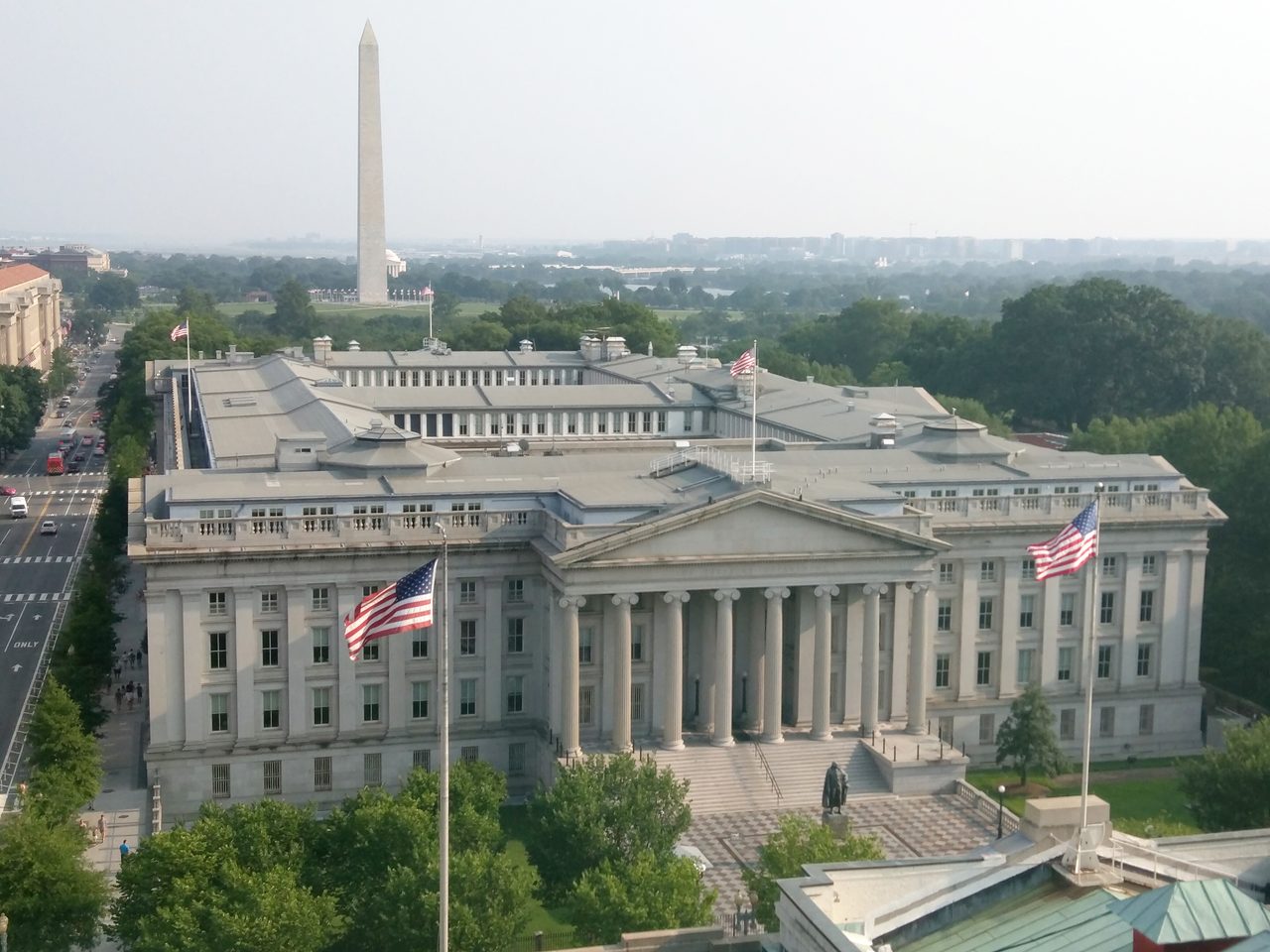
Photo: MeanieHyaena / CC BY 4.0 · via Wikimedia Commons
Treasuries Are a Haven Again, and the Bond Market's Big Short Is Paying for It
Ten-year yields fall 17 basis points in a week
US Treasuries are showing tentative signs of reclaiming their traditional haven role, and the timing is awkward for investors positioned for this year's slump to deepen. The 10-year yield dropped about 17 basis points last week while the Nasdaq 100 tumbled 5.5%, according to Bloomberg. The last time both moved that hard in the same week was April 2025, when tariff turmoil upended markets. For months before that, hot inflation, resilient growth and a flood of government and corporate supply had left Treasuries unable to cushion equity drawdowns.
Chip stocks shed $2 trillion in seven sessions
The wobble began in AI. Reuters reported chipmakers fell more than 14% over seven sessions, erasing roughly $2 trillion in market value, while the semiconductor index logged an eighth straight decline, its longest losing run since 2008. CoreWeave, the Nvidia-backed cloud provider, slid about 20% in the first three sessions of the week, another 12% on Friday, and roughly 25% for the week, its worst since November 2025, per Bloomberg.
The IMF put an AI correction at the top of its risk list
Officials are hedging too. In its October Global Financial Stability Report, the IMF named an AI-related market correction as its first salient risk, alongside a sharp rise in sovereign bond yields and cyberattacks. It reviewed 14 deals covering about $300 billion of equity and $650 billion of debt tied to $1.4 trillion of future revenue commitments, and calculated that hyperscalers accounted for nearly 10% of global investment-grade issuance this year.
Warsh keeps October open as hike odds slide
The Fed raised rates 25 basis points to 3.75%-4.00% in September, and minutes pointed to another increase by year-end. September consumer inflation ran at 3.7% year on year. October hike odds briefly jumped to 50% after the print, then slid to about 15% once Chair Kevin Warsh, speaking with the IMF's Kristalina Georgieva, repeated that the Fed will deliver price stability while declining to prejudge the Oct. 27-28 meeting, the Wall Street Journal reported.
Short Treasuries was one of the world's most crowded trades
Positioning explains the violence of the move. Bearish Treasury bets had become as crowded as long global semiconductors, and commodity trading advisers entered last week extremely short, then covered. "To paraphrase Mark Twain, rumours of the death of US Treasuries are greatly exaggerated," said James Athey of Marlborough Investment Management.
CoreWeave's insurance costs price 60% default odds
The credit market is flashing a harder warning. CoreWeave's five-year credit default swaps widened as much as 74.5 basis points to a record 1,194.5 basis points, ICE data cited by Bloomberg show, implying better than 60% odds of default within five years, up from about 30% a year ago. Its 9% notes due 2031 traded as low as 79.9 cents on the dollar and yields briefly topped 15%; S&P's recovery analysis implies unsecured holders would get back 10% to 30%.
$1.7 trillion of investment-grade supply, up 29%
Why would bonds benefit? Natixis's John Briggs argues that investors burned on AI-linked paper grow reluctant to buy new supply, removing "an arrow from the AI issuance quiver" and easing crowding-out fears for long Treasuries. Investment-grade issuers have sold about $1.7 trillion of debt this year, up roughly 29%, led by megacap technology. BlackRock's investment institute cut US equities to neutral and upgraded Treasuries, favouring short maturities, while JPMorgan's Priya Misra sees high-quality fixed income as a hedge if AI momentum fades.
Auctions at 5.30% still found buyers
Supply is being absorbed. A $39 billion 10-year auction cleared at 5.30%, the highest stop-out since November 2000, and a 30-year sale priced at 5.618% with a bid-to-cover of 2.54 against a 2.41 average, with indirect bidders taking 72.3%. The 10-year touched a 24-year high before falling 8.4 basis points to 5.105% on Oct. 15.
The next tests: the Fed, refunding and AI capex
What comes next matters more than what just happened. ICICI Bank Research expects the five largest hyperscalers to spend $729 billion in 2026 and $1.069 trillion in 2027, keeping financing demand heavy, and Morgan Stanley reckons leveraged basis trades have shrunk about 20% this year to $1.2 trillion — still large enough to amplify any forced unwind. Bond bulls have a window, not a verdict.
Sources
- Bloomberg: Treasuries Rally as AI Stock Selloff Renews Haven Appeal for Bond Investors
- Reuters: Is the AI rout making bonds safe again?
- Yahoo Finance: Bond Market's Big Short Bet Gets Wakeup Call as AI Trade Wobbles
- CNBC: CoreWeave credit default swaps hit distress levels as investors sour on AI debt
- The Wall Street Journal: Investors Trim Bets on Fed October Hike After Warsh Comments