Supreme Court to Test Race-Neutral Lotteries in Maryland Magnet-School Fight
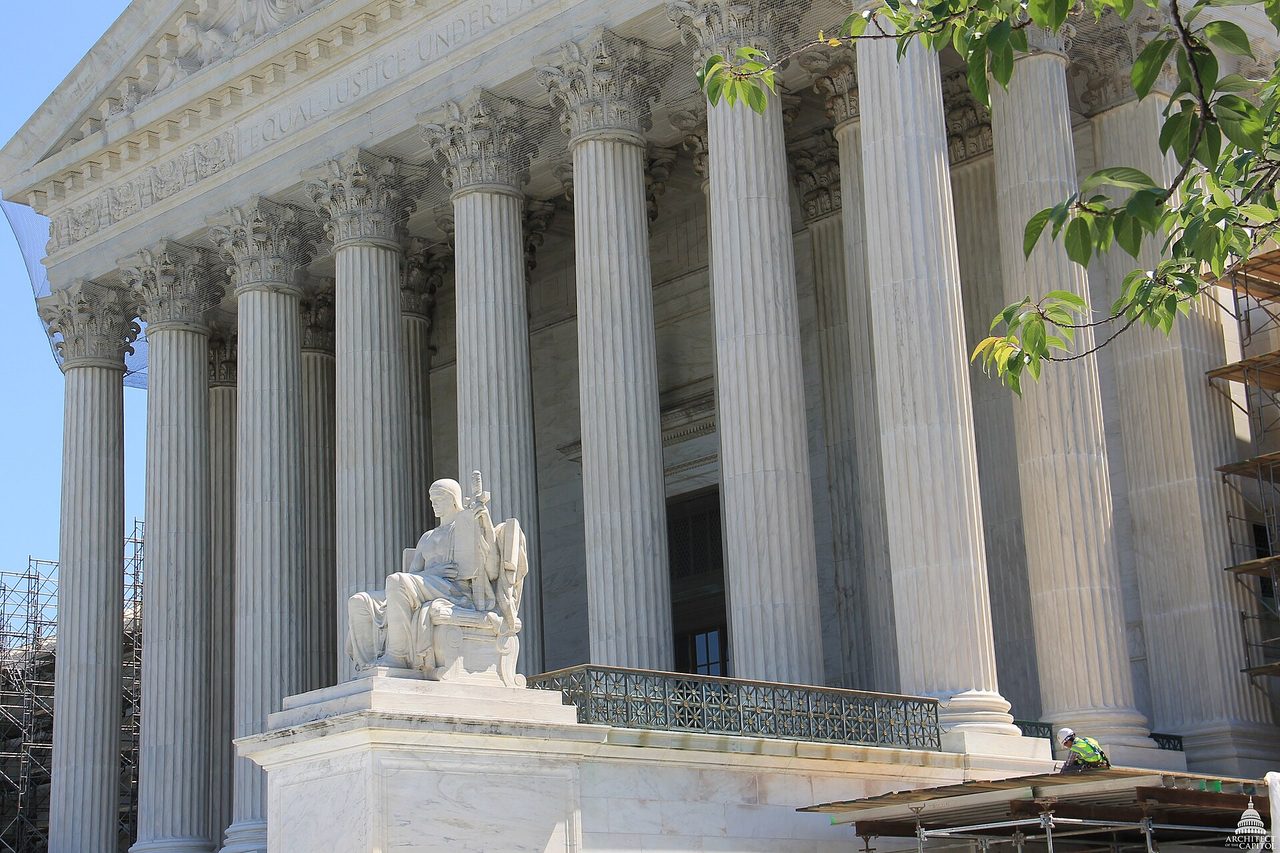
Photo: USCapitol / Public domain · via Wikimedia Commons
Supreme Court to Test Race-Neutral Lotteries in Maryland Magnet-School Fight
Justices take up a middle-school admissions battle
The U.S. Supreme Court announced on Oct. 19 that it will hear Association for Education Fairness v. Montgomery County Board of Education, a challenge to lottery-based admissions at four elite public middle schools in Montgomery County, Maryland. As the Associated Press noted, the case returns the justices to the explosive question of race in student admissions, three years after the majority struck down affirmative action in college admissions. Reuters reported that the schools at issue are academically rigorous magnet programs serving high-achieving students in sixth through eighth grades.
Asian American parents allege a design that disfavors their children
The plaintiffs, the Association for Education Fairness, describe themselves as a group of concerned Asian American parents in Montgomery County, according to SCOTUSblog, which dates the first filing of the lawsuit to 2020. They argue that the county redesigned admissions to lift Black and Hispanic enrollment at the expense of Asian American children, violating the equal protection guarantee of the 14th Amendment. NBC News reported that the challenge targets both the pandemic-era lottery and an earlier measure introduced in 2017, since discontinued, that favored children from low-poverty areas.
A pandemic-era lottery that ranks pupils inside their own schools
According to Reuters, the disputed selection process was introduced in the 2021-2022 school year, during the COVID-19 pandemic, and is known as the Pandemic Plan. The district screens all fifth graders centrally for academic potential, then assigns places by lottery from the qualified pool. Local outlet HPE News reported that the lottery cutoff sits at the 85th percentile in local testing. The Associated Press explained the mechanism the parents object to: pupils qualify for the lottery based on test results ranked against classmates in their own schools, so students in affluent schools where Asian American pupils are concentrated must score higher to enter the pool.
The district says the lottery is colorblind, and points to the applicant pool
The school system insists the policy is race-neutral. As AP quoted from the board's brief urging the justices to decline the case: "The Pandemic Plan is a colorblind lottery. Nothing about the Pandemic Plan, its history, or its purpose is offensive to the Constitution." The board argues that Asian American students' share of admissions exceeded their share of the applicant pool, that the officials who adopted the plan voiced no discriminatory intent, and that Asian American representation rose at two programs and fell at two, as reported by The American Quorum's review of the board's filing. Still, enrollment shifted: Maryland Matters reported that the Black and Latino share of magnet admissions at Takoma Park Middle rose from 23 percent to 37 percent by 2021, and at Eastern Middle from 31 percent to 40 percent.
Lower courts threw the case out over the standard of proof
Lower courts dismissed the suit. The U.S. Court of Appeals for the Fourth Circuit, based in Richmond, Virginia, affirmed the dismissal, holding that the parent group had failed to show Asian American students were harmed because they were still admitted at higher rates than their share of the applicant pool, the AP reported. Maryland Matters quoted a Montgomery County Public Schools spokesperson saying the Supreme Court granted review on a purely legal question: what plaintiffs challenging facially race-neutral admissions criteria must establish to demonstrate discrimination. The justices said they will weigh the narrow question of whether the parent group has enough evidence of discrimination for the case to move forward.
Arguments expected in early 2027, with nationwide stakes
Coverage converges on timing: outlets including BreakingAC and CBS19 expect oral arguments in early 2027 and a decision by July 2027, while Reuters says the ruling should come by the end of June. Education outlet Chalkbeat observed that the dispute, though rooted in one diverse, progressive suburb of Washington, D.C., could affect selective-admissions policies in many large urban districts that have rewritten criteria to widen access. Since the 2023 decision in Students for Fair Admissions v. Harvard, districts have leaned on facially neutral tools such as lotteries and school-based rankings to sustain diversity. A ruling that such outcome-aware designs amount to intentional discrimination would force rewrites across the country; a ruling for the county would give the lottery model the high court's blessing. Civil-rights groups including the NAACP Legal Defense Fund, Asian Americans Advancing Justice and LatinoJustice have filed amicus briefs backing the district's right to remove barriers to access.
Sources
- Associated Press: Supreme Court to hear case on race in middle school admissions
- Reuters: US Supreme Court to hear Maryland case involving race in school admissions
- Supreme Court to hear a new case on race and school admissions, this time in Maryland
- SCOTUSblog: Justices take up case on race and school admissions
- The Hill: Supreme Court to weigh admissions limits in Maryland case following 2023 ruling