China's RiboX reports the first human data for a circular RNA therapy
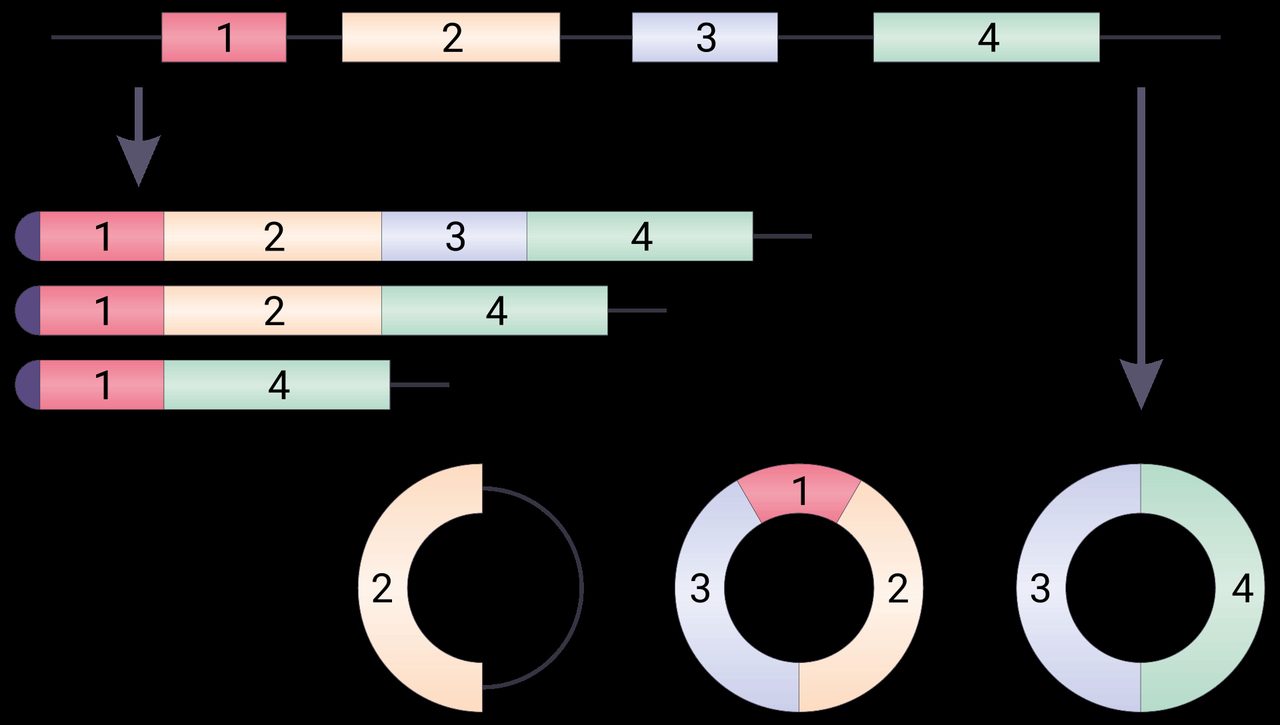
Photo: Helixitta / CC BY-SA 4.0 · via Wikimedia Commons
China's RiboX reports the first human data for a circular RNA therapy
A single infusion, six patients, and a measurable jump in saliva
Chinese biotech RiboX Therapeutics has published the first human clinical data for a circular RNA medicine, according to the Russian science outlet nplus1. RiboX and a team led by Henry Hoffman at the University of Iowa reported results from the first six participants in the Phase 1 SPRINX-1 trial (NCT06714253). The participants had a mean age of 67.7, with an equal split of men and women, and all had suffered severe xerostomia for at least two years after radiotherapy for head and neck tumors. The drug was given as a one-time infusion directly into the duct of a single parotid gland.
Aquaporin-1 circRNA in a lipid nanoparticle
According to the Business Wire release carried by Morningstar, RXRG001 is a circular RNA formulated in a lipid nanoparticle (LNP) that encodes human aquaporin-1 (AQP1), designed for in vivo transduction of residual salivary epithelium. A review in Frontiers in Biomolecular Science confirms the indication as radiation-induced xerostomia and hyposalivation, at Phase I/II under the same trial number.
Published in the NEJM
The preliminary results were published in The New England Journal of Medicine, according to the company release carried by Yahoo Finance, with nplus1 supplying the DOI (10.1056/NEJMc2604891). The company describes this as the first therapeutic use of circular RNA in humans, and says RXRG001 recently received Regenerative Medicine Advanced Therapy (RMAT) designation from the U.S. Food and Drug Administration.
Up to 450 percent at month three
At Month3, relative improvements from baseline among the three patients in the initial 4 µg cohort were 47 percent, 300 percent and 450 percent for unstimulated salivary flow, and 55 percent, 1,450 percent and 131 percent for stimulated salivary flow, according to the Business Wire release. Comparable increases were seen in the 10 µg cohort. Improvements were evident by Day 7 and maintained through Month 6. The Business Wire release says Xerostomia Questionnaire (XQ) scores showed rapid improvements within the first month that were sustained through the latest assessments for both cohorts.
Safety: no serious adverse effects
Among the first patients to receive the lowest doses, no serious adverse effects were observed, according to nplus1. The Frontiers review adds that non-clinical experiments confirmed a single injection can maintain improved salivary flow for roughly four weeks.
The case for circular RNA
Circular RNA needs no cap modification, has a naturally degradation-resistant closed structure and translates for longer, with a theoretical half-life of three to five times that of linear mRNA, which could reduce dosing frequency and dose volume, according to 生醫日報. The Frontiers review notes that circular RNA lacks 5′ and 3′ ends and is therefore not recognized by cytosolic RNA sensors such as RIG-I, resulting in weaker innate immune activation.
Long-term dry mouth after head and neck radiotherapy
The trial targets patients still suffering severe dry mouth at least two years after radiotherapy, according to nplus1. The same report notes that while drugs can be prescribed to boost saliva flow, side effects including profuse sweating, gastrointestinal problems and irregular heartbeat have steered many patients away, and in some cases the glands are too damaged to respond to medication at all.
The competitive backdrop: billions bet on Boston startups
Biotech investors and pharma companies have poured billions into three Boston-region startups competing to develop a next-generation version of mRNA technology, according to Endpoints News, and RiboX's readout is the first human evidence of circular RNA to arrive in that race. 生醫日報 notes that no more than five circular RNA candidates are currently in clinical development worldwide.
Reading it cautiously: six people, open label, no control
Matrixnews is explicit in its reporting that the available information does not say what the data show or how many people were involved, and that the significance of the findings cannot be assessed without more detail. nplus1 likewise emphasizes that these are early results from an open-label, non-randomized Phase 1 trial.
Expanding enrollment and cashing in the designation
RiboX was founded in 2021 and has raised tens of millions of dollars, with backing from leading Chinese life science funds, according to 生醫日報. The next steps are to push SPRINX-1 into a larger, more rigorously controlled design and to convert the RMAT designation into actual movement on the FDA's accelerated pathway.
A third set of numbers, from the market side
The circRNA-LNP formulation market was valued at USD 541.74 million in 2025 and is projected to reach USD 1,284.26 million by 2032 at a compound annual growth rate of 13.12 percent, according to 日商環球訊息有限公司. 生醫日報 separately cites the global mRNA therapeutics market at roughly USD 25 billion in 2023, forecast to reach USD 95 billion by 2030.
Sources
- Endpoints News: China biotech RiboX reveals first data of circular RNA therapies in people
- nplus1: Кольцевая РНК в липидных наночастицах помогла при сухости во рту после лучевой терапии
- ISACnet: Circular RNA Therapies: China's Biotech RiboX Unveils Groundbreaking Data (2026)
- Matrix News: China’s RiboX shares first human data on circular RNA therapies
- 藥師 Melody Chang 談保險支付方對雙特異性抗體與 CAR-T|生醫日報 2026-10-22