DOJ Sues to Freeze Alaska Senate Certification if a Namesake Spoils It for Sullivan
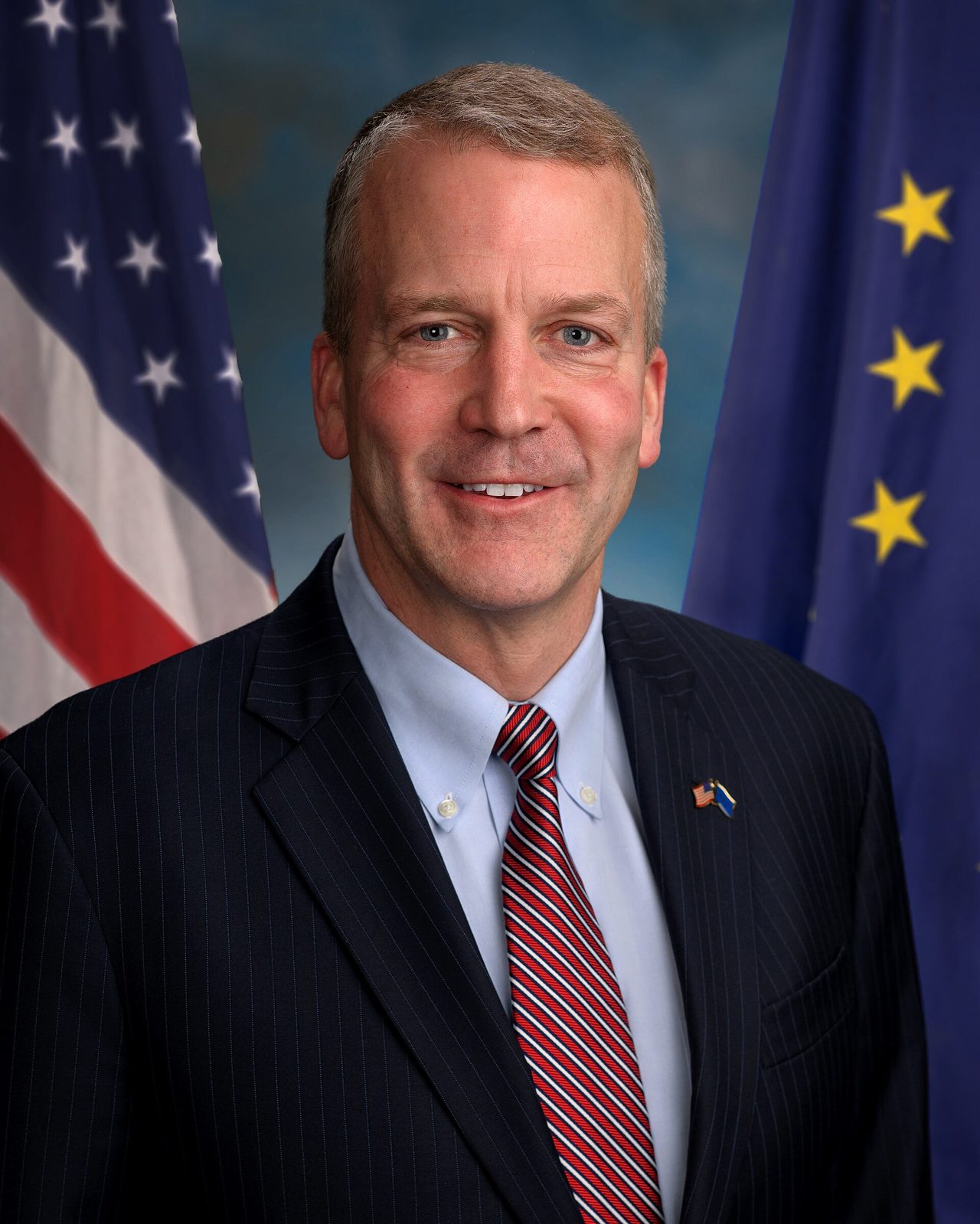
Photo: United States Senate / Public domain · via Wikimedia Commons
DOJ Sues to Freeze Alaska Senate Certification if a Namesake Spoils It for Sullivan
A Lawsuit Filed Before a Single November Ballot Is Counted
The U.S. Department of Justice sued the state of Alaska on Thursday in federal district court in Alaska, asking a judge to bar certification of the state's U.S. Senate result under a two-part test: incumbent Republican Sen. Dan Sullivan loses, and he would have won if every vote for his same-named rival, Daniel J. Sullivan Jr., had gone to him instead under ranked-choice tabulation. According to CNN and PBS, the complaint invokes the National Voter Registration Act's duty to "protect the integrity of the electoral process" and asks that any tainted result be held pending an investigation of voter intent and further court relief.
The Spoiler Is a Retired Teacher With No Party Label
The alleged spoiler, Daniel J. Sullivan Jr., is a Petersburg resident described as a retired teacher and former Forest Service employee. He belonged to the Alaska Independence Party until it dissolved late last year and registered as a Republican only when he filed this year. Under a Division of Elections decision he appears on the ballot with no party affiliation, just the name. The DOJ complaint asserts that "the sole purpose of [Daniel J.] Sullivan's candidacy is to benefit the Peltola campaign by reducing the number of votes for Senator Sullivan."
Alaska Courts Already Ruled, and the Namesake Stayed On
Alaska election officials initially agreed the filing looked designed to confuse voters and tried to keep him off the ballot. But as Newsweek and Courthouse News report, a state trial court rejected the exclusion and the Alaska Supreme Court summarily affirmed, restoring the namesake to the ballot. The federal lawsuit effectively relitigates that lost fight in a new forum, swapping removal from the ballot for a post-election certification freeze. Capital University professor Mark Brown told Newsweek there is no federal statute authorizing the relief sought and called the suit frivolous.
A Primary Blowout That Explains Republican Anxiety
The numbers behind the panic come from the August 18 top-four primary, cited in the DOJ filing itself: Democrat Mary Peltola took 49.5 percent, Sen. Sullivan 41.4 percent, and Daniel J. Sullivan 2.5 percent. Fourth-place Democrat David Leslie withdrew, so fifth-place Republican Gerald Heikes advanced with about 1.1 percent, leaving four names on the November 3 ballot. Newsweek's poll tracker has Sullivan trailing Peltola by roughly 2.7 points. In a race that tight, even a small slice of confused Sullivan voters could flip the seat, which is exactly the scenario the DOJ's conditional injunction targets.
"Doomsday Scenario" Versus "It Won't Go Anywhere"
Attorney General Todd Blanche told reporters Thursday in Virginia that blocking certification was unlikely outside extreme circumstances, calling it a hypothetical "doomsday scenario" and insisting the department never intends to "improperly interfere with elections or the state certification process" — while refusing to rule it out entirely. Legal scholars are dismissive: Notre Dame professor Derek Muller said the cited statute "simply doesn't let the Department of Justice enjoin certification" and wrote that the filing is "designed to win the press release rather than the litigation." The case is assigned to U.S. District Judge Sharon L. Gleason.
Why Alaska Could Decide the Senate — Days Late
Alaska elects its senators under ranked-choice voting adopted by Ballot Measure 2 in 2020 with 50.55 percent of the vote: one nonpartisan primary advances four candidates, and voters rank them in November. NBC rates the Sullivan-Peltola contest a toss-up, one of a handful that could determine Senate control. The Guardian reported on October 22 that Peltola, running on the cost-of-living crisis, could become the first Democrat to hold the seat in nearly two decades, and that the result may not be known for days given the state's slow count. Election scholar Rick Hasen had already flagged Alaska as a likely litigation battleground if Democrats take the Senate narrowly. The DOJ has now made that prediction real before voting even ends.
Sources
- PBS NewsHour: Trump administration files lawsuit to block possible Democratic win in Alaska Senate race
- CNN: Trump DOJ sues to block Alaska US Senate results if Republican incumbent loses
- Newsweek: Trump Admin Seeks to Block Alaska Senate Result if Dan Sullivan Loses
- Courthouse News Service: Trump administration sues Alaska over two Dan Sullivans on ballot
- Democracy Docket: DOJ preemptively challenges Alaska election results if Democrat wins Senate race - Democracy Docket