Beijing Gets Its Runway: China Opens Joint Air Facility in Laos
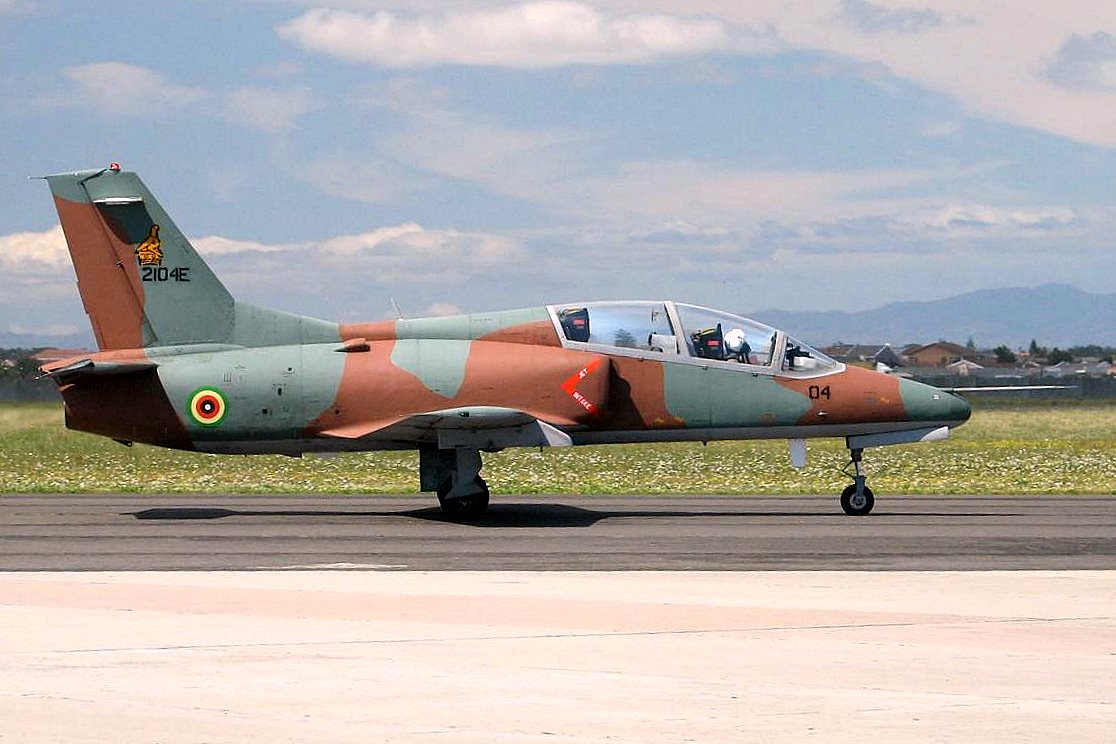
Photo: Danie van der Merwe from Cape Town, South Africa / CC BY 2.0 · via Wikimedia Commons
Beijing Gets Its Runway: China Opens Joint Air Facility in Laos
A joint ribbon-cutting north of Vientiane
On September 29, China's Ministry of National Defense announced that the China-Laos Joint Support and Training Center and the China-Laos Friendship Aviation Academy had begun operations at Ban Keun airport in Vientiane Province, about 50 kilometers north of the Lao capital. The two institutions are jointly maintained and operated by both sides and are tasked with training Lao air force pilots, according to statements carried by Chinese state media and the Laotian Times. Beijing said the center was established through consultations between the two countries.
Training only, Beijing insists, aimed at no one
The Chinese defense ministry said the facility "is not directed against any third party" and would enhance practical military cooperation and regional peace and stability. Beijing disclosed no details on how many Chinese personnel would staff the site, how long they would stay, or what aircraft and equipment would be based there. Chinese military commentator Song Zhongping said the center is entirely owned by Laos, houses no separate Chinese garrison, and grants China no exclusive rights of use.
Eight jets on the ramp and a 2,000-meter runway
Satellite imagery of the airfield taken around the opening showed eight aircraft on the apron. Private imagery analyst Jacob Bogle told Radio Free Asia they were K-8, also known as JL-8, light attack and training aircraft. Imagery obtained by CNN from the Vantor platform showed a runway about 6,500 feet (2,000 meters) long with a taxiway and support areas. The base sits roughly 40 miles north of Vientiane and about 25 miles from the nearest Thai border, per CNN.
From CIA airstrip to China's third overseas outpost
The site was built over Lima Site 44, a Vietnam War-era airstrip used by the CIA-operated Air America network for secret operations in the region. The Ban Keun complex is China's third known overseas military outpost after its 2017 base in Djibouti and the joint support and training center at Cambodia's Ream Naval Base, which opened in April 2025 with Chinese financing. Unlike Ream, a naval facility, Ban Keun is organized around air operations, which regional scholars describe as China's first overseas outpost centered on airpower. Cambodia maintains that Chinese personnel and warships are not permanently based at Ream.
Bangkok speaks, Hanoi watches, analysts warn of encirclement
Thailand is so far the only government to comment publicly. Defense ministry spokesperson Rear Admiral Surasant Kongsiri said Bangkok respects Vientiane's sovereign right to decide while continuing to monitor developments closely. Analysts say the combination of Ban Keun, Ream, and China's South China Sea installations has effectively encircled Vietnam. Joshua Kurlantzick of the Council on Foreign Relations called Ban Keun "the first air force base that China has abroad," while Collin Koh of Singapore's S. Rajaratnam School of International Studies suggested it may amount to the first full-fledged PLA overseas base in Southeast Asia.
Debt, power grids, and leverage over Vientiane
The strategic context is economic as well as military. The International Monetary Fund estimates Laos' public debt at around 81 percent of GDP last year, with China by far the largest bilateral creditor. In 2020, China's state-owned China Southern Power Grid acquired a reported 90 percent stake in Electricite du Laos Transmission Company, which operates much of the national grid. In June, Lao President Thongloun Sisoulith visited Beijing, where Xi Jinping called for strategic dialogue including on national defense. The two sides have also pledged to expand joint training and exercises, personnel development, and humanitarian assistance, and held a humanitarian-response exercise earlier this month.
What to watch: permanence, planes, and patrols
Neither side has specified troop numbers, deployment durations, or the terms governing Chinese aircraft rotations. The test, experts say, is whether combat aircraft operate from Ban Keun routinely, whether fuel storage, munitions, maintenance, and air defenses follow, and whether joint exercises widen in scope. If a pilot school grows into a forward operating location, mainland Southeast Asia's air balance shifts with it.
Sources
- The Star: China opens rare joint military support centre in Laos
- ABC News Australia: What we know about China's new joint air force training facility in Laos
- Radio Free Asia: China-Laos air base could be another Southeast Asian forward outpost for Beijing
- CNN: This old CIA airfield is now a Chinese base
- The Diplomat: Expanding the Military Footprint: China’s New Air Base in Laos