SpaceX Wants to Be America's Fourth Carrier. Building It Is the Hard Part.
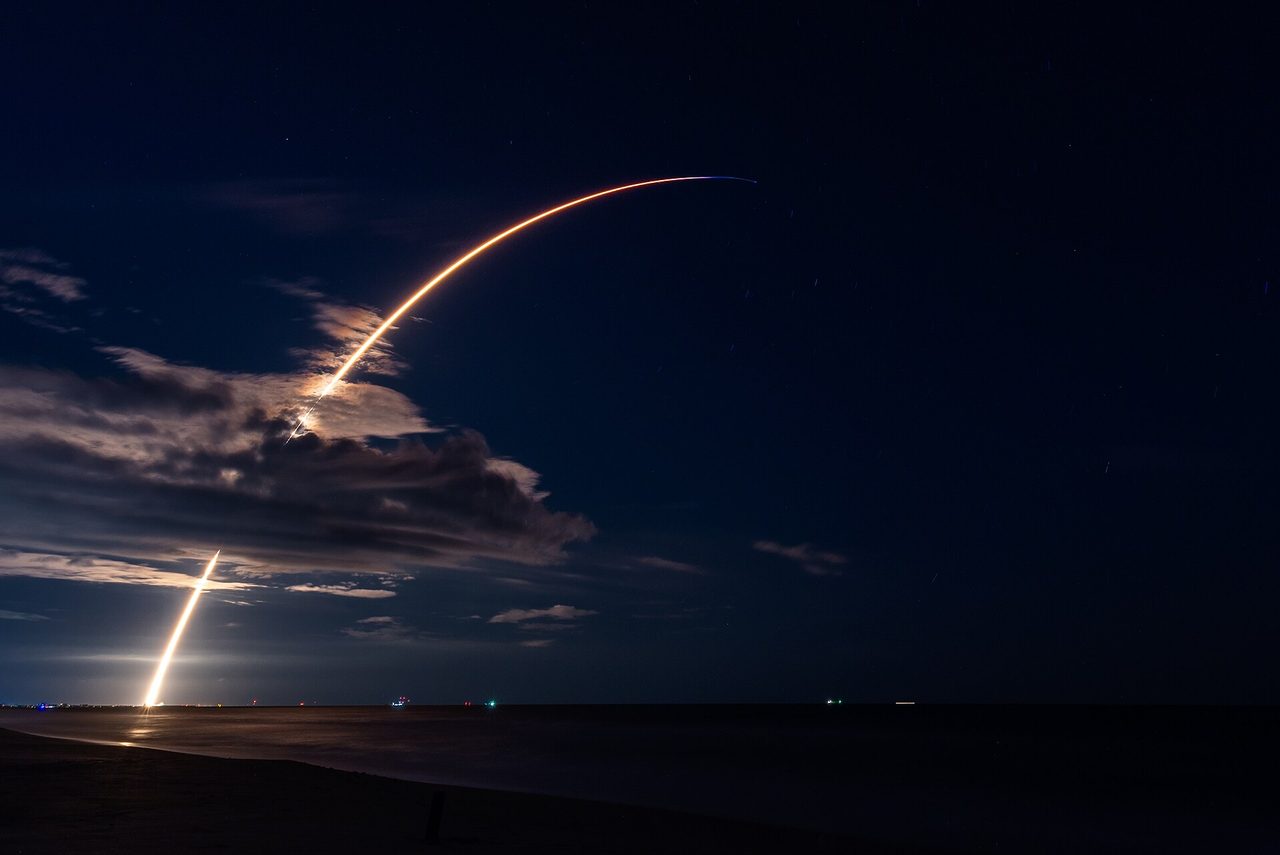
Photo: U.S. Space Force photo by Joshua Conti / Public domain · via Wikimedia Commons
SpaceX Wants to Be America's Fourth Carrier. Building It Is the Hard Part.
Tower talks signal a ground game
SpaceX is negotiating with major US tower owners, including Crown Castle, to secure access to at least 80,000 cell sites as it works toward building a fourth nationwide wireless carrier from scratch, according to Bloomberg reporting citing people familiar with the matter. The scale is striking: 80,000 sites would equal roughly half of the 158,500 purpose-built cell towers operating in the US last year, per Wireless Infrastructure Association figures cited by Reuters. On this week's earnings call, Elon Musk said SpaceX will build out terrestrial networks for broad-based connectivity anywhere it is allowed to operate, adding that satellite launches plus spectrum buys "will pave the way for Starlink Mobile to become a major mobile carrier in the US."
A spectrum shopping spree fills the indoor gap
The company's official story is a spectrum puzzle coming together. The FCC cleared a 65 MHz nationwide purchase from EchoStar in May; on October 8 SpaceX agreed to buy Grain Management's nationwide 800 MHz portfolio, reportedly for about $8 billion in cash, a band the FCC says covers approximately 100 percent of the US population; and the FCC has now approved a 15,000-satellite direct-to-device constellation, with half due in operation by Oct. 7, 2032. Low-band 800 MHz spectrum penetrates buildings, while frequencies near 2 GHz add capacity. Musk called the Grain deal "the last critical piece of the spectrum puzzle needed for SpaceX to provide complete phone coverage in America."
Incumbents say airwaves alone are not a network
The pushback has been blunt. T-Mobile Chief Technology Officer John Saw said SpaceX's holdings would not be enough to match the capacity and performance of established mobile networks. Verizon's Katie Magnotta said a company can hold billions of dollars of spectrum, but "if they do not have the network to use it, it's just empty airwaves." Carrier chiefs and analysts alike stress that a terrestrial network takes years, not quarters, with one executive line summing it up: it is not something that gets done overnight. TD Cowen estimated a competitive nationwide terrestrial build at more than $80 billion, requiring many years and billions in additional spending.
Markets punish telcos and reward towers
Investors moved first. AT&T, Verizon and T-Mobile shares fell between 4.2% and 5% in extended trading after the tower-talks report, while SpaceX shares rose more than 2% premarket and Crown Castle surged over 7%. Citi's telecom team, led by Michael Rollins, framed it as "net-positive for the tower stocks and net-negative for the telcos." Crown Castle CEO Chris Hillabrant left the door open on his earnings call: "You can assume that we're talking to all parties." Nothing is signed, and some observers read the talks partly as leverage over the carriers. Starlink already serves over 13.6 million consumer subscribers worldwide, an installed base any mobile launch would build on.
Regulators, rivals and the clock decide what comes next
Three gates lie ahead. First, the Grain 800 MHz deal still needs FCC approval, while Verizon, AT&T and T-Mobile together with trade group CTIA are lobbying the FCC to preserve current spectrum-sharing rules against changes favoring satellite-to-phone service. Second, the tower talks must convert into leases, and better satellites could reduce how many towers SpaceX ultimately needs. Third, analysts say the questions that matter by 2027 are whether SpaceX launches commercial service on schedule and signs customers beyond Boost Mobile and existing carrier partners. Pricing will reveal whether Starlink Mobile is an emergency-coverage add-on, a wholesale network, or a genuine direct challenge to mobile subscriptions.
Sources
- Bloomberg: SpaceX Pursues Deals With Tower Companies to Build Nationwide Mobile Carrier
- The Verge: SpaceX's mobile carrier push reportedly involves tapping into 80,000 cell sites
- Fierce Network: SpaceX's 800 MHz spectrum grab threatens Big 3 mobile carriers even more
- Ars Technica: Starlink spectrum deal boosts Musk plan to beat AT&T, T-Mobile, and Verizon - Ars Technica
- The Indian Express: SpaceX's spectrum deal still leaves it far from rivaling telecom giants