Musk Calls Time on the Neocloud Boom as SpaceX Locks In $40 Billion for Chips
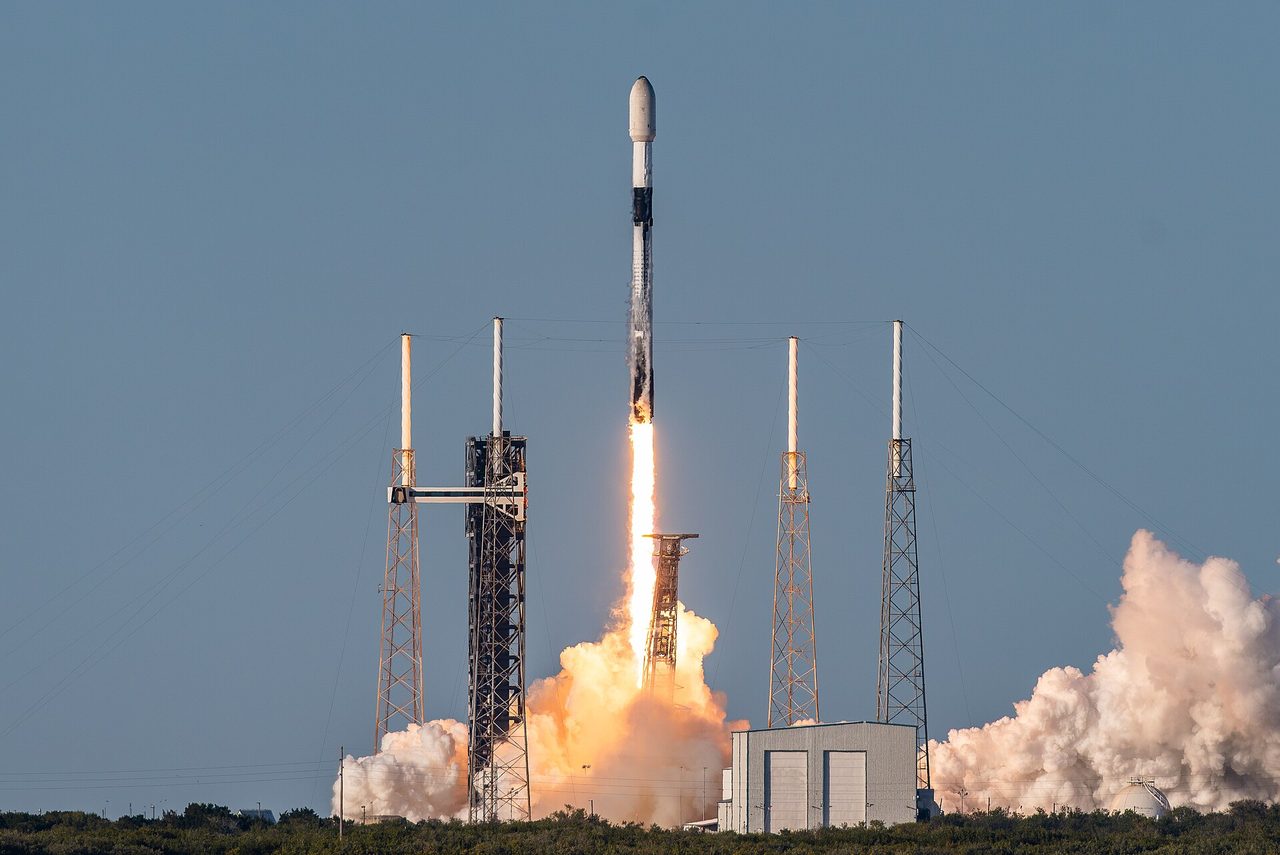
Photo: U.S. Space Force photo by Joshua Conti / Public domain · via Wikimedia Commons
Musk Calls Time on the Neocloud Boom as SpaceX Locks In $40 Billion for Chips
Musk predicts a die-off across 200-plus AI cloud firms
Elon Musk posted on X on October 25, US time, that more than 200 so-called neoclouds — specialist providers renting GPU compute to AI developers — face "guppy-level death and consolidation," adding that "some will make it through, but not many." He was replying to venture capitalist Chamath Palihapitiya, who had called the firms "disorganized and poorly capitalized." Musk first answered "pretty much," then delivered the fuller verdict.
Lenders have shut the door on AI-only borrowers
"As of the past few weeks, debt markets have almost entirely shut off access to money for any company that doesn't have substantial revenue independent of AI data centers," Musk wrote. Firms whose sales depend almost entirely on renting out AI compute can no longer count on borrowed money to keep expanding, in his account — and that funding freeze is what will force the shakeout.
SpaceX's own $40 billion raise held up as the counterexample
Musk said SpaceX has closed $40 billion in debt financing to buy GPUs, crediting the company's investment-grade status and its revenue from Starlink satellite internet and rocket launches. CNBC reported the package is primarily callable debt tied to chip deliveries due in the first and second quarters of 2027, and that Musk described it as "not a major factor this quarter."
No takeover plans: buying a neocloud would be "pointless"
After some X users speculated he was talking down prices before a buyout, Musk replied: "SpaceX is not buying any neoclouds. Pointless." Reuters noted that Musk named no lenders, interest rate, maturity or closing date, and SpaceX issued no separate announcement. Bloomberg had earlier reported the deal could use a special purpose vehicle to keep debt off the balance sheet, with Goldman Sachs leading investor talks.
Even SpaceX is paying up for the money
Details relayed from Semafor suggest the financing was not cheap: the lowest-rated slice was expected to carry interest of about 8.3 percent, with a safer chip-backed slice near 7.75 percent — more than a percentage point above where SpaceX's existing bonds trade. If a borrower with launch and satellite revenue pays that premium, pure-play AI borrowers face harsher terms still.
CoreWeave's slide gives the warning its exhibit A
Market moves back the gloom. CoreWeave fell 23.85 percent in the week ended October 19 to close at $61.12, while Nebius Group dropped 18.96 percent over the same stretch. By October 23, CoreWeave closed at $54.24, down 37.7 percent from its September 30 close. In pre-market trading on the Monday after Musk's posts, CoreWeave and Nebius fell 2.7 percent and 3.5 percent respectively. The company reported $640 million in net interest expenses for the second quarter, up from $267 million a year earlier, with yields on some unsecured bonds approaching 15 percent.
A wall of debt comes due just as patience runs out
Fierce Network reported CoreWeave carries $35.6 billion in debt principal: payments stay in low single-digit territory through 2030, then spike to $14.9 billion in 2031 and beyond. Offsetting that is a $104 billion revenue backlog as of the end of the second quarter, plus $25 billion in new commitments early in the third. Whether backlog converts into cash fast enough to cover compounding interest is now the central question over the stock.
Gartner got there first with its 2030 obituary
Musk is amplifying an existing forecast. Gartner chief forecaster John Lovelock expects more than 80 percent of independent neoclouds to stop operating independently by 2030, and the firm does not see AI revenue catching up with data center capital spending until 2032 or 2033 at the earliest. In a sustained-build scenario, Gartner puts more than $4 trillion in asset value at risk of write-downs through 2032, with a 12 percent return on invested capital not arriving until at least the end of 2032.
Wall Street splits between vultures and believers
Reactions divide along familiar lines. Some analysts frame the coming contest as a "Game of Thrones" war for compute in which cash-rich hyperscalers — Amazon Web Services is largely sold out through 2027, with a good chunk of 2028 also sold — pick up distressed GPU fleets on the cheap. Others argue the chips and data centers do not vanish when the equity does, so restructuring and asset sales, not shutdowns, will dominate. Either way, separating borrowers with real revenue from borrowers with only an AI story has become the market's new sorting rule.
Pricing, earnings and buyouts decide survivors
Three tests come next: the final pricing and structure of SpaceX's $40 billion package, which will show what debt markets truly charge a quality borrower; CoreWeave's coming earnings and bond prices, which will show whether the interest burden keeps compounding; and whether the hyperscalers start buying distressed compute assets. Consolidation has begun, and the survivors will be few.
Sources
- The Guardian: AI cloud computing companies face ‘guppy-level death’, Elon Musk warns, as funding dries up – business live
- Business Insider: Elon Musk says neoclouds are cooked, and SpaceX won't be buying them
- CNBC: SpaceX closes $40 billion debt deal for AI chips, Elon Musk says
- mint: Elon Musk says SpaceX closed $40 billion debt deal for AI chips as firm ‘investment grade, has Starlink, launch revenue’
- Wccftech: Elon Musk Goes Ballistic On AI Neoclouds, Says They Will See “Guppy-Level Death” As SpaceX Raises $40 Billion For GPUs