The Watch History Hiding in Plain Sight in 'You Can See Everything'
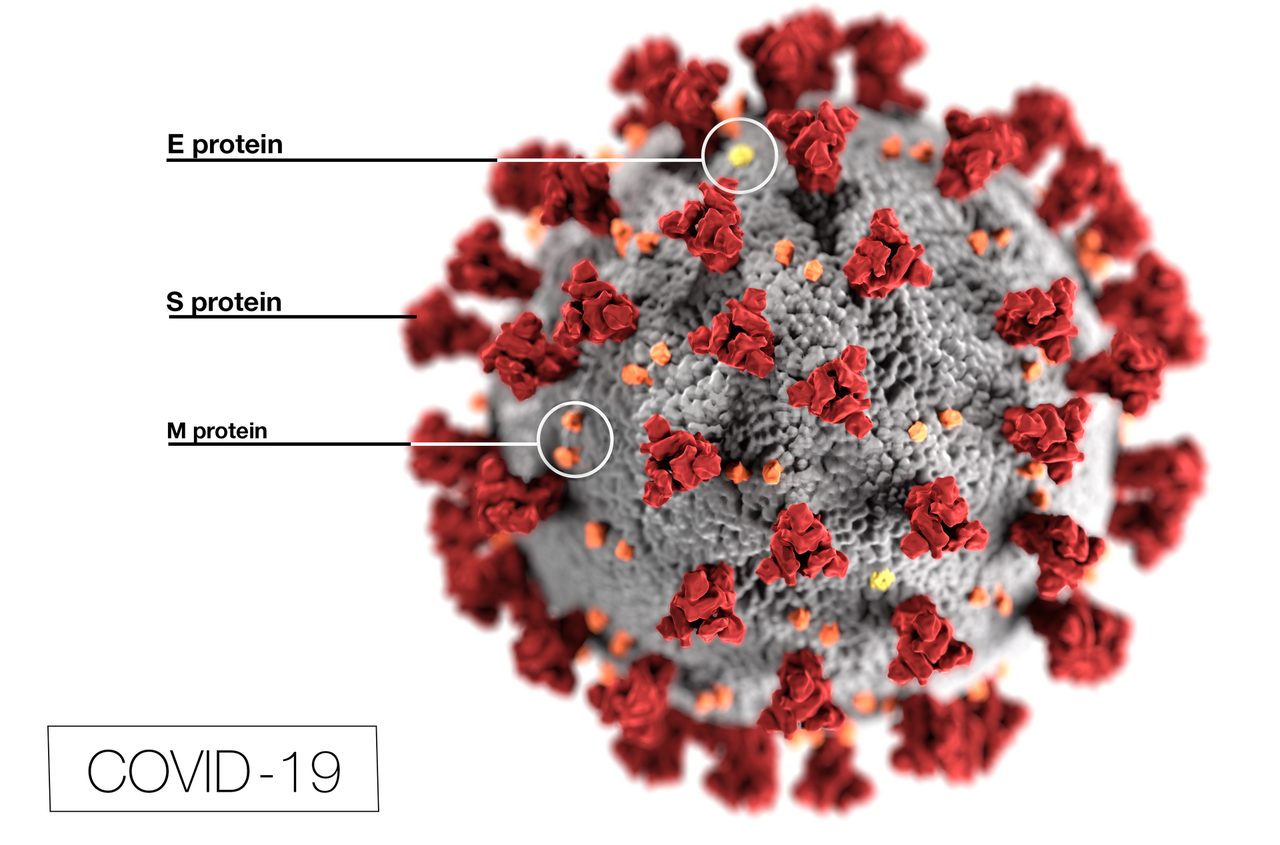
Photo: CDC/ Alissa Eckert, MS; Dan Higgins, MAM / Public domain · via Wikimedia Commons
The Watch History Hiding in Plain Sight in 'You Can See Everything'
A Paused Frame Gave Away Billy Evans's Homework
Somewhere in the nearly three-hour sprawl of "You Can See Everything," the camera lingers on a laptop screen, and Billy Evans's viewing habits come into focus: dense science videos, playing at roughly double speed. Reporters traced the footage, identified each video, and then found the scientists in them.
Three Videos Point to Virology Plus Super-Resolution Imaging
The identified clips form a coherent cluster. One is "Introduction to Super-Resolution Localization Microscopy" from Teledyne Photometrics, narrated by Daniel Croucher, a Ph.D. biologist and former applications specialist at the company. Another is "MadSTORM for Super Resolution and Highly Multiplexed T Cells," published in the Journal of Visualized Experiments (JoVE). The third is "Structure of Viruses (Lecture 4)," a Columbia University virology lecture by Vincent Racaniello. Virology plus advanced microscopy is exactly the foundation a blood-diagnostics venture would need.
The Scientists Recognized Themselves, and One Was Disappointed
Racaniello, a professor of microbiology and immunology at Columbia, confirmed the lecture is his 2011 class on virus structure. He said he had not seen the documentary and learned of his cameo from others writing in. His verdict stung: he was disappointed Evans had landed on the old version, since he issues revised lectures every year. The episode captures the odd afterlife of open courseware, where a decade-old lecture can resurface as a plot point in a fraud saga.
Researchers Say Double Speed Is Possible, but Barely Digestible
People who make such videos note that presenters step through complex material deliberately, so double speed is technically followable for viewers with solid grounding. But the margin is thin. Asked whether material like this can be absorbed at two or three times speed, the answer from the microscopy side was essentially no: it would be hard to process, and expect to rewind. Speed-watching looks less like mastery than like cramming.
A Laser Diagnostics Startup Still Stuck in Theranos's Shadow
Evans, the partner of Elizabeth Holmes and father of her two children, founded Haemanthus in Austin, Texas, in 2022. The company, named for a genus of blood lily, says it uses light to analyze blood, saliva, and urine for signs of disease. Investor materials show it first raised 3.5 million dollars from friends and family, then began courting wealthy investors in Austin and the San Francisco Bay Area in spring 2025 for another 15 million, describing a wearable device that would take three years and 70 million dollars to develop. Outside reporting has put total backing at as much as 20 million. The company insists it is not "Theranos 2.0" and says Holmes has zero involvement, now or in the future. What it lacks, publicly, is a product customers can buy or published data showing the technology works, and it has lost its chief technology officer and key inventor.
A Box-Office Hit Makes Every Detail Evidence
Co-directed by Nathan Fielder and Lance Oppenheim, the film follows Holmes through roughly 34 days before she reported to federal prison in May 2023 to serve a sentence of more than 11 years for defrauding investors. It premiered as a secret screening at the Telluride Film Festival on September 6, 2026, then opened in the United States on October 16 through A24. The numbers explain the scrutiny: a 7-million-dollar budget, a 174-minute runtime, an opening of 15.6 million dollars from 855 screens with more than 2,000 sold-out shows, the biggest documentary opening in North America in two decades, then 19.5 million in its second weekend across 2,655 theaters, for a total above 45.1 million. When a film becomes a cultural event, even a watch history becomes testimony.
Sources
- dnyuz.com: You Can See Everything That Billy Evans Watched on 2x Speed
- Newsy Today: Billy Evans Watches Scientific Videos at 2x Speed in New Documentary - Newsy Today
- IT BOLTWISE: Theranos-Doku: Welche Wissenschaftsvideos Billy Evans auf 2x Speed sah
- Los Angeles Times: Billy Evans' 'You Can See Everything' shower scene was his idea
- Fortune: Billy Evans’ ‘Theranos 2.0’ startup has patents, investors, and a missing CTO—but no product