Mark Warner Wins a Fourth Senate Term in Virginia
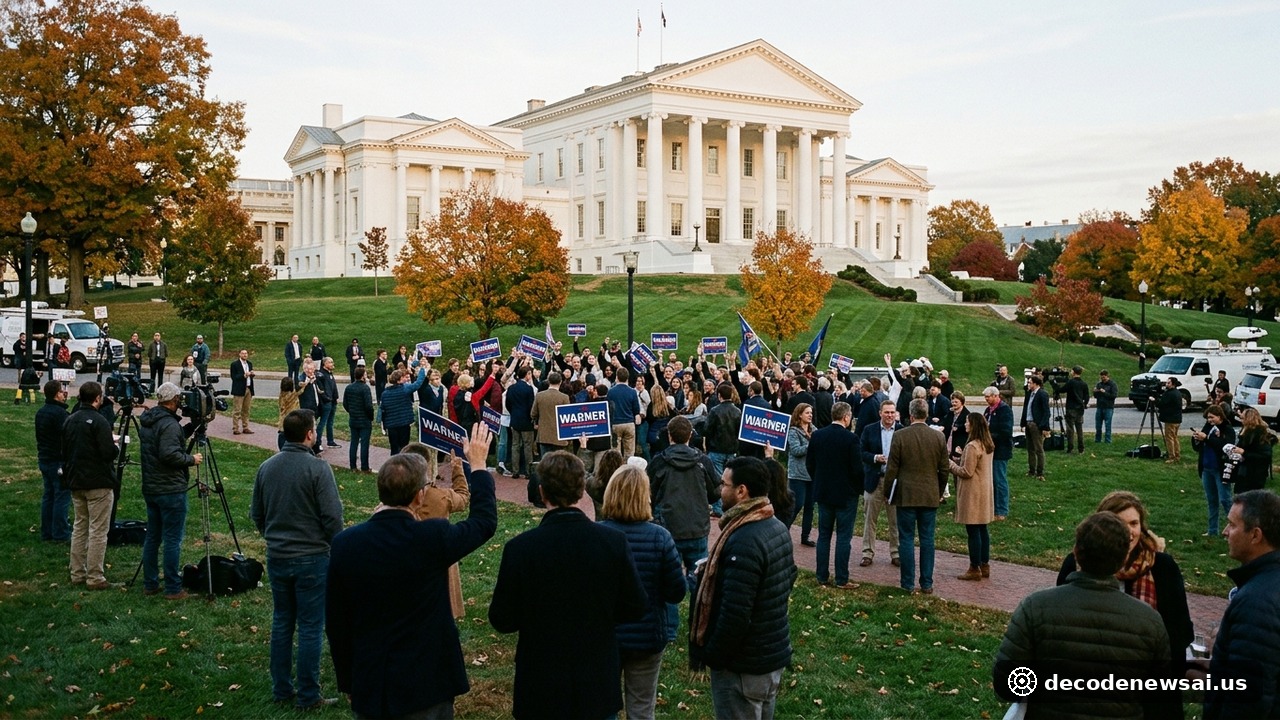
Photo: AI-generated
The Associated Press calls the race
Democratic Sen. Mark Warner defeated Republican challenger Bert Mizusawa in Virginia’s November 3, 2026, election, winning a fourth term in the U.S. Senate. The Associated Press called the race at 7 p.m. Eastern. Warner, first elected to the Senate in 2008, will continue representing Virginia in the upper chamber. Mizusawa is a retired Army major general who had not previously run for elected office. He emphasized his military service and national-security background during the campaign. Warner entered the contest with a much longer political record, including service as Virginia’s governor and as vice chairman of the Senate Intelligence Committee. Pre-election coverage generally described Warner as the favorite. The Washington Post noted his substantial fundraising advantage, while reporting that national Republican organizations had devoted relatively limited resources to Mizusawa. The result was not a surprise to most analysts, but it still matters in a state whose political and economic ties to the federal government are unusually strong.
Federal workers were part of the political backdrop
Virginia has one of the country’s largest populations of federal employees. Many federal workers and their communities were affected by the Trump administration’s efforts to reduce the federal workforce early in the president’s second term. The Associated Press identified that environment as part of the context surrounding Warner’s victory. Warner’s role in national-security and intelligence issues also gives him a prominent profile in a state with a substantial military and federal presence. His campaign benefited from incumbency, an established statewide organization and a record of winning previous elections. Mizusawa sought to make his military experience a central contrast, but he faced a more experienced opponent and a campaign in which national Republican groups did not provide the same level of support that might have made the race more competitive. The outcome should not be treated as a simple statewide referendum on federal layoffs or on the president’s broader agenda. Senate elections reflect multiple factors, including candidate reputation, campaign resources, party identification, local concerns and the national political climate. The race itself was not generally regarded as one of the closest Senate contests of the cycle.
Other Virginia results require separate confirmation
Virginia voters also decided contests for the U.S. House and considered constitutional amendments involving abortion rights, same-sex marriage and restoration of voting rights for people who have completed incarceration after felony convictions. Those questions could have consequences beyond the Senate result, particularly because control of the House may depend on a small number of competitive districts. The state’s election department distinguishes unofficial election-night returns from certified results. Local offices become official after certification by the relevant local electoral board, while statewide and cross-locality contests require certification by the State Board of Elections. That distinction matters because vote totals can change as eligible mail ballots, provisional ballots and other outstanding ballots are processed. The confirmed headline result is Warner’s reelection. The available reporting reviewed for this article did not establish final certified outcomes for every Virginia House contest or ballot amendment. Those results should be reported separately once the state publishes and certifies them. An election-night projection is an important development, but it is not a substitute for the official canvass.
Sources
- FOX 5 DC: Mark Warner wins fourth US Senate term, defeating Republican Bert Mizusawa in Virginia: AP
- NBC4 Washington: See live results from the Virginia midterm elections
- WHSV / WWBT: Sen. Mark Warner wins again
- The Washington Post: Virginia election results 2026: Live updates
- Virginia Department of Elections: Results — November 3, 2026 General and Special Elections