U.S. Strikes Near the Strait of Hormuz Add Uncertainty to Iran Talks
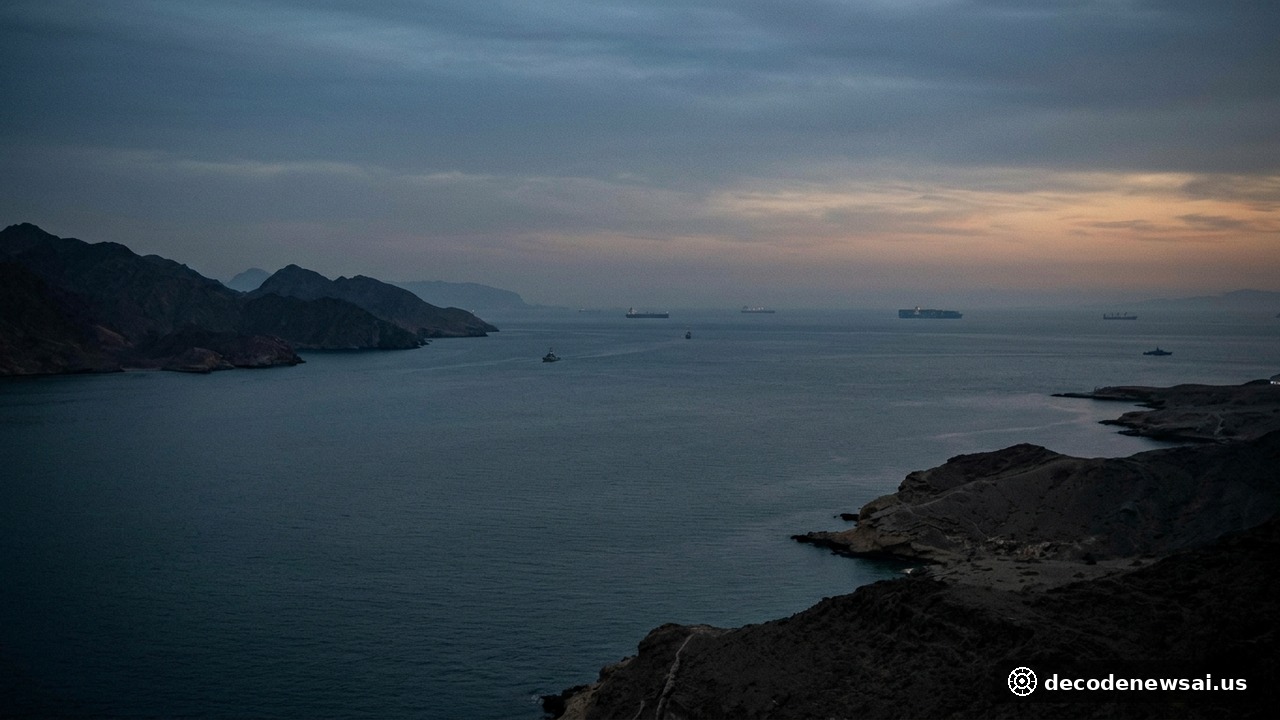
Photo: AI-generated
Washington describes a limited defensive operation
U.S. forces carried out limited strikes against Iranian targets near the Strait of Hormuz, U.S. officials said on November 3. The Associated Press reported that the operation targeted Iranian forces that were using surface-to-air missiles against U.S. assets in the area. Iranian state media reported explosions on Qeshm Island and nearby locations. Reuters, CNN and Stars and Stripes also reported strikes around the island, describing the operation as limited and defensive according to U.S. officials. The public account remains incomplete. Much of the information about the targets and the rationale came from U.S. officials who spoke anonymously. Iranian state media provided a separate account of explosions and military activity, but the available reporting does not independently establish the full extent of damage or losses. The U.S. military had not released a detailed public operational statement when the initial reports appeared. It would therefore be premature to describe every reported target, weapon or casualty as confirmed. Qeshm is a strategically important island near the entrance to the Strait of Hormuz. Its location gives it significance for surveillance, military positioning and control of nearby shipping routes. The reported strikes are part of a broader pattern of limited U.S. operations during a conflict in which both Washington and Tehran have continued to signal that they retain military options.
The shipping corridor remains the larger concern
The Strait of Hormuz connects the Persian Gulf with the Gulf of Oman and is one of the world’s most important energy chokepoints. The Associated Press has noted that roughly one-fifth of global oil supply passed through the waterway in peacetime. Even limited military activity can affect shipowners’ risk calculations, insurance premiums, crew safety and decisions about whether to transit the area. Al Jazeera’s live coverage reported Iranian Revolutionary Guard claims involving U.S. drones and tankers near the strait. Those claims should be attributed to the Iranian side rather than presented as independently verified events. The same distinction applies to reports of mines, projectiles and attacks on commercial vessels. In a conflict environment, early accounts can be incomplete or contradictory. The practical question is not only whether a particular vessel can pass through the strait, but whether shipping companies can do so with predictable security, insurance and operating costs. Any sustained disruption could affect energy markets and the economies of countries that depend on Gulf exports.
Military pressure and diplomacy are proceeding together
The strikes came as indirect U.S.-Iran negotiations continued. The Associated Press and Al Jazeera reported that Vice President JD Vance described progress in talks. Tehran, however, has insisted that Washington lift its naval blockade and meet Iranian conditions before a deal can be reached. Iran has discussed a plan to reopen the strait within two days, but that proposal is conditional and is not an agreement accepted by both governments. The Council on Foreign Relations’ conflict tracker describes the confrontation as unresolved, with the strait, sanctions and Iran’s nuclear program among the central disputes. The Washington Post had also reported that the Qeshm operation followed a series of limited strikes that were not publicly announced. That background makes it difficult to interpret the latest action as either a one-off incident or proof that a larger campaign has begun. The timing, on the eve of U.S. midterm elections, adds a domestic political dimension. President Donald Trump had previously said the United States would not strike Iran before the vote, while the administration has also tried to present the conflict as manageable and diplomacy as possible. The available evidence does not establish that the election caused the operation. For now, the defensible conclusion is limited: U.S. officials confirmed a strike and characterized it as defensive; Iranian accounts described additional military activity; and negotiations remain conditional. A limited operation should not automatically be described as a return to full-scale war, just as diplomatic progress should not be confused with a confirmed reopening of the strait.
Sources
- Reuters: US carries out 'defensive' strikes on Iran's Qeshm Island, officials say
- CNN: US military conducts strikes on Iran’s Qeshm Island in defensive operation, officials say
- Stars and Stripes: US quietly strikes Iranian island in Strait of Hormuz as Trump weighs next steps
- Council on Foreign Relations: Conflict With Iran — Global Conflict Tracker
- The Washington Post: U.S. forces launch new 'defensive' strikes in Iran on eve of election