AUBURN, Ala. - Physicists at Auburn University announced on Nov. 14 that they used ultrashort laser pulses to align microscopic electrical regions inside a quantum crystal, solving a decades-old mystery about how the material behaves. Led by Associate Professor Wencan Jin and graduate student Mohamed Kandil, the findings were published as an Editors' Suggestion in Physical Review Letters.
What happened?
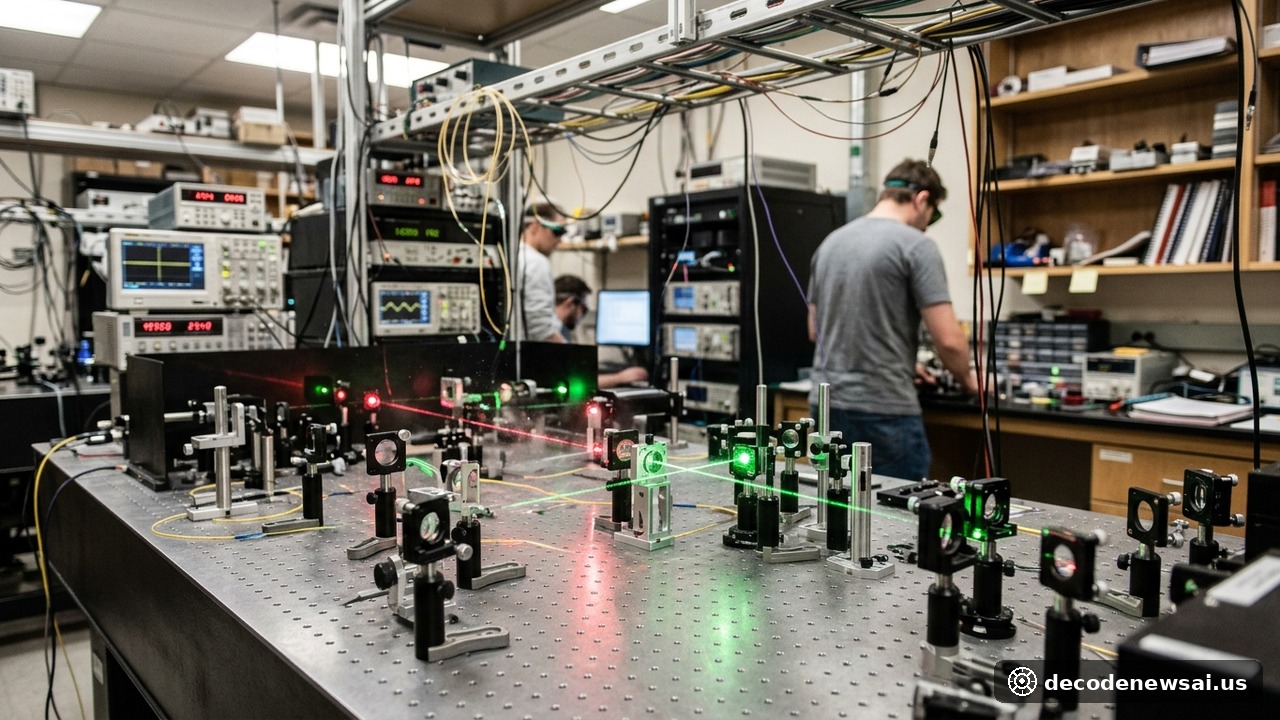
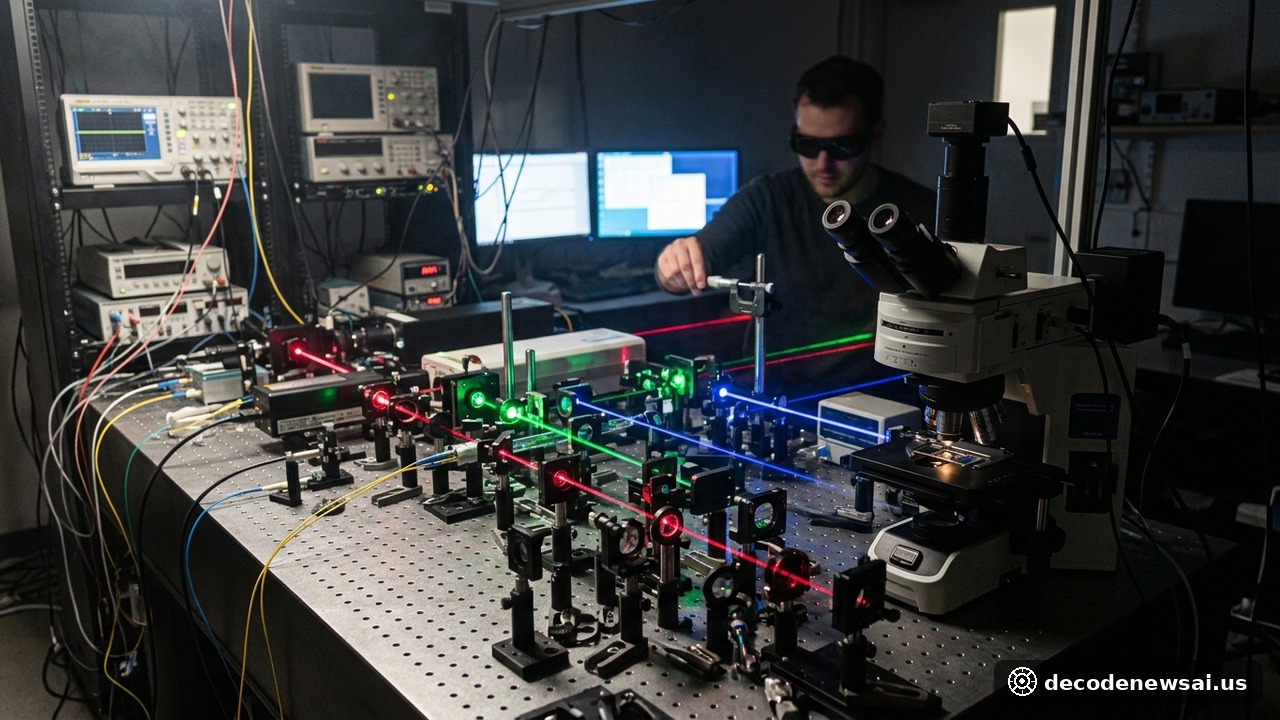
Working with modified strontium titanate crystals grown by Japan's National Institute of Advanced Industrial Science and Technology, the Auburn team developed a specialized laser-measurement system over nearly a year. By tracking optical response across repeated thermal cycles, researchers demonstrated that polar nanoregions preexist before cooling. Ultrashort flashes of light successfully forced these disorganized regions into alignment in one picosecond, or one trillionth of a second.
Why does it matter?
The experiments establish the first direct optical method to manipulate and observe microscopic polar order inside a quantum ferroelectric metal at room temperature. "Scientists have discovered how to use flashes of laser light to organize tiny electrical regions inside a crystal, solving a decades-old mystery about how the material behaves," ScienceDaily reported on Nov. 14. Because the light-induced order operates on picosecond timescales, the technique provides a framework for exploring ultrafast optical information processing and data storage.
What comes next?
The Auburn research group plans to use its laser platform to investigate how polar fluctuations interact with superconductivity and broader quantum phase transitions. While commercial applications remain long-term, the findings establish dynamic optical poling as a tool for quantum materials engineering.