NEW YORK - Advanced equipment manufacturer Nextpower has emerged as an industrial backbone of domestic solar growth, supporting state-level buildout targets approaching 15 gigawatts.
What happened?
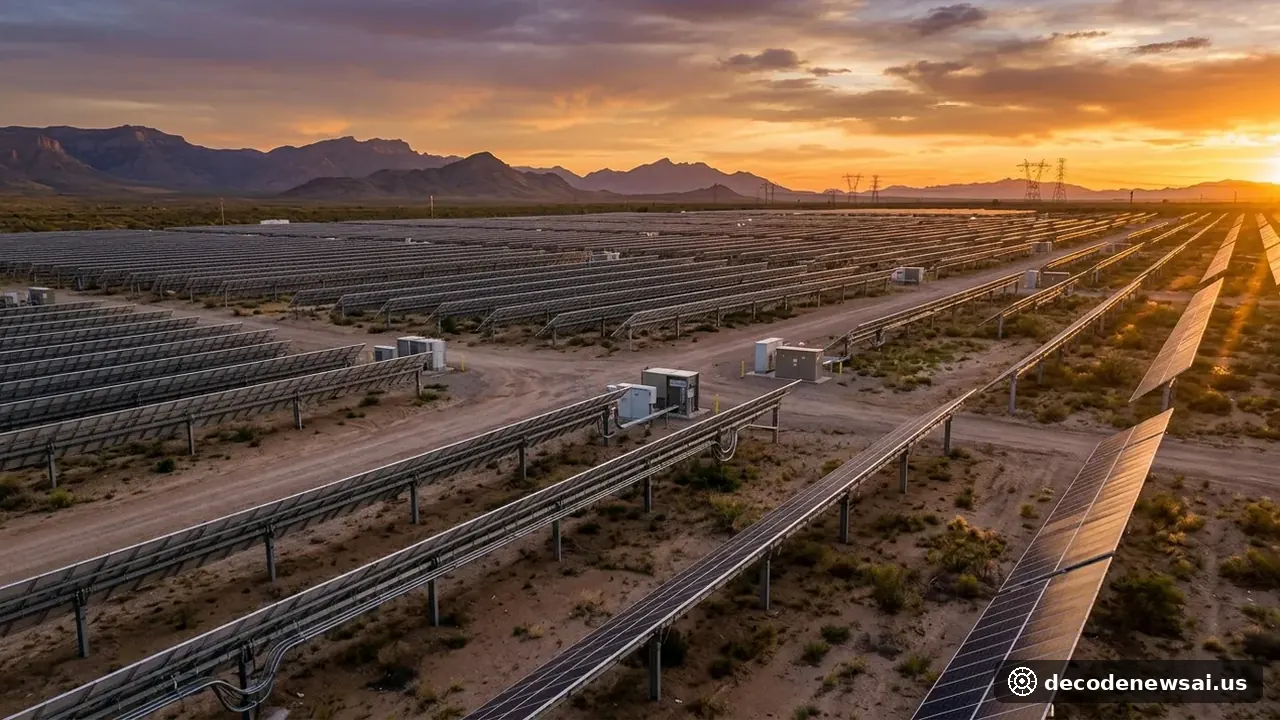
An extensive industry analysis published by Fortune on Nov. 14 revealed how motorized single-axis trackers optimize utility-scale solar generation across the American Southwest. The mechanical tracking assemblies utilize specialized algorithmic sensors to tilt photovoltaic solar panels continuously toward incident sunlight across continuous daylight operational hours throughout the entire calendar year. Field performance monitoring data confirmed the mechanized systems increase daily electrical yield by more than 20% compared to traditional fixed-tilt solar racking arrays, accelerating regional deployment timelines.
Why does it matter?
Surging power requirements from artificial intelligence infrastructure clusters have intensified pressure on regional utility operators to maximize land-use efficiency. "Nextpower operates as the spine of the U.S. solar sector—and increasingly worldwide—by literally lifting the solar panels toward the sun," renewable energy correspondents highlighted in an industrial review. Domestic structural tracker manufacturing insulates American utility builders from international tariff volatility while establishing skilled engineering employment hubs across regional manufacturing facilities.
What comes next?
Nextpower plans to deliver high-wind reinforced tracking assemblies to major solar-plus-storage projects under construction across Texas and Arizona through early 2027. State public utility commissions scheduled regulatory working sessions in early 2027 to establish standardized domestic content certification rules for solar support hardware. Domestic clean energy developers continue expanding capital procurement commitments to integrate motorized solar tracking arrays across upcoming commercial utility-scale electrical generation projects throughout the nation, reinforcing domestic renewable energy supply chains and helping commercial power grids achieve federal decarbonization targets.