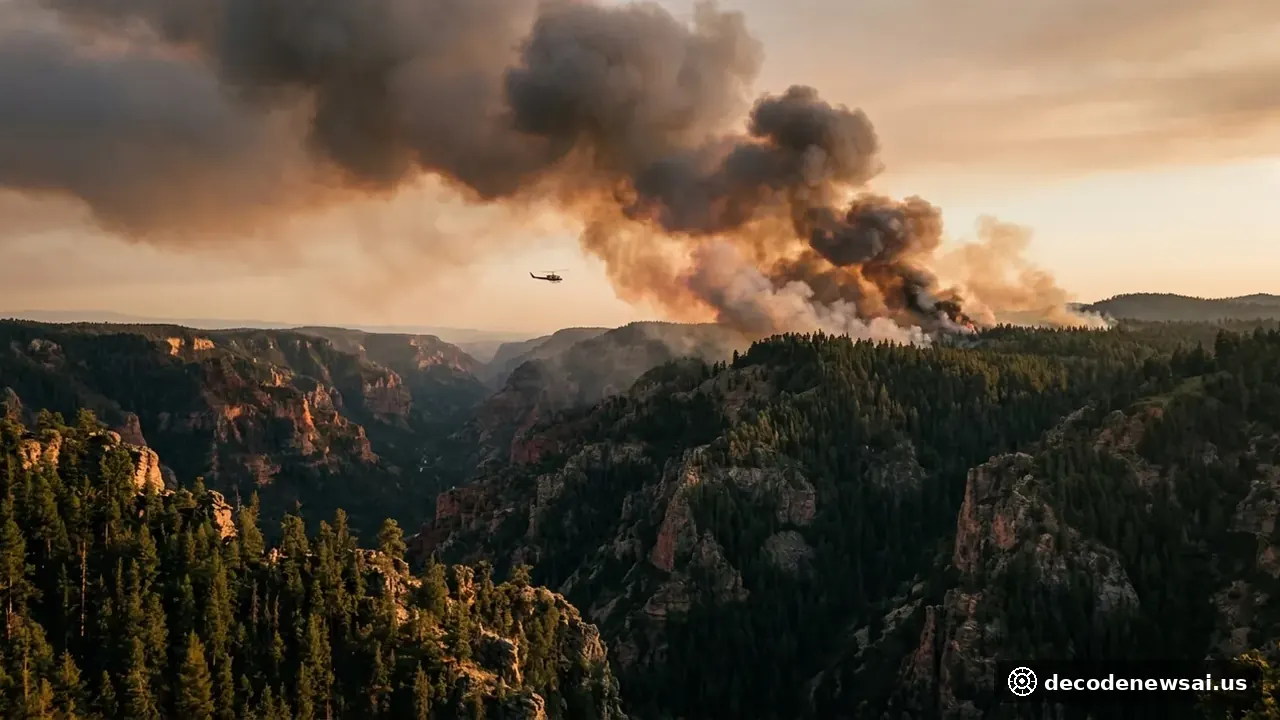
GRAND JUNCTION, Colo. - Unexpected fire behavior, chronic understaffing, and a revived federal policy to quickly extinguish all blazes contributed to the June deaths of four helitack firefighters in western Colorado, according to a U.S. Department of the Interior report cited on Nov. 16.
Aggressive Suppression Policy Drove Deployment
The Rifle Helitack crew was dropped into remote terrain on June 27 to fight the Knowles fire, which merged into the Snyder Fire along the Colorado-Utah border. Emily Barker, Nick Hutcherson, and Sydney Watson died at the scene, Nathan Matthews died of burns on July 24, and a fifth crew member survived.
Investigators wrote that protecting sage-grouse habitat and halting cheatgrass created an organizational posture to aggressively suppress new wilderness starts despite extreme fire-weather forecasts.
Trainee Dispatchers and Radio Failures
Communication collapsed by early afternoon as trainee dispatchers tracked up to 16 active aircraft and three emerging incidents simultaneously, causing severe task saturation that prevented a mandatory weather broadcast. Aging radios and software crashes forced crews onto cellphones, while no role continuously mapped personnel against advancing flames.
An advancing blaze eight miles west overran the crew in under three hours, leaving them no time for helicopter extraction and forcing them into fire shelters.
Safety Advocates Demand Policy Accountability
"It was outrageous to have a full-suppression policy on a lightning-caused fire in the wilderness to prevent the spread of cheatgrass," Timothy Ingalsbee, executive director of Firefighters United for Safety, Ethics and Ecology, told the Associated Press, calling the aggressive approach unsustainable.