Gold Eases From One-Week High as the Dollar Holds Near 18-Month Peak
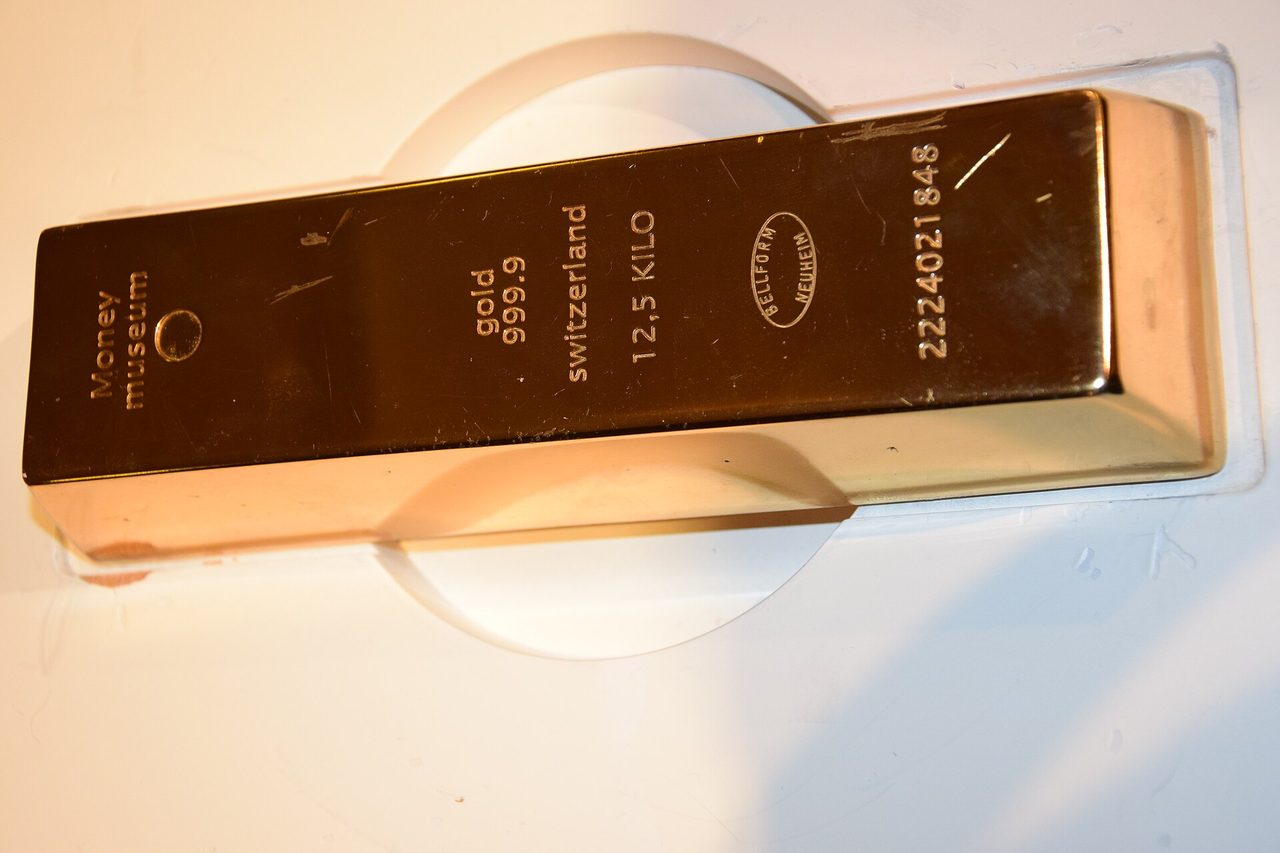
Photo: Ank Kumar / CC BY-SA 4.0 · via Wikimedia Commons
Gold Eases From One-Week High as the Dollar Holds Near 18-Month Peak
Spot gold falls 0.5% after touching its best level since October 2
Gold turned lower on Monday after an early push to a one-week high, with a firm US dollar and caution ahead of US inflation data doing the damage. Spot gold slipped 0.5% to $4,171.18 an ounce by 1132 GMT, having reached its highest level since October 2 earlier in the session. A December contract on US gold futures dropped 0.5% to $4,195.50. The reversal capped a stronger start: at 0253 GMT spot bullion was still up 0.3% at $4,206.01, with futures at $4,230.40, and by 0714 GMT it had eased to $4,185.13, down 0.2%.
The dollar sits just below its 18-month high
The first pressure point is the currency. The dollar index was up 0.2% at 102.43, just below last week's 18-month high, while the greenback traded at 158.245 yen. A stronger dollar makes dollar-priced bullion more expensive for buyers holding other currencies, and positioning data show how one-sided the trade has become: speculative long dollar positions rose to roughly $36 billion in the week to October 7, from about $8.4 billion just three weeks earlier.
Wednesday's CPI is the week's swing factor
The second variable arrives on Wednesday in the form of the US consumer price index, followed by producer prices and retail sales on Thursday. "Gold is under pressure from a dollar that remains near recent highs, with investors adopting a cautious stance ahead of this week's release of US inflation figures," said ActivTrades director and chief executive Ricardo Evangelista. He added that higher-than-expected readings could reinforce expectations of further Fed tightening, pushing Treasury yields and the dollar higher and pressuring gold further, while softer figures could do the opposite.
Markets price an 81% chance the Fed holds in October
CME FedWatch tool shows traders see an 81% probability that the central bank leaves rates unchanged in October, up from 51% a month earlier. A separate tally put the odds of an October hike at 17%, with an 86% probability of an increase by December. The Federal Reserve raised rates by 25 basis points at its most recent meeting, and officials have sounded hawkish, with the next policy gathering scheduled for October 27-28.
Middle East escalation cuts both ways for bullion
Geography is not simply bearish for the metal. Yemen's Houthis stepped up strikes on Saudi Arabia and two tankers were attacked over the weekend, swinging oil prices, while a reported Russia-Ukraine energy ceasefire pushed crude the other way. Safe-haven flows and inflation fears are both in play, keeping volatility elevated.
Yields near 5.3% remain gold's biggest headwind
The rate backdrop is still the main drag. The US 10-year Treasury yield is trading around 5.3%, and the 10-year and 30-year yields recently touched 24-year highs. Saxo Bank head of commodity strategy Ole Hansen said gold is trading near key support just above $4,100, with macroeconomic headwinds from rising real yields and dollar strength continuing to weigh on investor appetite.
Central bank buying keeps the $4,000 floor intact
The bid side is just as visible. Gold has fallen from a record $5,595 to roughly $4,130 this year, a 26% drop from the peak, yet central bank purchases and safe-haven demand have kept prices above $4,000. Speaking at the London Bullion Market Association's annual conference, Bank of Italy deputy governor Sergio Nicoletti Altimari called gold "a safe haven asset, probably the safe haven asset." A survey of 76 central banks found a record 45% plan to increase reserves over the next 12 months and 89% expect global official holdings to rise.
Retail buyers feel the drop immediately
Physical markets adjusted at once. In Pakistan, rates issued by the All Pakistan Sarafa Gems and Jewellers Association showed 24-karat gold falling 2,100 rupees per tola to 439,936 rupees, passing the international decline straight to jewelers and buyers.
Forecasters are roughly $2,000 apart
Professional opinion is split. Natixis analyst Bernard Dahdah has trimmed his year-end target to $4,100, while JPMorgan sees $6,300 by 2027 and Deutsche Bank stands at $6,000. The near-term answer hinges on Wednesday's inflation print: a cooler number could strain the dollar's grip above 102 and let gold retake $4,200, while a hot print would put the $4,100 support line back to the test.
Sources
- Kitco: Gold slips from one-week high as firm US dollar weighs
- Zawya: Gold slips from one-week high as firm US dollar weighs
- The Peninsula: Gold slips to $4,185.13 per ounce ahead of US inflation data
- CNBC: Gold gains on weaker oil, dollar; U.S. inflation data in focus
- The Times of India: Gold Rate Today Live Updates - Gold slips from one-week high ahead of US inflation data