Hidden Signals in Sleep Point to Disease Risk Years Ahead, Two Studies Find
Two Studies, One Idea: Sleep Holds Health Signals
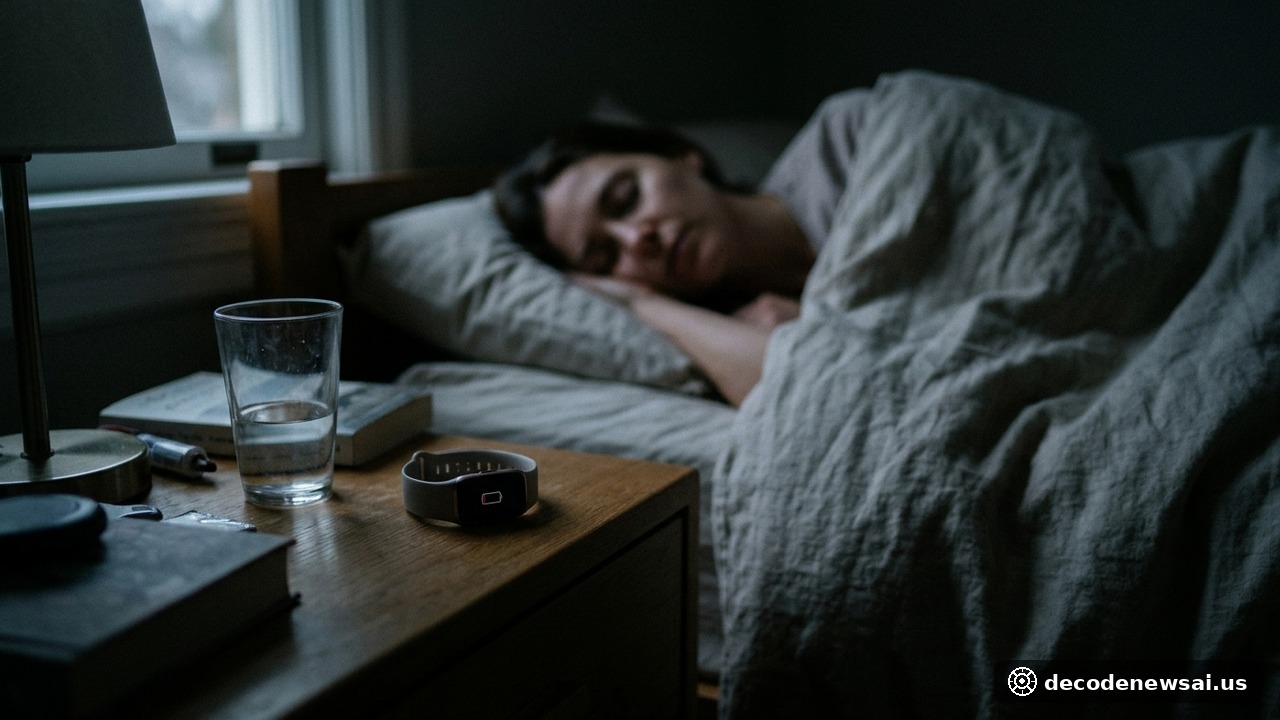
A 95,000-Person Cohort and a Wrist Sensor
REM Sleep and 83 Diseases
Deep Sleep, Short Sleep, and the Sweet Spot
Greater deep sleep tracked with lower risk of seven conditions, including type 2 diabetes and major depressive disorder. The reverse side was starker: sleeping fewer than five hours a night was linked to elevated risk across 37 conditions, including dementia, heart failure and type 2 diabetes, and irregular sleep plus longer nighttime wakefulness each tracked with additional risk. Risk was generally lowest between six and eight hours; above eight hours, the protective associations weakened. The authors said the findings "provide additional evidence supporting the role of a 6-8 hours' sleep duration as a health safeguard for middle-aged and older adults."
The Staging Problem Experts Keep Flagging
The weak point is measurement. Sleep stages were inferred from wrist movement, not recorded with laboratory polysomnography. The authors report that, against lab recordings, their algorithm overestimated total sleep by roughly 48 minutes and underestimated REM by about 17 minutes, with only moderate stage-by-stage agreement. Writing in the Science Media Centre's expert reaction, Nina Rzechorzek of the University of Cambridge and Greg Elder of Northumbria University both noted that movement-based watches cannot yet accurately determine which sleep stage a person is actually in overnight. A 2025 meta-analysis of 24 studies covering nearly 800 participants, cited by The Conversation, similarly found wearables typically overestimate total sleep time by about 17 minutes.
Sleep-Study ECGs and an AI Heart-Risk Score
The second study approached prediction from a different signal: the electrocardiogram already recorded during clinical sleep tests. A deep-learning model paired those ECGs with sleep-stage information to estimate risk of atrial fibrillation, heart failure and death. Adding the model's score to established risk factors improved prediction performance by roughly 4 to 6 percentage points for atrial fibrillation, 8 to 9 points for heart failure, and 4 to 7 points for mortality. "Adding these scores into sleep studies has great potential for improving early detection of cardiovascular disease, determining who is most at risk, and being more proactive in patient care," said Gari Clifford of Emory University School of Medicine and the Georgia Institute of Technology.
What the Findings Cannot Say
Both teams were explicit: these are associations, not proof that more REM sleep protects you. UK Biobank participants tend to be healthier than the general population, sleep was tracked for only one week, and some stage-disease links could reflect classification noise rather than biology.
What Comes Next
For now, the actionable takeaway is the familiar one with better data behind it: hold sleep between six and eight hours. For cardiovascular patients who already undergo sleep testing, an AI-read ECG may soon give clinicians a reason to act years earlier than symptoms would.