A New Kind of Sunscreen Reaches US Shelves After a 25-Year Wait
Bemotrizinol lands on US shelves
For the first time in more than a quarter-century, American shoppers have a genuinely new option in the sunscreen aisle. The ingredient is bemotrizinol, usually shortened to BEMT, a filter that Europe, Australia and parts of Asia have relied on for roughly two decades. Formulas from Neutrogena and other manufacturers are now arriving in stores and in online listings.
FDA cleared it in June, sales began in August
The US Food and Drug Administration added bemotrizinol to the over-the-counter sunscreen monograph on June 9, 2026, capping a review that opened with a proposed order in December 2025 and a public comment period. The final order permits concentrations up to 6 percent and covers adults and children as young as six months, carrying a "generally recognized as safe and effective" — GRASE — designation that no other chemical filter in the US currently holds. Products could legally be sold starting August 9.
One molecule, both kinds of UV
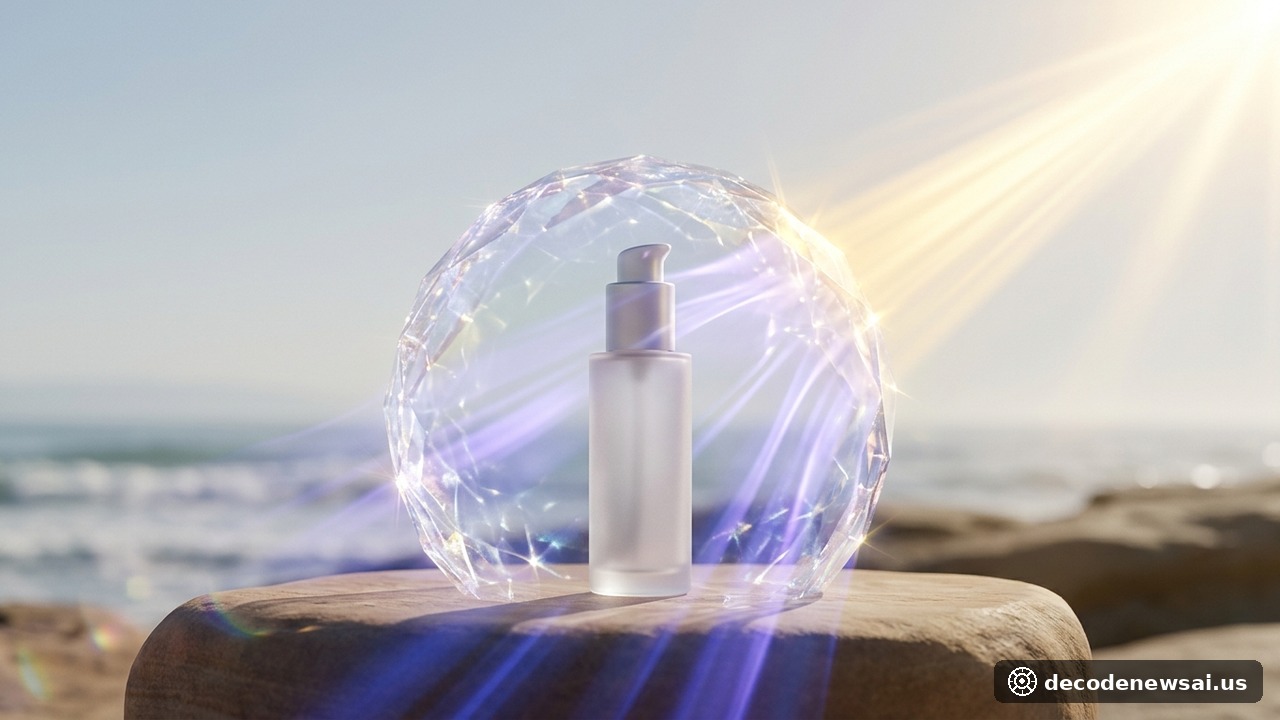
Sun damage comes from two bands of light. UVB causes most sunburn; UVA penetrates deeper and is tied to skin cancer and premature aging. Sunscreens that block both can be labeled "broad spectrum protection" — those that can't must carry an FDA warning label. Bemotrizinol is the first chemical filter approved in the US that covers both on its own; formulators previously had to blend several ingredients to get there. "This ingredient provides a solution for what is currently a big gap with respect to providing strong UVA protection," said David Andrews, chief science officer of the Environmental Working Group.
Stability, and how little soaks in
BEMT also outlasts its competition in daylight: it retains more than 90 percent of its protective capacity after extended sun exposure, unlike avobenzone, the only other chemical UVA filter on the US market, which has long been dogged by instability. The safety file helped. The FDA reviewed studies of more than 500 patients run by Dutch manufacturer DSM Nutritional Products and found absorption into the body was nearly undetectable, with no irritation or allergic reactions over three weeks of daily use. "It's a molecule that's too big to really penetrate through the skin and get absorbed into the bloodstream," said Jennifer Stein, a dermatologist at NYU Langone Health.
Why Washington took so long
Face creams first, at $16.99
Supply stays tight for 18 months
DSM holds an 18-month exclusivity period running from August 9, so rival formulators can source bemotrizinol only through it or its licensees for now. That bottleneck helps explain why the early launches are small face products rather than family-size body bottles, and why a broader wave of reformulations is expected to stretch into 2027.
The old advice still applies
Dermatologists say nothing about the new filter changes the basics: reapply every few hours, and more often when swimming or sweating heavily. Sunscreen shouldn't be the only defense either — shade, hats and sun-protective clothing matter. On the environmental side, Washington does not classify sunscreens for ecological impact and "reef safe" claims carry no standard definition; the EU's environmental agency has found "limited evidence of environmental toxicity" for BEMT, though it says longer-term research is needed.