The Line Starts Before Sunrise: America's Food Banks Run Short as Demand Hits Recession-Era Highs
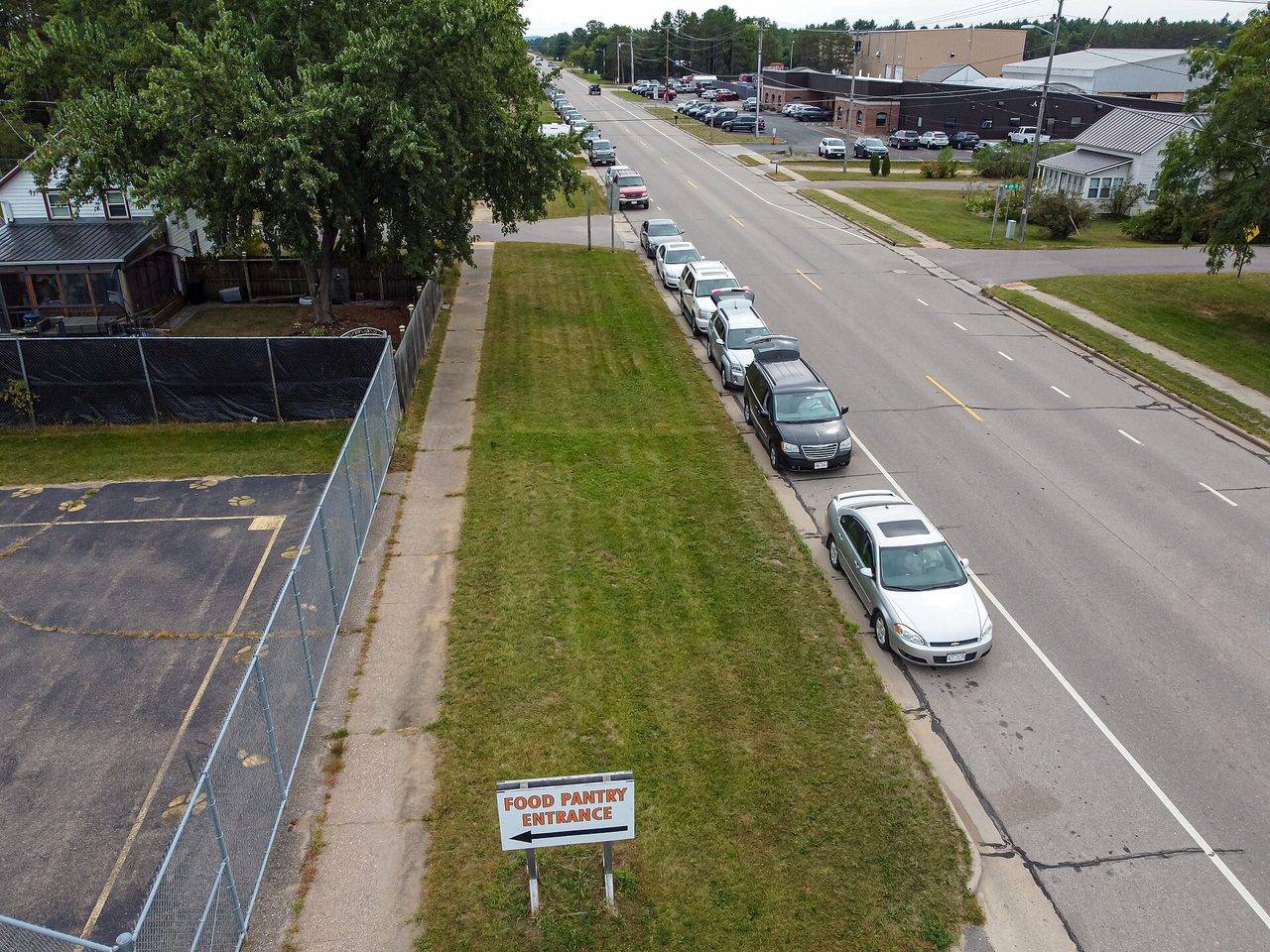
Photo: Wikideas1 / CC0 · via Wikimedia Commons
The Line Starts Before Sunrise: America's Food Banks Run Short as Demand Hits Recession-Era Highs
A Half-Mile of Cars Before Dawn
DUNLOW, W.Va. — The cars began arriving before the sun cleared the ridge. By the time a semi-trailer pulled in on Sept. 16, the line along the two-lane road ran roughly half a mile. Some drivers had come more than 30 miles over flood-prone mountain roads. Temperatures climbed toward 30 degrees Celsius, and engines were shut off to save gas.
Bill Likens, 51, runs the pantry here as director of community outreach for Cabwaylingo Presbyterian Chapel. His job that morning was arithmetic: how many cartons of eggs and sacks of potatoes each vehicle could receive.
“There’s a decent chance we could run out,” he said. “I don’t want them to sit in that line and not get anything. But I don’t have a lot of extra food these days.”
The Highest Level Since the Great Recession
“We are sitting at food insecurity levels that are the highest they have been since the Great Recession,” said Linda Nageotte, president and chief operating officer of Feeding America, a network of more than 250 food banks.
Her explanation is an equation most households recognize: “Prices for everyday basic necessities are increasing faster than incomes, and the result for too many families is that there is just too much month at the end of their money.”
Forty-Eight Food Banks, One Answer
An NBC News survey this month of 48 of the largest food banks, representing 35 states and Washington, D.C., found that nearly three-quarters reported more people coming through their doors over the past year. More than 80 percent said the food and funding they receive through the U.S. Department of Agriculture had fallen, even as fuel costs for hauling supplies rose.
The people in line are not who the public picture assumes. They include workers stopping by on lunch breaks and older adults stretched thin by medical bills.
The Federal Share Shrinks by a Third
At Facing Hunger Foodbank, which supplies Likens’s pantry and others across Appalachia, chief executive Cyndi Kirkhart said the number of people seeking help is up 25 percent over the past year while the amount of food the federal government supplies has dropped by a third.
The gap gets closed with corporate donations, food the banks buy themselves, and improvised drives organized by friends and family.
When the Bills Rise Faster Than the Paycheck
Two forces are pushing people toward pantries, the Times reporting found: prices driven up by tariffs and war, and cuts to federal food benefits — the latter partly from the tax-and-spending bill President Trump signed. In California, the state association of food banks says pantries serve about 6 million people a month, up from 4.5 million at the pandemic peak.
Rent, or Dinner
The trade-offs show up in every survey. Ohio’s association of foodbanks interviewed 2,644 pantry visitors between April 18 and May 22: 57 percent had chosen between paying utilities and buying food, a figure that rose to 65 percent in households with children.
A Connecticut Foodshare and University of Connecticut study found 76 percent of pantry guests had spent the past year choosing between food and another essential expense, with housing and utilities topping the list.
The Line No Longer Stops at the Poorest
Upstate New York’s emergency food network reports visits up about 10 percent year over year. In New York City, one in three residents has visited a pantry in the past three years, many of them employed full time. In the Bronx, 33 percent of residents rely on SNAP — the highest share in the city.
In Silicon Valley, a Second Harvest survey of 1,159 clients in early September found 60 percent more worried about paying bills than a year earlier, nearly half without $100 in savings, and 74 percent living with diabetes, high blood pressure or heart disease. “Nutritious food should not be something people have to sacrifice to pay rent or fill a prescription,” said chief executive Leslie Bacho.
Shelves Empty Before Thanksgiving
Donations are not keeping pace. At Lorraine’s Soup Kitchen in western Massachusetts, storage that once held pallets of staples is down to a single box of macaroni and cheese and a few staggered shelves of cans; staff have asked friends and family to run food drives on their behalf.
The Food Bank of Western Massachusetts serves about 116,000 people monthly through nearly 200 member agencies. In Dayton, Ohio, the director of With God’s Grace Food Pantry said the site could be forced to close if donations do not improve by January.
States Inherit Three-Quarters of the Bill
On Oct. 1, H.R. 1 cut the federal share of SNAP administrative costs from 50 percent to 25 percent, leaving states with 75 percent.
Nebraska’s SNAP caseload is down 25 percent from October 2025 — about 40,000 people, according to Eric Savaiano of Nebraska Appleseed, “a little more than the entire city of Kearney.” Sen. Kirsten Gillibrand says new work requirements and eligibility rules could push 223,000 New Yorkers off food assistance; 26,500 city residents have already lost benefits, 26 percent of them in the Bronx.
A Referendum Conducted With Grocery Carts
With midterm elections approaching, the queue outside a pantry has become a form of economic accountability. The farm bill expired in October and the Senate version remains stalled; the next SNAP cost shift, tied to state error rates, is scheduled for October 2027 unless Congress delays it.
Nationally, Feeding America’s Map the Meal Gap estimates 47.9 million people were food insecure in 2024. Food banks can bridge a month; they cannot close the gap that keeps reopening it.
Sources
- NBC News
- Unbiased Headlines
- Cleveland Scene
- UConn Today
- Spectrum News