The Thirstiest Seven: When Horsepower Meets Single-Digit MPG
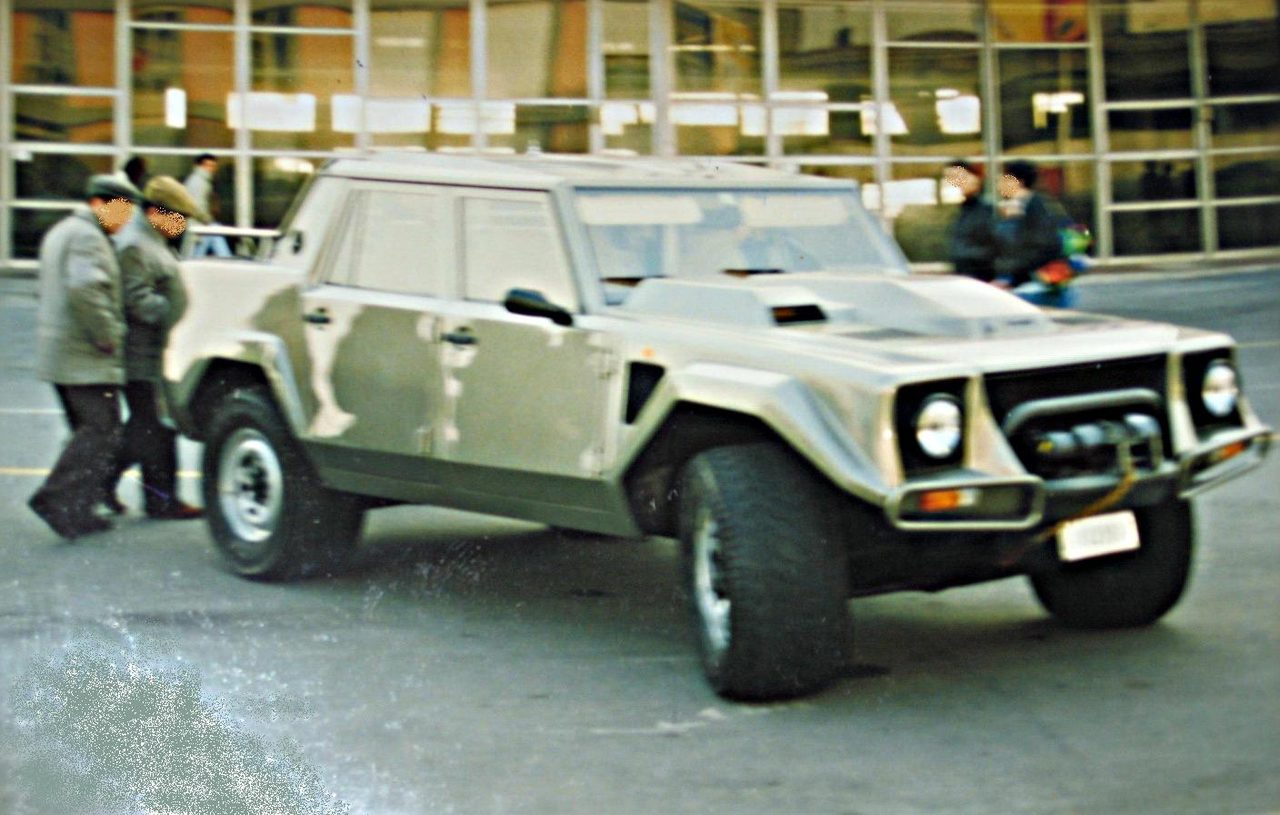
Photo: No machine-readable author provided. Luc106 assumed (based on copyright claims). / Public domain · via Wikimedia Commons
The Thirstiest Seven: When Horsepower Meets Single-Digit MPG Jalopnik has ranked seven production cars and trucks with some of the worst fuel economy ratings ever recorded, from a Lamborghini SUV sipping fuel at 5 mpg to a 777-horsepower Ram pickup. The list spans Italian supercars, a Viper-powered truck and a 1970s American land yacht, showing what extreme power and weight cost at the pump.
A V12 SUV That Drinks 5 to 7 MPG
The thirstiest entry is the 1986 Lamborghini LM002. Weighing 6,780 pounds and powered by the same basic 5.2-liter V12 as the Countach 5000QV, it returns somewhere between 5 and 7 mpg according to various reports. The Countach-sourced engine makes 444 horsepower and 368 lb-ft of torque in the LM002. One automotive history outlet puts its consumption at around 8 mpg and notes its 76-gallon fuel tank; only 301 were built, earning it the "Rambo Lambo" nickname.
Countach Holds the EPA Basement at 7 MPG Combined
The Lamborghini Countach carries one of the lowest combined ratings in the EPA's database: 7 mpg combined, with 6 mpg in the city and 10 mpg on the highway. The same listing puts consumption at 14.3 gallons per 100 miles and estimates the annual fuel bill at $11,750 on premium gasoline. Jalopnik groups it with the Bugatti Veyron as significant yet woefully inefficient supercars.
A Veyron Empties Its Tank in 12 Minutes
The Bugatti Veyron's 1,001-horsepower quad-turbocharged 8.0-liter W16 pushes it to 253 mph, and the EPA says it manages 14 mpg on the highway at best and 8 mpg around town, for a combined 10 mpg. Its 26-gallon fuel tank can be drained in just 12 minutes of hard running, about $136 of gasoline in less than a quarter of an hour. Reference data adds that at top speed the car returns just 3 mpg, burning 1.4 gallons per minute.
The Enzo and Its $10,300 Annual Fuel Bill
The Ferrari Enzo is rated at 8 mpg combined, with 7 mpg in the city and 12 mpg on the highway, and its fueleconomy.gov entry estimates $10,300 a year in premium fuel. Technical figures translate that to 34 litres per 100 km in the city, 20 on the highway and 29 combined. Even with a lightweight berlinetta body, a high-revving naturally aspirated V12 extracts a steep price at the pump.
A Viper Engine in a Pickup Truck
The Dodge Ram SRT-10 is one of the attainable entries, a truck Jalopnik notes readers might actually see one day. Its 8.3-liter V10, borrowed from the Viper sports car, delivers 500 horsepower and 525 lb-ft of torque in a 5,194-pound truck. A 2004 Forbes road test listed the price at $45,795 with EPA ratings of 10 mpg city and 15 mpg highway; the reviewer averaged roughly 12 mpg.
A 1973 Lincoln at 10 MPG of Old-School Luxury
The list reaches back to a 1973 Lincoln Continental with a reported 10 mpg average. The sedan predates official EPA ratings, but the figure is plausible given its 7.5-liter 460 V8. Emissions rules of the era strangled output: the engine made a mere 219 horsepower (net) in the Continental by 1973 and just 208 horsepower by 1977, while thirst stayed firmly in land-yacht territory.
The TRX Carries the Torch at 702 Horsepower
The Ram 1500 TRX succeeds the SRT-10 as the modern halo gas-guzzler. The 2021 Hellcat-powered truck pairs a 702-horsepower supercharged V8 with a 0-to-60 time of 3.7 seconds and a 6,396-pound curb weight. The EPA rates it at 10 mpg city, 14 highway and 12 combined, though independent testing has seen as little as 9 mpg. The 2027 Ram 1500 SRT TRX raises output to 777 horsepower while keeping the same 10/14/12 mpg ratings, and reviewers expect buyers to line up despite the disturbing fuel economy.
Guzzlers Fade as Standards Tighten and Shift
The ranking lands amid shifting U.S. efficiency politics: the 2024 standards projected a 49.3 mpg fleet average for model year 2031, while the current final rule targets 34.9 mpg. Whichever direction regulation moves, these seven machines show the enduring trade-off between displacement, weight and thirst, a breed growing rarer in the electrified era.
Sources
- Jalopnik: 7 Cars And Trucks That Have Some Of The Worst MPG Ratings Ever
- Motorious: Ram SRT-10: When Dodge Put a Viper V10 in a Pickup
- MorningOverview: 11 vehicles the EPA measured at single-digit gas mileage, from a 7-mpg Lamborghini to a Chevy pickup
- Wikipedia: Bugatti Veyron
- Yahoo Autos: I Drove The 2027 Ram 1500 SRT TRX: Here's My Honest Review Of Ram's 777-HP Supertruck