NASA Wants Someone to Save Hubble — Before It Falls Out of the Sky
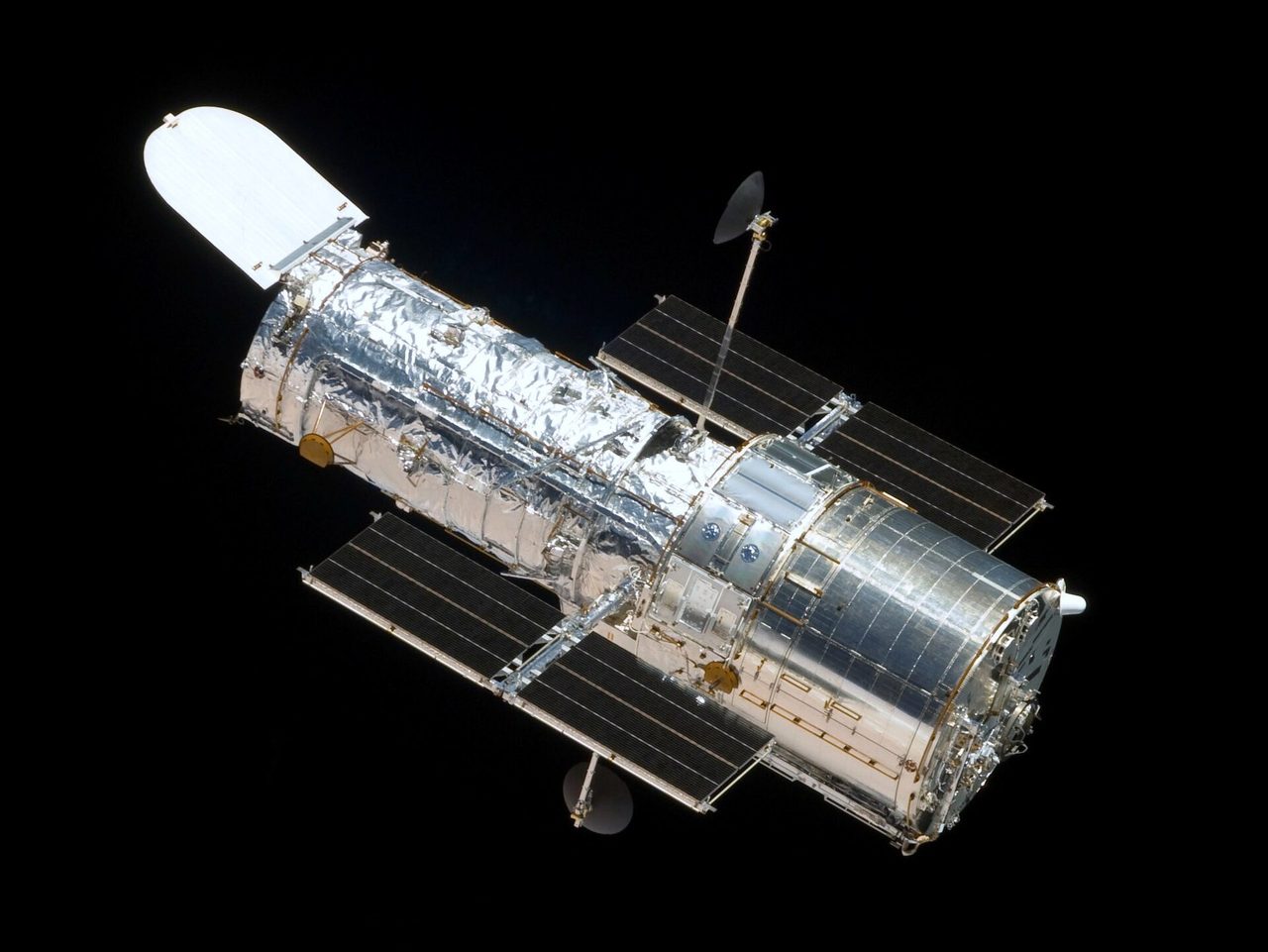
Photo: Ruffnax (Crew of STS-125) / Public domain · via Wikimedia Commons
NASA Wants Someone to Save Hubble — Before It Falls Out of the Sky
A new request for ideas, with three possible endings
NASA has issued a Request for Information asking commercial space companies how they might reboost, service, or safely dispose of the Hubble Space Telescope. The RFI, released Thursday, lays out three paths: grapple Hubble and lift it to at least 600 kilometers (about 373 miles), send up a servicing mission to improve its capabilities, or guide it to a controlled reentry. Responses are due November 30, and any mission would have to fly by 2032 without harming the observatory.
An observatory that can only fall
Hubble orbits at roughly 483 kilometers and is sinking by about 14.6 kilometers a year. NASA last raised its orbit in 2002, when the Space Shuttle Columbia visited; the final servicing flight, Atlantis's STS-125 mission launched on May 11, 2009, did not reboost it, and the shuttle fleet retired two years later. With no propulsion of its own, the telescope has been losing altitude ever since, with no way to climb back.
Without help, an uncontrolled reentry in the 2030s
Left alone, Hubble is expected to reenter the atmosphere in the early to mid-2030s. NASA estimates a 10 percent chance of reentry by September 2032, rising to 50 percent by December 2033, and heightened solar activity could add drag, as the end of the Swift mission demonstrated. At more than 12 metric tons, with a 2.4-meter primary mirror likely to survive reentry heating, Hubble is too big to let fall at random: one technical estimate puts the casualty risk at 1 in 330, far above the agency's 1-in-10,000 standard.
A sequel to the rejected 2022 SpaceX pitch
The situation is familiar. In 2022, commercial astronaut Jared Isaacman approached NASA about funding a Dragon mission to lift Hubble by at least 50 kilometers, and engineers also studied attaching a rescue pod with fresh gyroscopes. NASA received eight responses that round, including a joint Astroscale-Momentus proposal, but judged the options too risky. Isaacman has since become NASA Administrator, and similar concepts may now be dusted off.
"Commercial industry has rapidly evolved"
"Commercial industry has rapidly evolved in recent years to offer new capabilities for in-space satellite capture and servicing," said Nicky Fox, NASA's associate administrator for science. "Given the time we have until Hubble's anticipated reentry, we are eager to explore the breadth of possibilities to boost Hubble to a higher orbit." Fox called Hubble "a national icon that has fundamentally changed how humanity views our universe for more than 35 years." Goddard Space Flight Center would share technical data and coordinate rendezvous, capture, and servicing operations.
No money on the table yet
The notice is strictly information-gathering, not a formal procurement: NASA is not committing to buy a mission and has given no indication of what it would pay. The agency is effectively preparing for two futures at once — a rescue that extends the great observatory's life by years, or at minimum a dignified, guided farewell over empty ocean, courtesy of the capture ring installed in 2009. Either way, officials acknowledge that something must eventually be sent to Hubble, whether to lift it or to lower it.
What comes next: replies by November, flight by 2032
Companies have until the end of November to respond, and NASA will use the replies to gauge interest, maturity, and cost before deciding whether to proceed. Launched in April 1990 and now running in single-gyro mode to eke out its remaining years, the 36-year-old telescope may be getting its last serious chance at rescue. If no viable, funded plan emerges, its finale will be an uncontrolled streak across the sky sometime in the 2030s.
Sources
- Ars Technica: Think you can save the Hubble Space Telescope? NASA wants to know. - Ars Technica
- SpaceNews: NASA seeks ideas for Hubble servicing mission
- The Register: NASA ponders a Hubble servicing mission or a controlled deorbit
- Starlust: NASA considers potential servicing of Hubble Telescope to extend its lifespan, asks industry for help
- Mezha: NASA weighs servicing Hubble or bringing it down in a controlled reentry