Marvell Bets $115 Billion on Optical Future With Lumentum Takeover
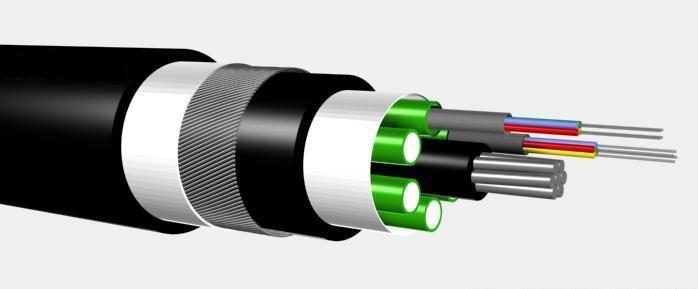
Photo: Buy_on_turbosquid_optical.jpg: Cable masterderivative work: Srleffler (talk) / CC BY-SA 3.0 · via Wikimedia Commons
Marvell Bets $115 Billion on Optical Future With Lumentum Takeover
A $115 Billion All-Stock Combination
Marvell Technology and Lumentum announced on November 2 a definitive agreement under which Marvell will acquire Lumentum in an all-stock transaction with an implied enterprise value of about $115 billion, including debt. Lumentum stockholders will receive 4.5 shares of Marvell common stock for each Lumentum share, worth roughly $1,132 per share — a premium of about 23.9% over the unaffected closing prices on October 28, the last trading day before deal talks surfaced. On a fully diluted basis, Marvell holders will own about 67% of the combined company and Lumentum holders about 33%.
Marrying Electrons and Photons
The official logic is complementarity: Marvell's electrical chips paired with Lumentum's lasers and optical components to meet the increasingly complex connectivity requirements of next-generation AI infrastructure. Marvell Chairman and CEO Matt Murphy called it "a once in a generation opportunity," arguing that AI infrastructure is undergoing a fundamental architectural shift toward optical connectivity and that the companies that move first will set the standard for decades. Lumentum President and CEO Michael Hurlston said surging AI data traffic demands rapid hardware innovation and that the combination is positioned for a $550 billion market opportunity.
$550 Billion Market, $1 Billion in Synergies
The transaction expands the combined company's total addressable market to $550 billion. Marvell expects more than $1 billion in annual run-rate cost synergies and says the deal will be accretive to non-GAAP earnings per share in the first year after closing. Completion is targeted for the first half of calendar 2028, subject to stockholder approvals at both companies, regulatory clearances and other customary conditions. Murphy will stay on as chairman and CEO; three Lumentum directors, including Hurlston, will join Marvell's seven-member board.
Taking the Fight to Broadcom
The deal sharpens Marvell's rivalry with Broadcom, long the main custom-chip partner of Google and currently the only supplier combining compute and switch silicon with an in-house laser portfolio. Absorbing Lumentum lets Marvell pair its industry-leading digital signal processors with laser fabrication for full system-level modules. Lumentum competes with US-listed Coherent and China's Zhongji Innolight, and a proposed US ban on new Chinese optical transceivers could shift demand toward domestic suppliers — a potential tailwind for the combined firm.
Shareholders Greet the Deal With a Selloff
Investors were unconvinced at first. Since the talks were first reported late last month, Lumentum shares have fallen about 8% and Marvell about 22%, as a broad chip selloff accelerated on Intel's weak forecast. The math explains the nerves: ahead of the talks Marvell's market footprint was roughly $221 billion against Lumentum's $83 billion, while Marvell held only about $3.92 billion in cash at quarter-end — so a deal of this size means heavy stock issuance. It is Marvell's largest purchase since the $10 billion Inphi buyout in 2021, and integration of photonic startup Celestial AI is still under way.
Two Hurdles Left: Shareholders and Regulators
What comes next is a long approval runway: votes by both sets of stockholders and antitrust reviews befitting one of the year's largest semiconductor combinations — hence the distant first-half-2028 closing target. If it clears, the merged Marvell becomes a self-styled category leader in AI connectivity just as hyperscalers accelerate their shift to custom silicon, owning the full span from copper to optical links inside the AI data center.
Sources
- Marvell Investor Relations: Marvell and Lumentum to Combine, Creating a Category Leader in AI Connectivity
- Investing.com: Marvell to buy Lumentum in $115 billion deal in AI data-center bet
- Yahoo Finance: Marvell Strikes $115B Deal To Acquire Lumentum: CEO Sees ‘Once In A Generation’ Opportunity In AI Optical Shift
- The Economic Times: Why are Marvell and Lumentum share prices down over $115 billion acquisition?
- Livemint: Marvell to acquire Lumentum in $115 billion all-stock deal, steps up challenge to Broadcom amid AI boom