European Flights Diverted and Searched After Bomb Threats; Greek Cruise Ship Also Targeted
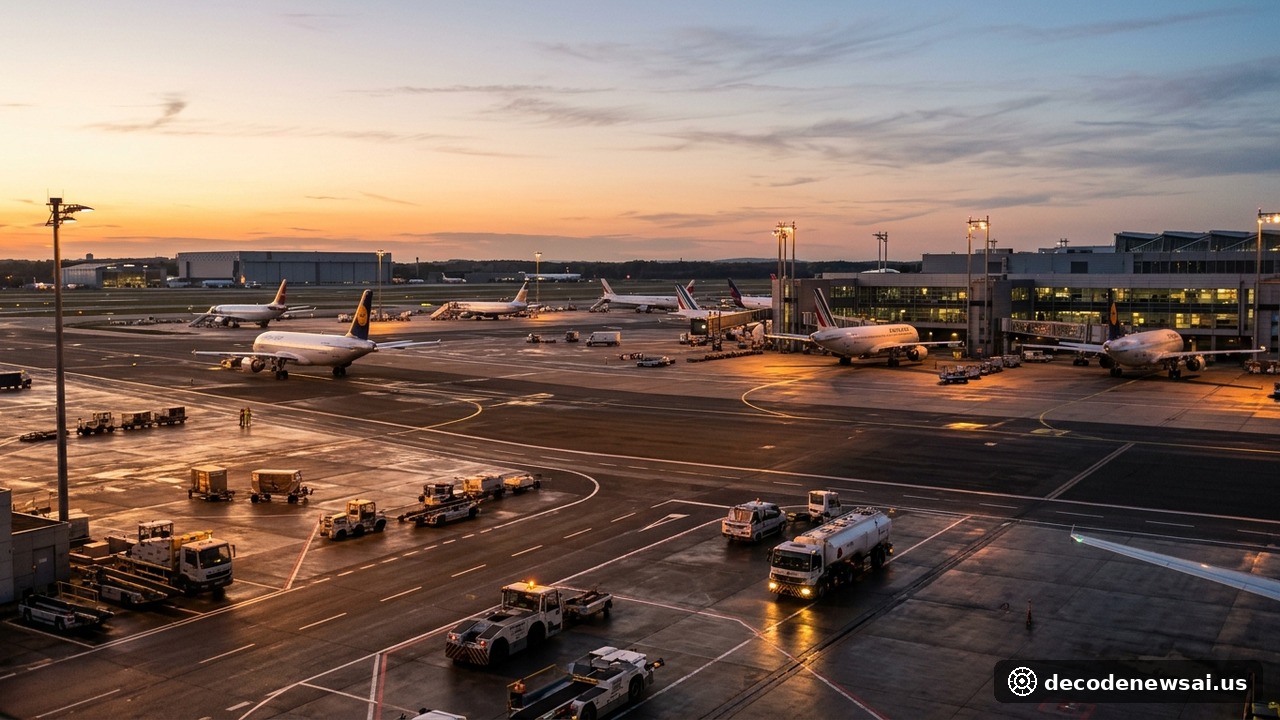
Photo: AI-generated
At least seven aircraft face threats or security checks
A series of bomb threats disrupted air travel across Europe on November 3, prompting searches, diversions and temporary operational changes involving at least seven passenger flights. The airlines included Ryanair, LOT Polish Airlines, Scandinavian Airlines and Wizz Air. Reuters and the Associated Press reported that the affected aircraft landed safely and that searches found no explosives. No injuries were reported. Italy’s air force also scrambled two Eurofighter jets to escort a Ryanair flight from Dublin to Rome after a threat was reported. The incidents affected airports in Italy, Poland, Spain and Bulgaria. Although authorities described the threats as hoaxes or unconfirmed alerts, each report triggered established security procedures involving aircraft, passengers, baggage and airport operations.
Airports across several countries activate emergency procedures
In Italy, two Ryanair flights arriving in Rome’s Fiumicino airport from Lisbon and Dublin were searched. The Dublin flight was escorted by Italian fighter jets. In Poland, a LOT flight from London Heathrow to Warsaw was diverted to Warsaw-Modlin airport, which temporarily suspended operations while the aircraft was inspected. A Scandinavian Airlines flight arriving from Copenhagen also underwent checks at Warsaw Chopin airport, where one runway was temporarily closed. In Spain, authorities inspected a Ryanair flight from Manchester after it landed at Murcia airport. The aircraft carried 121 people, including crew members. Bulgarian authorities also checked two flights arriving in Sofia from Bergamo in Italy and Dublin in Ireland. Officials reported no explosive devices on either aircraft.
A flight was diverted the previous day
The threats did not begin on November 3. On November 2, a Wizz Air flight from London Luton to Sofia was diverted to Budapest after receiving a bomb threat while in the air. A Hungarian Gripen fighter jet escorted the aircraft, and subsequent checks of the plane and passengers found no threat. Reuters also reported an earlier incident on October 18, when an Austrian Airlines flight from Tel Aviv to Vienna diverted to Sofia after a reported threat while flying over Romania. The aircraft was inspected and later continued to Vienna. Investigators are still trying to identify the people who sent the threats. There is no public evidence establishing that all the incidents were organized by the same person or group.
A separate bomb alert prompts a cruise ship evacuation in Greece
On the same day, the Crown Iris, a Panama-flagged cruise ship operated by an Israeli company, received a bomb threat while docked at the Greek island port of Syros. The ship was scheduled to sail to Haifa. Greek authorities said an anonymous caller claimed that an explosive device had been attached to the vessel’s hull. An initial search by coast guard officers, a sniffer dog and a diver found no suspicious objects. Authorities arranged further checks and began evacuating the ship as a precaution. The Associated Press reported that the vessel had 940 passengers and 597 crew members aboard. There is no publicly confirmed link between the cruise ship threat and the threats involving commercial aircraft.
Investigators have not established whether the incidents were coordinated
An aviation security expert told the Associated Press that several explanations remain possible. One threat could have prompted copycat incidents, a single individual or group could have made multiple threats, or the activity could be part of a state-backed hybrid operation. The expert cautioned that there was not enough evidence to identify a source. The British government described the threats as malicious hoaxes and said the country had established procedures for responding to aviation security alerts. The Guardian and the Financial Times reported that the incidents affected multiple aircraft and airports. Even when no device is found, a false threat can cause diversions, airport closures, passenger evacuations, delays and additional costs for airlines.
Travelers should follow airline and airport updates
Authorities reported that the affected aircraft had been searched and no explosives had been found. Passengers should follow updates from airlines and airports, allow extra time for connections and check for changes to ground transportation. Investigators still need to establish who sent the threats, whether the incidents shared a common source and whether any cross-border coordination was involved. Until those findings are made public, the incidents should not be attributed to a particular country or organization.
Sources
- Reuters: Bomb threats cause flight disruptions across Europe
- The Guardian: Seven planes across Europe searched or diverted after ‘malicious hoax’ bomb threats
- Euronews: Hoax bomb threats target four European flights as scares spread across the continent
- ABC News Australia: Seven flights and cruise ship disrupted in Europe by hoax bomb threats
- BBC News: Seven flights searched after suspected bomb threats across Europe