Democrats Sweep Texas Statewide Races, Ending Decades of Republican Dominance
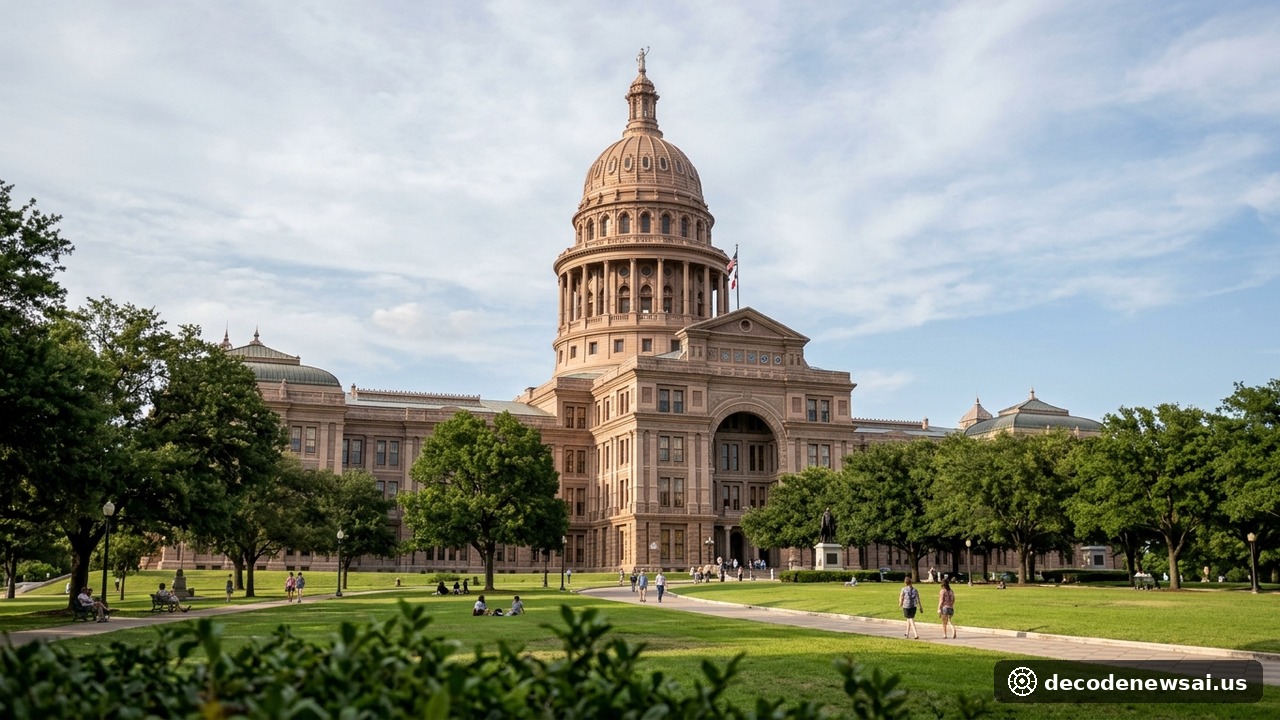
Photo: AI-generated
A dramatic shift in Texas politics
Democrats won a sweeping series of statewide victories in Texas on November 3, ending more than three decades without a Democratic win in a statewide contest. Republican Governor Greg Abbott lost to Democrat Gina Hinojosa. State Representative James Talarico defeated Republican Attorney General Ken Paxton in the U.S. Senate race, while Democratic state Representative Vikki Goodwin defeated Lieutenant Governor Dan Patrick. Reuters reported that Democrats also captured the attorney general’s office, comptroller, land commissioner, agriculture commissioner and railroad commissioner positions. The results represent a major change in the political structure of a state that has long been one of the Republican Party’s strongest strongholds. The victories were not limited to the two highest-profile contests. Democrats gained control of offices responsible for the state budget, public lands, agriculture and oversight of the oil and gas industry. The breadth of the wins gives the party a much larger role in shaping Texas government than it has had for decades. It also places Texas at the center of the national debate over whether the Republican coalition that has dominated the state can continue to hold together.
A statewide winning streak finally ends
Texas Democrats had not won a statewide election since 1994. Talarico’s Senate victory made him the first Democrat in decades to win a Texas U.S. Senate race, while Hinojosa is set to become the state’s first Latina governor. Her win also ended Abbott’s bid for a fourth term. The result marks a striking reversal in a state that Donald Trump carried comfortably in the 2024 presidential election. The Texas Tribune and local reporting described Democratic victories across the statewide ballot, while Reuters noted that the party also won a number of lower-profile races. The outcome suggests that Democratic gains were broader than a single candidate or office. However, it remains important to distinguish victories in statewide executive offices from control of the state legislature, which was still unresolved when the available reports were reviewed.
Cost of living and government accountability shaped the campaign
Reuters and the Associated Press identified economic concerns and dissatisfaction with government as important factors in the election. Democratic candidates focused on household costs, corruption and public services. Republican candidates placed greater emphasis on cultural issues. Reuters also reported that turnout in Latino communities increased and that some conservative and independent voters had become dissatisfied with inflation and the war with Iran. Those factors help explain the political environment, but they do not establish that one issue or one demographic group alone determined the result. The election reflected a combination of economic concerns, candidate choices, campaign strategy and broader national dissatisfaction. Democrats also benefited from years of organizing in communities where the party had previously struggled to compete.
Republican strategy faces new questions
Texas has long been a central part of the Republican path to winning presidential elections. The scale of the Democratic victories is therefore likely to raise questions for national Republicans about candidate recruitment and campaign strategy. One important factor was the Republican Senate primary, in which Trump backed Paxton against longtime Senator John Cornyn. Paxton secured the nomination but then lost to Talarico in the general election. The Associated Press reported that Paxton’s legal controversies and divisions within the Republican Party after the primary became significant issues in the race. Talarico emphasized living costs and political corruption, seeking support from younger voters, Hispanic voters, moderates and independents. His victory, together with Hinojosa’s defeat of Abbott, delivered a major setback to the Republican establishment in a state that had long been considered safe territory.
Control of the Texas House remains unresolved
Despite the statewide sweep, control of the Texas House of Representatives remained uncertain at the time of this review. Reuters identified the chamber as the major outstanding question after Election Day. The final balance of power in the legislature will matter because the governor cannot implement a full policy agenda without working with lawmakers. The legislative outcome will influence debates over the state budget, education, immigration, energy and health care. Democratic victories in statewide executive offices create new opportunities, but they do not automatically give the party control over every institution in Austin. Any major policy changes will depend on the final legislative results and negotiations with lawmakers.
The next test is governing, not just winning
The victories by Hinojosa and Talarico have given Texas Democrats national visibility and may change how both parties assess the state’s political future. But demographic change does not guarantee a durable partisan realignment. Democrats will need to maintain their organizing networks and demonstrate that they can address practical problems facing residents. Republicans, meanwhile, will have to reconsider their candidate selection, policy priorities and appeal to independent voters. The 2026 election has clearly reshaped Texas’s statewide political leadership. The longer-term significance will depend on whether the new officials can deliver on their promises and whether Democrats can sustain the coalition that produced the breakthrough. For now, the state’s executive offices have changed hands, while the final legislative balance remains a key piece of the political picture.
Sources
- Reuters: 'A mandate for change': Democrats remake Texas politics in election rout
- The Texas Tribune: Democrats seize power in Texas, ending decades of GOP dominance
- The Guardian: ‘A win the size of Texas’: Democrats celebrate shrinking Republican dominance in a big state
- CBS Texas: Hinojosa defeats Abbott, makes history as Texas' first Democratic governor in decades
- Texas Public Radio / San Antonio Report: Takeaways from a Democratic sweep in Texas