JB Pritzker Defeats Darren Bailey to Win a Historic Third Term as Illinois Governor
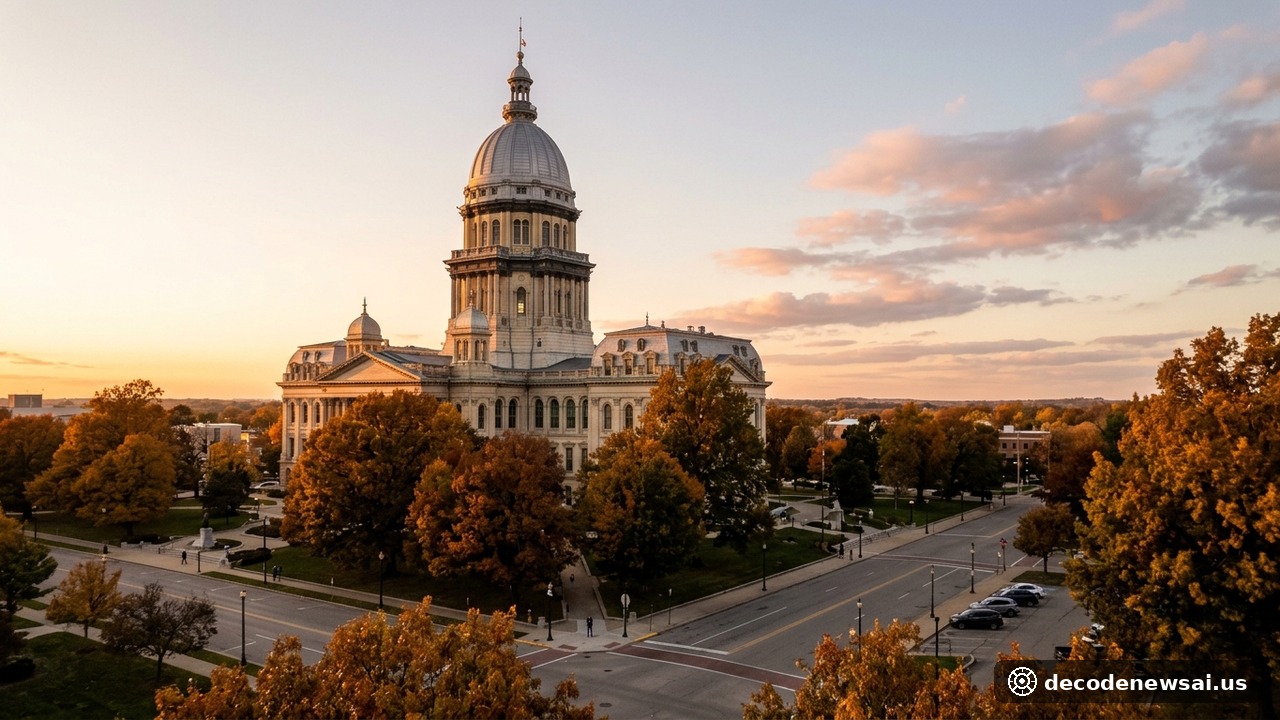
Photo: AI-generated
A third consecutive victory over Bailey makes Pritzker the first Democrat elected to three terms
Democratic Gov. JB Pritzker defeated Republican Darren Bailey in Illinois's 2026 gubernatorial election, securing a third four-year term. The Associated Press called the race shortly after polls closed. Pritzker becomes the first Illinois governor since Republican Jim Thompson in 1982 to win three terms and the first Democrat ever elected to a third term in the state. Pritzker first won the office in 2018 and was reelected in 2022. Bailey, a farmer from southern Illinois and former state lawmaker, lost to Pritzker by about 12 percentage points in 2022. CBS News and the Chicago Sun-Times reported that Bailey again focused on affordability, taxes and public safety, but struggled to overcome Pritzker's financial advantage and the Democratic Party's longstanding strength in Illinois.
Fiscal management, health care and opposition to Trump shaped the reelection campaign
Pritzker made his record from the first two terms the centerpiece of his campaign. He highlighted improved state credit ratings, balanced budgets, a higher minimum wage and increased education funding. He also emphasized Illinois policies on health care, reproductive rights and labor protections, contrasting them with the Trump administration's agenda. Capitol News Illinois reported that Pritzker presented himself as a national Democratic figure opposing Trump's policies and spent time and money supporting Democratic candidates in other states. Bailey criticized Pritzker's tax and spending policies, arguing that the cost of living and the cost of doing business remained too high. He sought to broaden his appeal in the Chicago suburbs and even moved into an apartment in the city during the campaign to change perceptions of him as a downstate conservative. Pritzker's advertising, however, repeatedly connected Bailey to Trump and highlighted his conservative positions on abortion, guns and social issues. The race also reflected a sharp difference in campaign resources. Pritzker, a billionaire and heir to the Hyatt hotel fortune, was able to fund a large advertising operation and support Democratic candidates beyond Illinois. Bailey had far fewer resources and struggled to counter the governor's message statewide.
Speculation about a 2028 presidential bid grows as Pritzker says he will keep governing Illinois
Pritzker's third victory strengthens his position in national Democratic politics. He has substantial personal wealth and a nationwide fundraising network. During the campaign, he spent more than $90 million supporting his own reelection and directed tens of millions more through his political operation to Democratic candidates in other states. Axios and Capitol News Illinois reported that Pritzker traveled to early presidential primary states such as South Carolina, New Mexico and Nevada to support Democrats, fueling speculation that he may consider a 2028 presidential campaign. In his victory speech, Pritzker praised Illinois and criticized the Trump administration over corruption, concentrated power and economic policy. He did not announce a presidential bid and said he would return to the work of governing the state the next day. His third term is expected to include continued efforts on early childhood education, housing, data-center regulation and a new stadium project for the Chicago Bears. For Illinois, Pritzker's reelection means continuity under a Democratic governor and a legislature controlled by the same party. For national Democrats, his victory and fundraising capacity increase his influence, but his plans for 2028 remain uncertain. Voters have given him another four years, and he will be judged on whether he can continue delivering on fiscal management, housing, education and public safety. The third term is also historically unusual because Illinois governors are not subject to term limits, yet no governor had won a third election since Thompson. Pritzker's win gives him a chance to become the longest-serving Democratic governor in state history if he completes the term. He has said he wants to finish work on universal preschool and maintain the state's improved fiscal position, while also pursuing projects that could shape Illinois's economy for years. Those commitments will compete for attention with national political speculation and the demands of a third term.
Sources
- Pritzker wins 3rd term as presidential speculation builds
- JB Pritzker and Darren Bailey square off again in Illinois governor race
- Illinois governor election 2026 race between JB Pritzker, Darren Bailey gets under way as voters hit the polls
- Illinois Gov. JB Pritzker wins third term, defeats Darren Bailey again, AP projects
- Illinois governor race: Democrat JB Pritzker elected to third term