Democrats Sweep Texas Statewide Races, Ending Decades of Republican Dominance
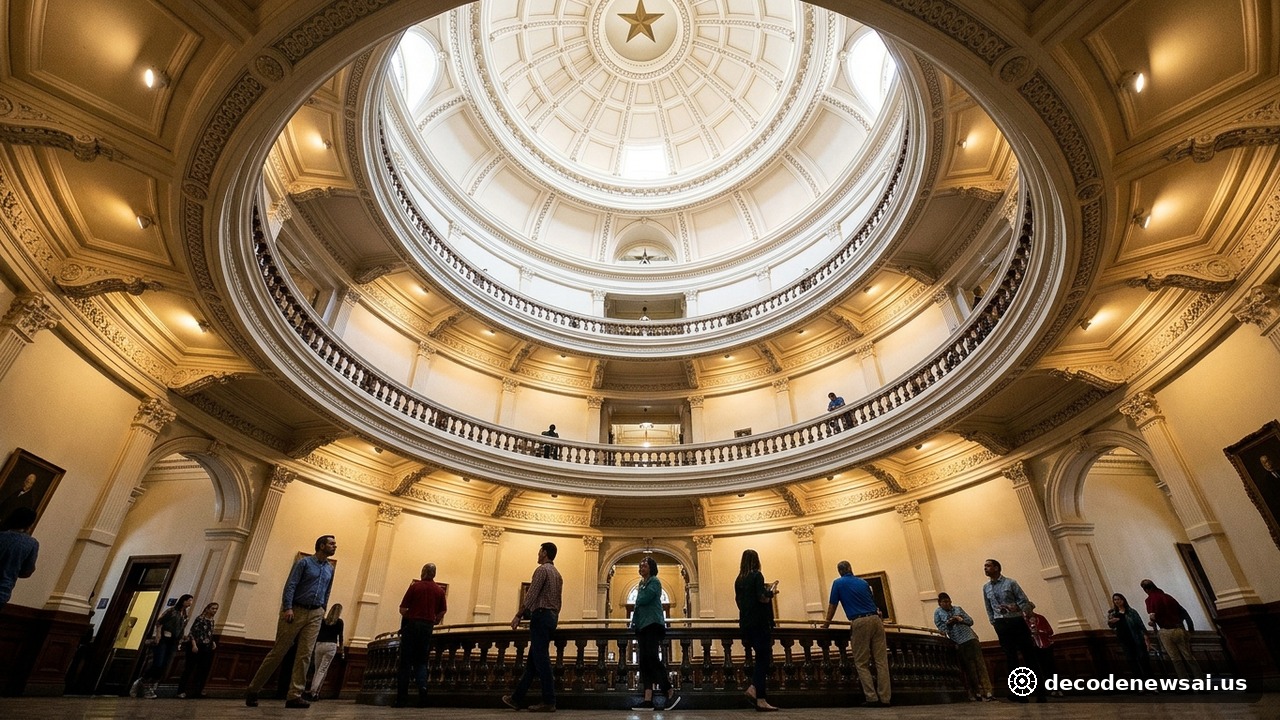
Photo: AI-generated
Governor, U.S. Senate, lieutenant governor and attorney general offices change hands
Democrats scored a historic victory in Texas's 2026 midterm elections, winning the governor's office, a U.S. Senate seat, the lieutenant governorship and the attorney general's office. The results ended decades of Republican dominance over the state's top elected offices. The Associated Press reported that Democrat Gina Hinojosa defeated three-term Gov. Greg Abbott to become Texas's first Latina governor. James Talarico defeated Attorney General Ken Paxton for the U.S. Senate seat, becoming the first Democrat elected to a Texas Senate seat since 1988. Democrats also won the lieutenant governor and attorney general races. State Rep. Vikki Goodwin defeated longtime Lt. Gov. Dan Patrick, taking the office that presides over the Texas Senate. State Sen. Nathan Johnson defeated Republican Mayes Middleton to become the state's next attorney general. The Texas Tribune described the outcome as a sweeping change in the state's political power structure, with Democrats winning offices that had been held by Republicans for decades.
Affordability, corruption controversies and data-center expansion reshaped voter priorities
The election focused heavily on the cost of living, energy prices, health care, public education and government accountability. Reuters' national analysis of the midterms reported that nearly nine in ten voters considered the cost of living an important factor in their vote, while nearly two-thirds said Trump was responsible for high prices. Texas Democrats centered their campaigns on grocery and gasoline costs, housing affordability and corruption rather than building their entire message around cultural disputes over abortion, guns and education. Data-center expansion and artificial-intelligence infrastructure also became local campaign issues. Large facilities require substantial electricity and water, raising concerns about higher utility bills and pressure on local resources. The Texas Tribune reported that Democratic candidates used opposition to poorly regulated data-center projects as part of their campaign message, particularly in rural and suburban communities where voters were concerned about electricity prices and water use. Paxton's legal and political controversies were another factor in the Republican losses. He was impeached by the Texas House in 2023 and later acquitted by the state Senate. His record and public image gave Talarico an opening to question his suitability for the Senate. Axios noted that Democratic candidates remained focused on affordability and accountability while Republicans struggled to answer voters' concerns about economic pressure.
Democrats now face the challenge of governing a state whose legislature remains largely Republican
The Texas Tribune reported that Democrats also made gains in several congressional districts, flipping seats despite Republican efforts to redraw the state's congressional map. Democratic candidates improved in border counties and among younger voters, and some districts that had supported Trump in 2024 shifted toward Democrats. However, several legislative contests were still being counted on election night, so the statewide executive victories should not be treated as proof that Democrats had won control of the entire legislature. The incoming governor, Hinojosa, will have appointment powers, authority over the implementation of the state budget and the ability to veto legislation. But Republicans are expected to retain a majority in the Texas Senate and may continue to control the state House. Goodwin will face Republican lawmakers who could seek to limit her influence over which bills reach the Senate floor. Johnson, as attorney general, will have the authority to review lawsuits and legal positions inherited from Paxton's office. The election turns Texas from a state where Republicans had long dominated statewide offices into a major battleground for Democratic governance. Democrats must now show that the result was more than a one-cycle backlash against the party in power and that they can build a durable coalition. Republicans will have to reassess their candidates, their relationship with Trump and their approach to local concerns. The political shift could have consequences well beyond Texas, shaping both parties' strategies and resources ahead of the 2028 presidential election. The scale of the change was particularly striking because Texas had resisted previous Democratic midterm waves. Republicans had built their advantage through strong rural turnout, control of statewide offices and a political message centered on border security and cultural issues. This year, Democrats improved in several counties along the Rio Grande and in fast-growing suburbs, while high prices and local opposition to energy-intensive projects helped shift the debate. The party's success will now be measured by whether it can maintain those gains after taking responsibility for state agencies and public services.
Sources
- Democrats seize power in Texas, ending decades of GOP dominance
- Top takeaways from the US midterm elections
- Texas Election Day Updates: James Talarico, Gina Hinojosa land historic wins
- Hinojosa defeats Abbott, makes history as Texas' first Democratic governor in decades
- What happened in the Nov. 3, 2026, historic midterm election in Texas