Rob Sand Defeats Zach Lahn for Iowa Governor, Ending Longstanding Republican Control
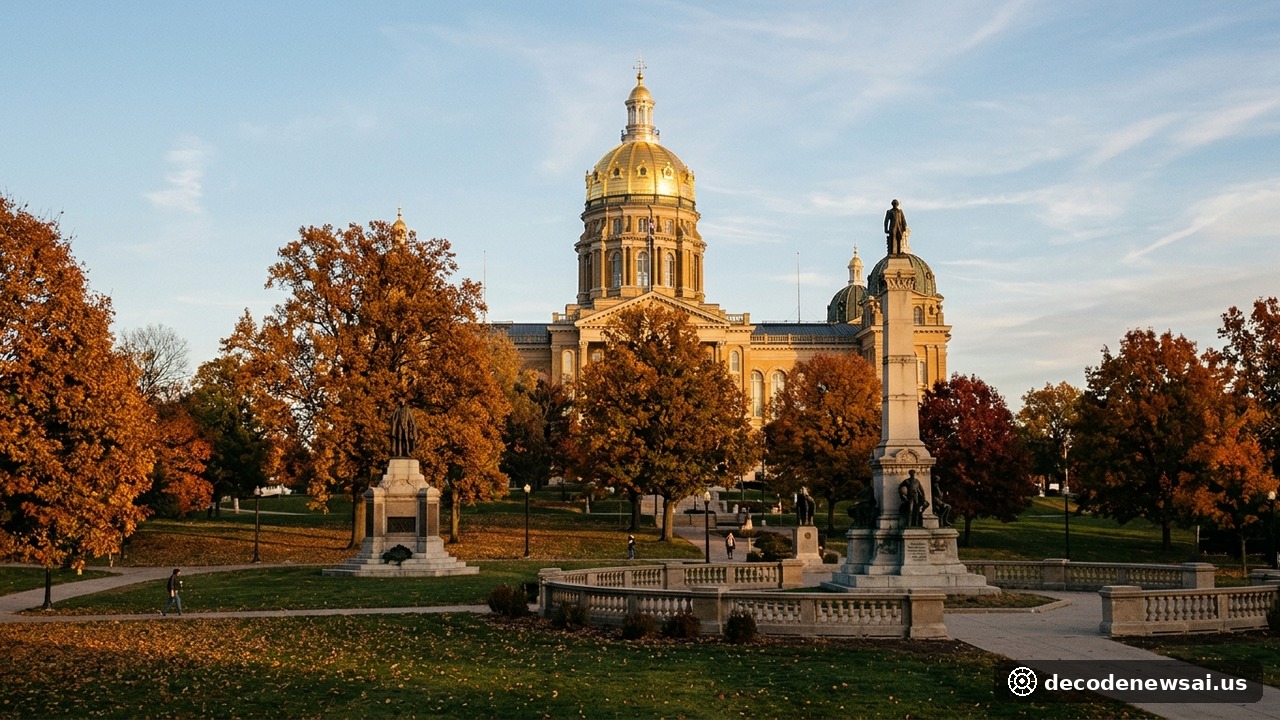
Photo: AI-generated
State auditor wins open race and returns the governor's office to Democrats
Democrat Rob Sand defeated Republican Zach Lahn in Iowa's 2026 gubernatorial election, according to an Associated Press race call. The victory ends Republican control of the governor's office that began in 2011 and breaks the party's long-running hold over Iowa's state government. Republican Gov. Kim Reynolds had decided not to seek another term, creating the state's first open gubernatorial contest in years. Sand was the state auditor and the only Democrat holding statewide elected office in Iowa before the election. He campaigned on government accountability, cooperation across party lines and his small-town background. He also sought to distinguish himself from the national Democratic brand, presenting himself as a pragmatic candidate focused on solving problems rather than party loyalty. CBS News reported that Sand supported nonpartisan primaries and emphasized problem-solving as a way to appeal to independent voters. Lahn, a farmer and businessman, ran as a conservative outsider. He argued that Iowa needed a change in direction and defended policies favored by Republicans, including the state's education savings account program. He won a competitive Republican primary after defeating candidates who had stronger establishment backing.
Affordability, health care, education and water quality shaped the state debate
The campaign was not simply a referendum on national politics. The Associated Press and Iowa Public Radio reported that voters were concerned about Iowa's budget, the cost of living, access to health care, cancer rates and water pollution. Sand criticized Republican tax cuts and the state's education savings account program, which directs public money toward private-school tuition. He argued that Iowa should invest more in public education and improve access to health care. Lahn defended the education savings account program as a way to give parents more choices. He also emphasized business experience, water quality and the Make America Healthy Again movement. Iowa Capital Dispatch reported that Lahn had defeated Randy Feenstra, who had received Trump's endorsement, in the Republican primary. Sand, by contrast, had been viewed as the Democrats' strongest statewide candidate well before Election Day. The candidates offered different approaches to the state's challenges. Sand argued that a decade of Republican control had weakened accountability and left important problems unresolved. Lahn warned that Sand's proposals would bring higher taxes and more regulation. Both candidates addressed water quality and cancer rates, issues that have become particularly salient in Iowa.
A national Republican setback leaves Sand facing a Republican legislature
Sand's victory came on a night of broad Democratic gains across the country. Iowa had backed Trump by more than 13 percentage points in 2024, making the Democratic win a notable reversal in a state that had moved toward Republicans over the previous decade. The Washington Post and Axios described Sand as a candidate who built a personal profile through town halls, public outreach and a moderate political style, allowing him to compete in areas where other Democrats had struggled. The result does not give Sand a free hand to enact his agenda. Republicans continue to control both chambers of the Iowa Legislature, meaning that the new governor will have to negotiate with lawmakers over budgets, education, health care and regulatory policy. Iowa Public Radio reported that Sand will take office in January 2027 and will need to work with the Republican-led legislature to advance his priorities. Sand's win shows how candidate identity, local issues and dissatisfaction with the governing party can combine to change a state's political direction. He will move from the auditor's office to the governor's mansion with a mandate built around accountability and bipartisan cooperation. Whether that approach can produce concrete results will depend on his ability to turn campaign promises into agreements with lawmakers who remain controlled by the opposing party.
Sources
- Democrat Rob Sand wins Iowa governor's race, defeating MAHA Republican Zach Lahn
- Democrat Rob Sand wins election to become Iowa governor, AP projects
- Democrat Rob Sand wins Iowa governor's race, ending GOP control of the office
- Rob Sand defeats Zach Lahn, becomes Iowa's first Democratic governor in 16 years
- Rob Sand wins the 2026 General Election to become Iowa’s governor