Hakeem Jeffries Launches House Speaker Bid, Promising “Dramatic Change” After Democratic Victory
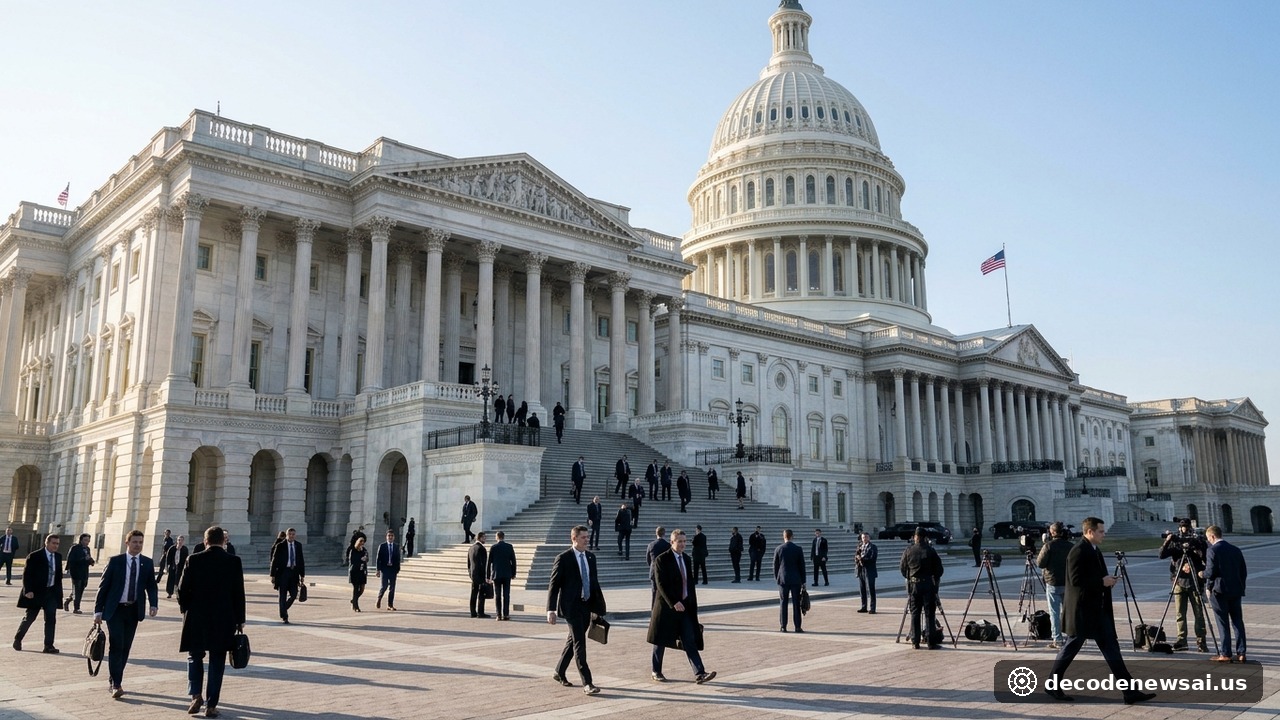
House Democratic Leader Hakeem Jeffries formally announced on November 4 that he is running to become the next speaker of the U.S. House of Representatives. After Democrats won control of the House in the 2026 midterm elections, Jeffries sent a letter to incoming Democratic colleagues asking for their support and pledging to deliver what he called the “dramatic change” voters are demanding. If elected by the full House, he would become the first Black American to serve as speaker.
Jeffries has announced his candidacy, but he has not yet been elected. House Democrats are expected to choose their party’s nominee before the new Congress convenes, and the full House is scheduled to vote for speaker in January 2027. News organizations have described Jeffries as the clear favorite, but he still needs to secure support across a caucus that includes both moderates and progressives.
A letter built around three priorities
In his letter to Democratic colleagues, Jeffries argued that the party must move from opposing the Republican majority to delivering results as the incoming majority. He organized his agenda around three themes: affordability, accountability and American values.
On affordability, he highlighted housing, health care, groceries and everyday goods, gas and utilities, and caregiving. He urged Democrats to act quickly in the new Congress and said the party should seek bipartisan common ground when possible. At the same time, he signaled that Democrats would use their new majority to challenge policies of the Trump administration.
The letter also framed the election result as a mandate for action rather than simply a rejection of Republicans. Jeffries said every member of the incoming majority should have a meaningful role in addressing the cost of living and restoring public confidence in government.
Medicaid, tax credits and tariffs are on his agenda
Jeffries called for action during the first 100 days of the new Congress to reverse Medicaid cuts, restore funding for the Supplemental Nutrition Assistance Program, extend Affordable Care Act tax credits, repeal Trump administration tariffs and end what he described as the war in Iran.
Those are proposed legislative priorities, not enacted policies. Even with Democrats controlling both chambers, the president retains veto power and bills must pass through the legislative process. President Donald Trump has already threatened to oppose parts of the Democratic agenda, leaving the party to decide which proposals can advance and where negotiations may be possible.
Jeffries also called for stronger oversight of the executive branch. His letter proposed action against price gouging, changes to the Supreme Court and a ban on members of Congress trading individual stocks. He argued that the House should resume its role as a check on the executive branch rather than operate as an extension of the White House.
Holding together a diverse Democratic caucus
Reuters reported that Jeffries is well positioned to become speaker, but he will still need to maintain unity among Democrats. Some progressive lawmakers want a more forceful approach on issues such as universal health care, U.S. weapons policy toward Israel and other priorities. Jeffries has built his leadership reputation through negotiation and coalition-building, and his challenge will be to balance demands for faster change with the concerns of more moderate members.
The speaker’s job carries substantial influence over the House agenda, committee assignments and oversight priorities. A Democratic majority would give Jeffries more power to schedule votes and launch investigations, but it would not guarantee that legislation could pass the Senate or survive a presidential veto. The size and cohesion of the party’s majority will matter as much as the speaker’s own agenda.
The coming leadership vote will therefore be an early test of whether Jeffries can translate the election result into a unified governing strategy. The letter is a request for support, not proof that every Democrat has committed to vote for him.
The speakership still depends on a formal vote
Democrats’ House victory has created the opportunity for Jeffries to become speaker, but the party’s internal nomination and the full House vote remain ahead. Reuters reported that newly elected House Democrats were expected to meet behind closed doors to choose their candidate, with the full chamber set to elect its speaker when the new Congress begins in January.
If Jeffries wins, he would become the 57th speaker of the House and the first Black American to hold the office. Until that vote takes place, the outcome is not official. Republicans will also select their own candidate, although the party will enter the new Congress in the minority.
For now, the confirmed development is that Jeffries has formally launched his candidacy and outlined an agenda centered on affordability, accountability and American values. Whether he wins the speakership, how much support he can maintain across the Democratic caucus and whether his proposals can become law remain unresolved.
Sources
- Hakeem Jeffries / U.S. House: Dear Colleague Announcing Candidacy for Speaker of the House
- Fox News: Hakeem Jeffries declares bid for House speaker after GOP's midterm massacre
- The Washington Examiner: Hakeem Jeffries formally announces bid for House speaker
- The Wall Street Journal: A Big Night for the Big Apple?