Keisha Lance Bottoms Makes US History, but Georgia’s Divided Legislature Will Test Her Agenda
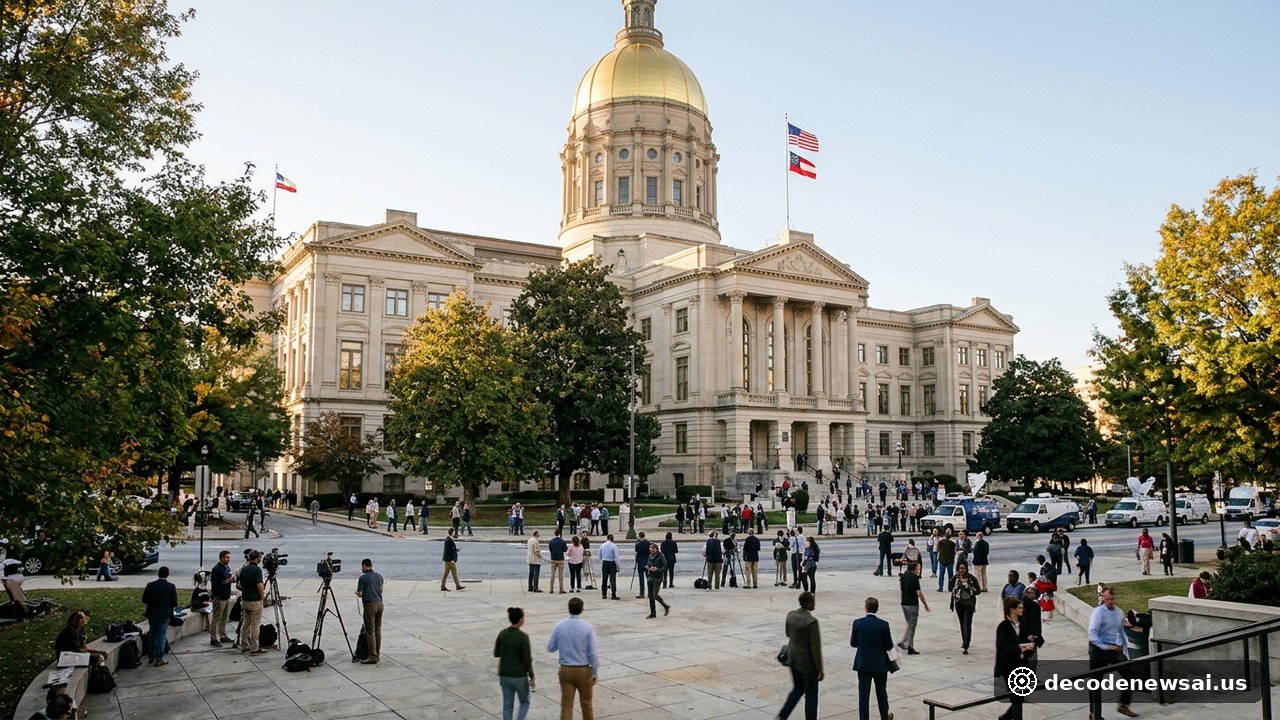
Keisha Lance Bottoms defeated Republican Rick Jackson to become the first Black woman elected governor in US history. She is also Georgia’s first woman governor and its first Black governor. Her victory ends more than two decades of Republican control of the governor’s office and returns the position to Democrats in a state Donald Trump carried in 2024. The historic breakthrough is already secured. The next challenge is turning campaign promises into state policy. Political power in Georgia did not shift entirely to Democrats. The Atlanta Journal-Constitution reported that Democrats were projected to regain control of the state House for the first time since 2004, while Republicans retained a narrow majority in the state Senate, with an advantage of about two seats. That divided structure could create opportunities for Bottoms, but it also means that healthcare, taxes, abortion policy and data-center regulation will require difficult negotiations.
A historic victory changes Georgia’s political map
Bottoms is the first Black woman elected governor in the United States, as well as Georgia’s first female and first Black governor. Her defeat of Trump-endorsed Republican Rick Jackson also makes her the first Democrat to win the state’s governorship since Roy Barnes in 1998. NPR reported that Georgia has become a competitive state in presidential and US Senate elections, but Republicans had continued to control the governor’s office and much of the state legislature. Bottoms’ win came as Democrats made gains in other statewide races. During the campaign, she emphasized affordability, healthcare, education and housing, and promised to challenge the Trump administration from the state level. She received support from former Presidents Joe Biden and Barack Obama, as well as Democratic Sen. Jon Ossoff. The result shows that Democrats were able to translate national dissatisfaction into a statewide victory, but the legislature’s party balance will still shape what the new governor can accomplish.
Medicaid expansion could have its first real opening
Bottoms has long supported expanding Medicaid to cover more low-income adults. Georgia has not adopted full Medicaid expansion under the Affordable Care Act, making the issue a recurring priority for Democrats in the state. The Atlanta Journal-Constitution reported that Bottoms could become the first Democratic governor in years with a realistic opportunity to move the proposal forward. Some Republicans have also become more open to expansion, arguing that it could help financially struggling hospitals and bring additional federal funding into Georgia. The governor cannot expand Medicaid on her own. The policy would require legislative approval and decisions about the state budget, federal matching funds and eligibility rules. Even if Democrats control the state House, Republicans retain a narrow majority in the Senate. Bottoms will need support from at least some Republican lawmakers to turn the promise into law. The effect on hospitals, low-income households and the state budget will depend on the final design of any expansion plan.
Universal pre-K and tax relief will face budget constraints
Bottoms has proposed guaranteeing a place in Georgia’s pre-kindergarten program for every family. The state’s lottery-funded Pre-K program served only slightly more than half of Georgia’s four-year-olds in 2025. The Atlanta Journal-Constitution estimated that guaranteeing access to every family could cost at least $300 million a year. Bottoms initially wants to use lottery reserves, but her longer-term plan also involves legalizing casino gambling to create additional education revenue. That proposal has struggled to win bipartisan support in the past. She has also proposed allowing local governments to eliminate sales taxes on groceries, exempting public-school teachers from state income taxes and providing tax relief for veterans and military retirees. Some targeted tax changes may be easier to negotiate than a major expansion of pre-K. But eliminating grocery taxes could reduce local-government revenue, while universal pre-K would require a stable source of recurring funding. Voters may broadly support lowering household costs, but that does not guarantee that lawmakers will agree on the details. Bottoms will have to show how her proposals can be financed and which ones should come first.
Data centers and abortion policy will test the new coalition
Georgia has become a major destination for data-center development. Bottoms has promised to pause new projects while the state assesses their effects on electricity demand, land use and the environment. She argues that rapid data-center growth could increase power bills and place additional pressure on the electricity grid. But a moratorium would bring her into conflict with Georgia Power and other influential business interests, and could affect the state’s strategy for attracting investment and jobs. Abortion policy presents another challenge. Bottoms wants to change Georgia’s current restrictions. A Democratic-controlled state House could advance legislation, but Republicans still control the Senate and would need to provide votes for any major change. Even if Democrats pass a bill in the House, Senate approval is not assured. Bottoms has also promised an ethics and transparency overhaul, but proposals to expand disclosure requirements to the legislative branch could create disagreements within her own party. The state’s narrow Senate balance gives Democrats a possible path to negotiate, but it does not guarantee that Republicans will support the governor’s priorities. The new administration will have to decide which issues can attract bipartisan support and which are likely to remain partisan battles.
The next test is governing, not making history
Bottoms’ victory carries national symbolic importance, but she will govern a divided state government with limited budget resources and powerful business interests. She must balance the expectations of progressive voters with the need to win support from moderate Republicans. The governor can propose budgets, appoint officials and set executive priorities, but she cannot bypass the legislature to enact every reform. The election has made Bottoms the first Black woman governor in the country and returned Georgia’s governor’s office to Democrats. Her long-term political legacy will depend not only on the historic nature of her election, but also on whether she can deliver measurable progress on healthcare, early-childhood education, household costs and government transparency.
Sources
- The Atlanta Journal-Constitution: Keisha Lance Bottoms made history with her win. Now comes the hard part.
- NPR / WBUR: Georgia elects the nation's first Black female governor
- The 19th News: Keisha Lance Bottoms to become the nation’s first Black woman governor
- CNN: The historic firsts of the 2026 election
- The Guardian: Georgia’s Keisha Lance Bottoms makes US history as first Black woman to be elected state governor