Dow Surges More Than 1,500 Points After Democrats Retake Congress
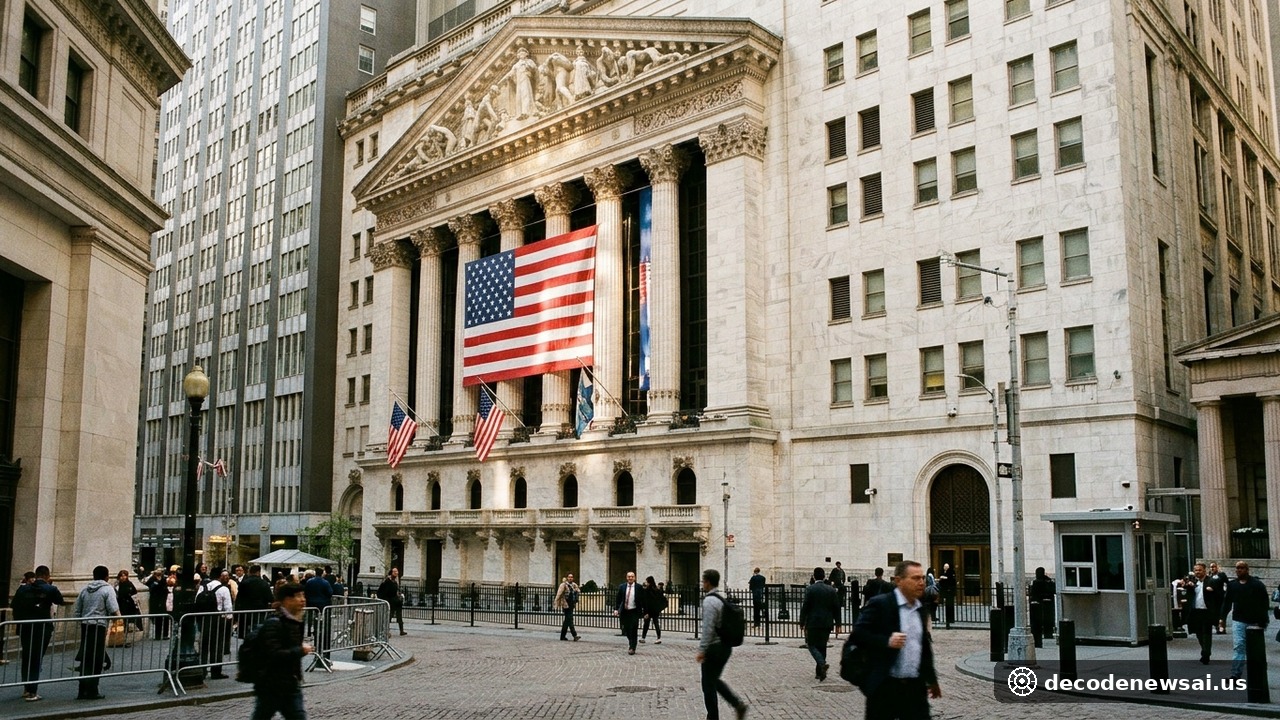
Wall Street rallied sharply on November 4 after Democrats won control of both chambers of Congress in the US midterm elections. The Dow Jones Industrial Average finished up 1,569.40 points, or 3%, at 53,356.12. The S&P 500 gained 1.6%, while the Nasdaq Composite rose 1.4%. The Dow’s advance of more than 1,500 points marked its strongest daily performance since April 2025. CNN, citing CFRA Research, said it could be the largest single-day Dow gain following a midterm election since 1982. Investors interpreted the result as the beginning of divided government: Democrats will control Congress, while Republicans retain the White House. Markets anticipated that a split between the legislative and executive branches could make sweeping policy changes harder to pass and reduce some near-term uncertainty for businesses. But the rally did not mean every industry would benefit, nor did it suggest that Congress and the White House would avoid conflict over the next two years.
From election-night losses to a strong close
Before the outcome became clear, stock futures fell as investors considered the possibility that Democratic control could bring tighter oversight of artificial intelligence, data centers and large technology companies. Sentiment improved after Democrats secured both chambers. The Wall Street Journal reported that investors became more confident after Trump said he was willing to work with Democrats and would not challenge the election results. Expectations of legislative gridlock helped stocks recover from early losses. The Associated Press reported that the Dow closed up 1,569.40 points at 53,356.12. The S&P 500 gained 119.70 points to 7,688.62, and the Nasdaq added 364.50 points to 25,736.51. Earlier reports had described Dow gains of about 1,000 to 1,200 points, while CNN reported an intraday move of roughly 1,500 points. Those figures refer to different times during the session and should not be confused with the final closing numbers. The market’s turnaround also reflected the removal of uncertainty about which party would control Congress. Investors could begin assessing the likely limits of a divided government rather than trading on a range of possible election outcomes. The result was a strong relief rally, although the details of future legislation and regulation remain uncertain.
Falling oil prices added support
A sharp decline in energy prices provided another source of support for the market. The Associated Press reported that Brent crude fell 8.7% to $94.62 a barrel, its lowest level in about two months. Lower oil prices can reduce transportation and operating costs for businesses and ease household energy expenses, potentially helping to moderate inflation. Investors also considered whether the change in congressional power could affect US policy toward the Iran war. An election result, however, does not guarantee that the conflict will end, and oil prices also respond to supply and demand expectations. Charles Schwab said the end of election uncertainty helped bring investors back into stocks, while Treasury yields and gold prices also moved. Reuters reported that the stock rally occurred alongside a weaker dollar and lower Treasury yields, suggesting that investors were reassessing the outlook for US fiscal policy and interest rates. The Dow’s jump was therefore not caused by politics alone; changing risk appetite, energy prices and expectations for government policy all contributed.
Healthcare and discount retailers lead as technology stocks diverge
The broad market advance concealed sharp differences among industries. The Associated Press said hospital operators and retailers serving lower-income consumers led the rally. Investors anticipated that a Democratic Congress could seek changes to healthcare and food-assistance policies, potentially affecting companies in those industries. Some large technology companies also gained, but chipmakers and businesses tied to AI data-center construction faced pressure as investors considered stricter oversight of electricity use, local permitting and environmental effects. Reuters reported declines among some data-center operators, while cash-rich technology platforms advanced. ABC News noted that investors were also watching potential policy changes involving housing, pharmaceuticals and cryptocurrency regulation. The sector reaction was not simply divided along party lines. Companies’ cash flow, capital-spending requirements and exposure to regulatory changes all influenced how their shares performed. For example, technology companies with large cash reserves and diversified revenue may respond differently from data-center developers that depend on large new construction projects. Similarly, healthcare providers and retailers may benefit from expectations about public policy, but those expectations still need to translate into legislation and funding decisions before they affect earnings.
Historical patterns offer context, not a guarantee
Market research has long found that US stocks have often performed well in the months after midterm elections, regardless of which party wins. Yahoo Finance quoted market strategists who said that a clear result and the prospect of divided government could reduce near-term policy uncertainty. But historical averages cannot predict the outcome after every election. Corporate earnings, interest rates, inflation and economic growth usually matter more to long-term share prices than the election itself. The rally also did not eliminate political or economic risks. The president retains executive authority over trade, tariffs and foreign policy. Congress may become embroiled in disputes over federal spending, the debt ceiling and investigations. If lawmakers fail to reach budget agreements, markets could become volatile again. The Dow’s gain on November 4 showed that investors welcomed a reduction in immediate policy uncertainty. Whether the advance continues will depend on the performance of companies, the path of interest rates and how the new Congress and the White House handle the policy disputes ahead. A strong one-day rally is a market reaction, not proof of a lasting trend.
Sources
- CNN: Dow eyes best post-midterm elections day in 44 years as Democrats take control of Congress
- Yahoo Finance: Stock market today: Dow rallies 1,500 points, S&P 500 and Nasdaq gain after Democrats win control of Congress
- ABC News: Dow surges 1,000 points as Democrats take control of Congress
- The Wall Street Journal: What’s Moving the Markets Today?
- The Guardian: US stocks rise, dollar slides as investors digest Democrats’ midterm victories