Dow Gains 1,569 Points as Wall Street Rallies After Democrats Win Congress
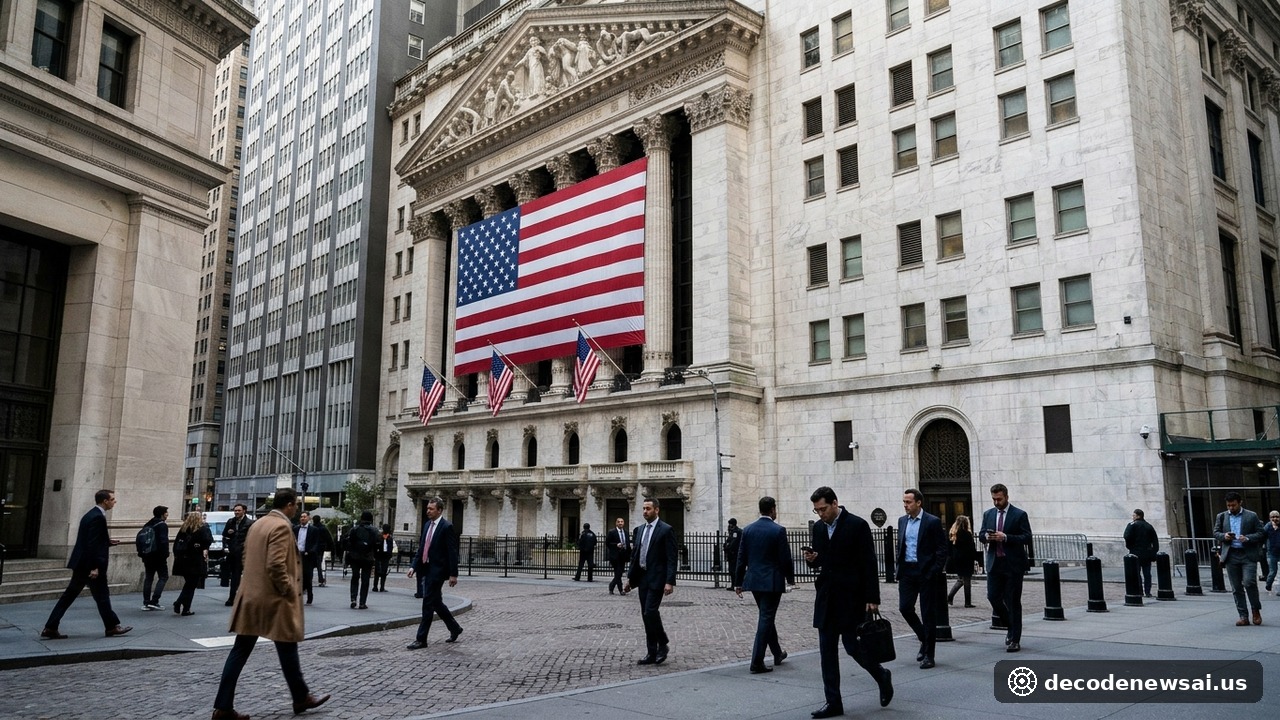
U.S. stocks staged a broad rally on November 4 after Democrats won control of both chambers of Congress in the midterm elections. Investors reassessed the outlook for Washington under divided government, sending the Dow Jones Industrial Average up 1,569.40 points, or 3.03%, to 53,356.12. The S&P 500 gained 1.58% to close at 7,688.62, while the Nasdaq Composite advanced 1.44% to 25,736.51.
The gains held through the close, turning an early-session advance of roughly 1,000 points in the Dow into a rise of more than 1,500 points by the end of the day. The Associated Press said the Dow’s 3% gain was its strongest single-day performance since April 2025. The rally was broad, but not universal: health-care companies, retailers serving lower-income consumers and several megacap technology stocks advanced, while energy, semiconductor and data-center-related shares faced pressure.
Election results ease one source of political uncertainty
Before the results became clear, investors had been concerned that a close or disputed election could prolong uncertainty about the direction of federal policy. Democrats’ gains in both the House and Senate changed that calculation. Market participants began to price in a divided government in which major policy shifts could face more resistance and require broader negotiations.
Reuters reported that investors viewed the new balance of power as a possible constraint on abrupt policy changes. That interpretation helped improve risk appetite after an unsettled period. However, the new Congress will not take office until January 2027, and election results do not immediately rewrite existing laws. Investors were responding to expectations about the policy environment, not to legislation that had already taken effect.
The election was not the only factor affecting prices. Analysts also pointed to falling oil prices, changing expectations about the Iran conflict, interest rates and sector-specific concerns. The day’s market move should therefore not be attributed to a single political explanation.
The major indexes finish sharply higher
At the close, the Dow had risen 1,569.40 points, or 3.03%, to 53,356.12. The S&P 500 added 119.70 points, or 1.58%, to 7,688.62. The Nasdaq Composite advanced 364.50 points, or 1.44%, to 25,736.51. The Russell 2000, which tracks smaller U.S. companies, gained 1.6% to 2,856.95, according to the Associated Press.
The final figures were larger than the intraday numbers in some earlier live market reports. The Dow was initially reported up about 1,000 points after the opening bell and later rose more than 1,200 points. Those were snapshots taken at different times, not competing final results. The closing figures provide the appropriate basis for comparing the day’s performance.
The Dow’s gain of more than 1,500 points was its strongest daily performance since April 9, 2025, according to reports from the AP and other market coverage. The index’s 3.03% advance also made it one of the standout performers among the major benchmarks.
Falling oil and a split in technology shares
Energy prices moved sharply lower as investors considered what the election could mean for U.S. foreign policy and the war involving Iran. The AP reported that Brent crude fell 8.7% to $94.62 a barrel. Lower oil prices helped ease pressure in the bond market, with Treasury yields declining as investors reassessed the potential inflation impact of energy costs.
The move was not uniformly positive for technology. Reuters reported that data-center operators fell as investors considered the possibility of tighter scrutiny of large AI infrastructure projects under a Democratic-controlled Congress. Yahoo Finance also reported weakness in chip stocks, including Nvidia and Micron. At the same time, major technology companies such as Apple and Microsoft rose, helping offset declines elsewhere in the sector.
That divergence matters because the market’s headline gains could obscure significant differences among industries. Investors may welcome the prospect of less abrupt federal policy change while still worrying that local and national officials could impose new limits on data-center construction, electricity use or permitting. Those concerns remain expectations rather than enacted restrictions.
One strong session does not settle the longer-term outlook
The rally showed that investors welcomed the clarity of the election outcome, but it does not establish how markets will perform over the coming weeks or months. The next Congress may revisit taxes, regulation, health care, energy and other policy areas, yet legislation will still have to move through the normal process and may face presidential vetoes.
Investors will also continue to watch corporate earnings, inflation, interest rates and energy markets. The future of the Iran conflict and its effect on oil prices remain uncertain. The November 4 session delivered a clear result: the Dow rose 3.03%, the S&P 500 gained 1.58%, the Nasdaq advanced 1.44%, and oil prices fell sharply. Whether the rally continues, and how the new political balance affects AI infrastructure investment and other sectors, cannot be determined from one trading day.
Sources
- The Wall Street Journal: The Dow’s Big Winners Today
- MarketWatch: Dow scores its best day in 18 months in a broad relief rally after Democrats sweep to power in Congress
- Yahoo Finance: Stock market today: Dow rallies 1,500 points, S&P 500 and Nasdaq gain after Democrats win control of Congress
- CNN: Dow eyes best post-midterm elections day in 44 years as Democrats take control of Congress
- Quartz: The Dow soars 1,500 points as a Democratic midterm election sweep lifts markets