SpaceX Taps Qualcomm to Build a US Mobile Network, but a Challenge to the Big Three Still Needs Spectrum and Customers
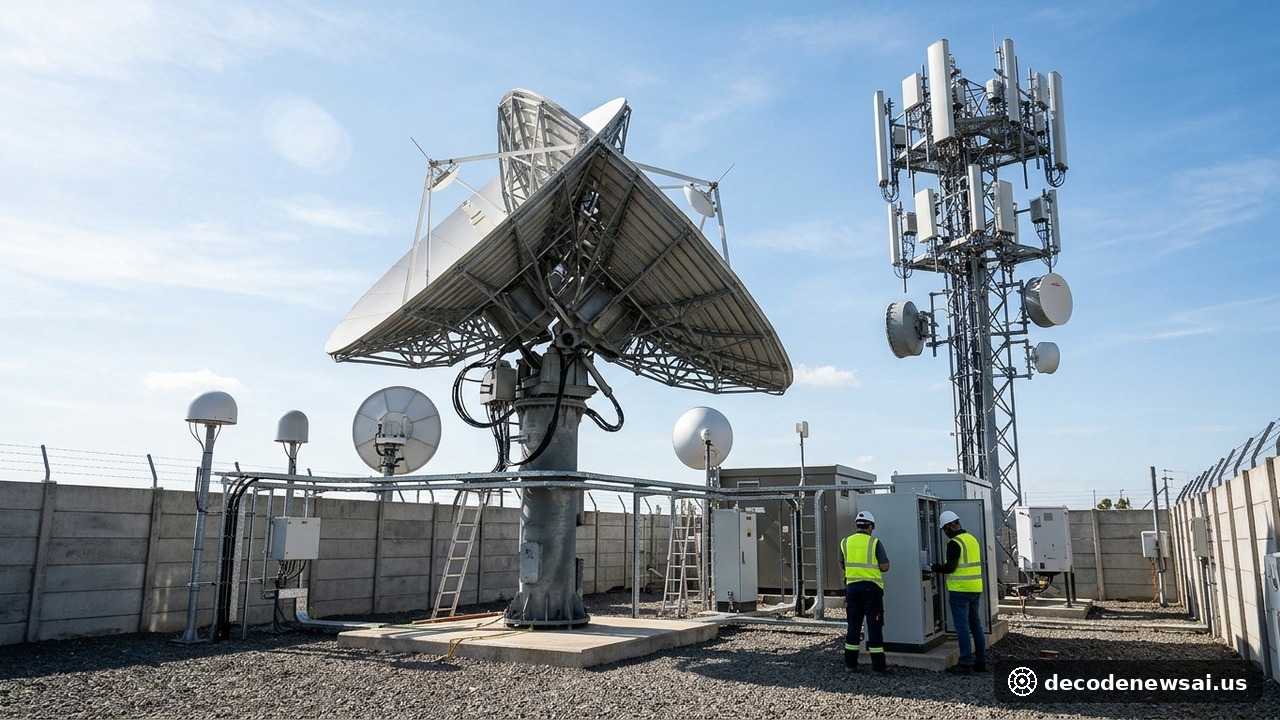
SpaceX has signed a multiyear agreement with Qualcomm to provide radio equipment, baseband platforms and software for the planned terrestrial 5G component of Starlink Mobile in the United States. Announced on November 4, the partnership is intended to support tens of thousands of ground sites, with deployment expected to begin in 2027. Qualcomm called it the largest 5G infrastructure agreement in its history, but the companies did not disclose the contract value, exact equipment volumes or a date for the launch of a full commercial service. The deal shows that SpaceX is moving beyond satellite-to-phone connectivity and intends to combine its low-Earth-orbit constellation with a ground-based 5G network. Notebookcheck and Barron’s said the agreement makes SpaceX’s ambition to challenge AT&T, Verizon and T-Mobile more concrete. But competing with established carriers requires more than radio equipment. SpaceX still needs spectrum, cell-site access, backhaul connections, regulatory approvals, customer support and substantial capital. Signing the agreement does not make Starlink a nationwide fourth carrier.
Qualcomm becomes a key supplier for the ground network
Qualcomm will provide its Dragonwing QRU100 radio platform, QDU100 distributed-unit platform and commercial-grade Layer 1 software. The planned network uses 64T64R Massive MIMO technology, which employs multiple antenna paths to transmit and receive signals simultaneously, improving spectrum efficiency and network capacity. Qualcomm says the architecture is also designed to improve energy efficiency for each unit of data processed. For SpaceX, the agreement gives it an established supplier for a major part of the terrestrial radio-access network and reduces the time required to develop every base-station component internally. For Qualcomm, the contract expands its role in telecommunications infrastructure beyond smartphone processors and modem chips. Barron’s noted that Qualcomm has had a smaller presence in large-scale network equipment than traditional base-station suppliers, making the agreement a potential opening to compete for major operator projects. The partnership also creates a test of whether Qualcomm’s radio and baseband platforms can support a network built around a new combination of satellite and terrestrial services. The companies have not disclosed the full deployment plan, so the scale of the initial rollout and the timing of each market launch remain unclear.
Satellites and terrestrial 5G solve different coverage problems
Starlink satellites can provide connectivity in remote areas, at sea and in places where conventional cell towers are difficult to build. But satellite-to-phone service still faces limits involving spectrum, capacity and device compatibility. Cities and suburbs need higher terrestrial capacity to handle large numbers of users streaming video, using apps and making calls at the same time. SpaceX plans to use satellites for broad coverage and ground-based 5G sites to add capacity in high-demand areas. Fierce Network reported that the hybrid model could reduce SpaceX’s dependence on roaming agreements with existing carriers. It does not mean satellites can replace terrestrial networks altogether. Ground sites still need fiber or other backhaul connections, suitable spectrum and land-use approvals. They must also coexist with existing wireless networks without creating harmful interference. Coverage will depend on site density, frequency bands and compatible devices, not simply the number of satellites in orbit. The model could be attractive in areas where traditional coverage is limited, but it will be more difficult to compete in dense markets where existing operators have already invested heavily in towers, fiber and spectrum. A hybrid network has to deliver reliable performance across both types of geography to become a practical substitute for an established mobile service.
Challenging AT&T, Verizon and T-Mobile requires more than technology
SpaceX wants to become a significant US mobile-service provider, but the established carriers already have extensive cell-site networks, retail distribution, enterprise customers and long-term spectrum holdings. SpaceX will need to show that it can offer reliable coverage at competitive prices and persuade consumers to switch from existing providers. Even if satellite connectivity creates a useful advantage in remote areas, urban customers will still care about indoor reception, data speeds, call quality and customer service. Reuters and MarketWatch reported that building a nationwide terrestrial network would require substantial investment. The Qualcomm agreement did not disclose the overall cost or how the project would be financed. SpaceX will also need continued access to spectrum, cell-site leases or construction permits, and partnerships across the device and carrier ecosystem. The market has discussed whether SpaceX might acquire or partner for wireless assets such as EchoStar’s Boost Mobile business. Analysts have suggested that existing customers, spectrum or network resources could speed up entry. But those discussions are not a confirmed acquisition agreement and should not be treated as part of the Qualcomm deal.
The industry and investment impact remains uncertain
The significance of the partnership is not simply that another brand may enter the wireless market. It gives a satellite operator a route into terrestrial network infrastructure. If SpaceX succeeds, it could change the competitive relationship between remote-area coverage, satellite-to-phone services and conventional mobile networks. Qualcomm, in turn, will have an opportunity to demonstrate whether its radio and baseband platforms can support a large-scale network rather than only supplying mobile devices. Important details remain undisclosed, including the final number of sites, contract value, spectrum arrangements, consumer pricing, coverage footprint and commercial launch schedule. Qualcomm’s statement that deployment is expected to begin in 2027 is a target, not proof that a nationwide service will be ready then. Investors will need to watch whether SpaceX builds sites on schedule, secures the necessary spectrum and attracts subscribers. For Qualcomm, the key question is whether one major contract can lead to recurring infrastructure revenue and additional operator customers. The agreement is an important step, but the real test will be the network’s eventual cost, coverage and ability to win customers from established carriers.
Sources
- Reuters: Qualcomm signs major 5G infrastructure deal with SpaceX for Starlink Mobile network
- Barron's: SpaceX Partners With Qualcomm for Starlink Mobile Rollout: What It Means for Telco Investors
- MarketWatch: Qualcomm Sat Out the Semiconductor Rally. Can a SpaceX Partnership Change That?
- Light Reading: SpaceX and Qualcomm team up for Starlink Mobile 5G
- Qualcomm: SpaceX Selects Qualcomm to Accelerate Starlink Mobile’s Nationwide 5G Network