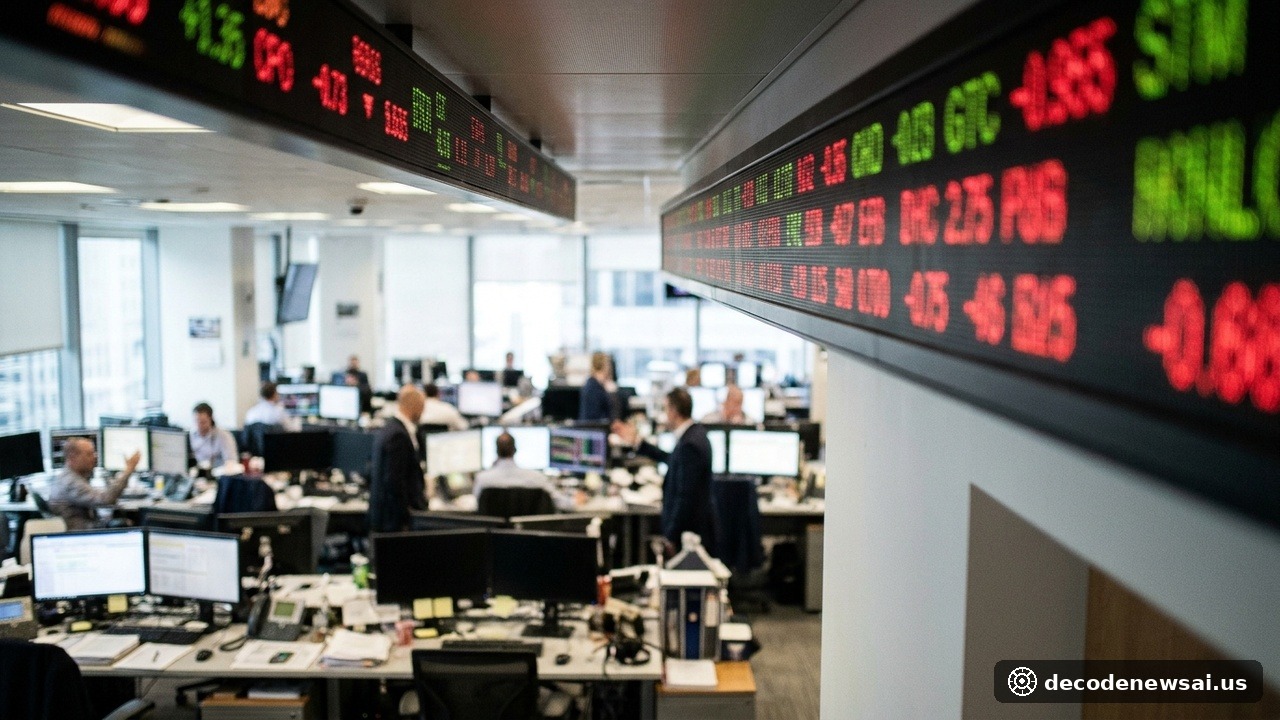
Asian markets diverged on Nov. 5 after the U.S. midterm elections. Japan’s Nikkei 225 fell about 1.8%, South Korea’s Kospi dropped roughly 5.3% and Taiwan’s benchmark declined about 3.2%. Hong Kong moved in the opposite direction: the Hang Seng Index rose about 3.7%, while the Hang Seng Tech Index gained about 5.6%. Investors were concerned that Democrats’ gains in Congress and state governments could lead to closer scrutiny of data-center construction, affecting AI infrastructure investment and Asian semiconductor suppliers.
Technology shares weigh on Japan, South Korea and Taiwan
South Korea recorded the steepest decline, with semiconductor-heavy stocks under pressure as investors reassessed the outlook for U.S. AI data-center spending. Taiwan’s market also weakened as chip and electronics supply-chain companies fell. Japan’s Nikkei was dragged lower by AI- and semiconductor-related shares, including some major electronics and equipment companies. Asian technology firms depend heavily on capital spending by U.S. cloud providers and data-center operators, so changes in U.S. regulatory expectations can quickly affect regional valuations.
Hong Kong moves higher
The Hang Seng rose about 3.7%, and the Hang Seng Tech Index advanced about 5.6%, contrasting with declines in Tokyo, Seoul and Taipei. Market participants said Hong Kong and mainland Chinese technology companies may be less directly exposed to U.S. data-center capital spending. Some investors may also have shifted funds away from U.S. and East Asian semiconductor shares toward Chinese internet, property and selected technology stocks. The Shanghai Composite edged up about 0.1%, showing that regional markets did not move in unison.
U.S. election results raise AI policy questions
Democrats won important state-level offices in Texas and Georgia, where some candidates had called for pauses or reviews of large data-center projects. Investors worry that restrictions involving electricity, water and land use could delay new U.S. facilities, affecting orders for servers, memory, networking equipment and chips. Analysts cautioned that tighter reviews could delay or relocate projects, but would not necessarily mean global demand for AI computing is falling.
Oil prices and capital flows remain variables
Brent crude briefly rose about 1.7% to $95.67 a barrel during Asian trading, adding to cost pressures for energy-importing economies. As investors digest the U.S. election outcome, they are also reassessing the dollar, bond yields and technology valuations. The next indicators will include U.S. data-center approvals, AI-company capital spending, semiconductor prices and policy changes across the region. The Nov. 5 market moves reflect a one-day reaction and do not by themselves establish a long-term change in Asia’s technology outlook.