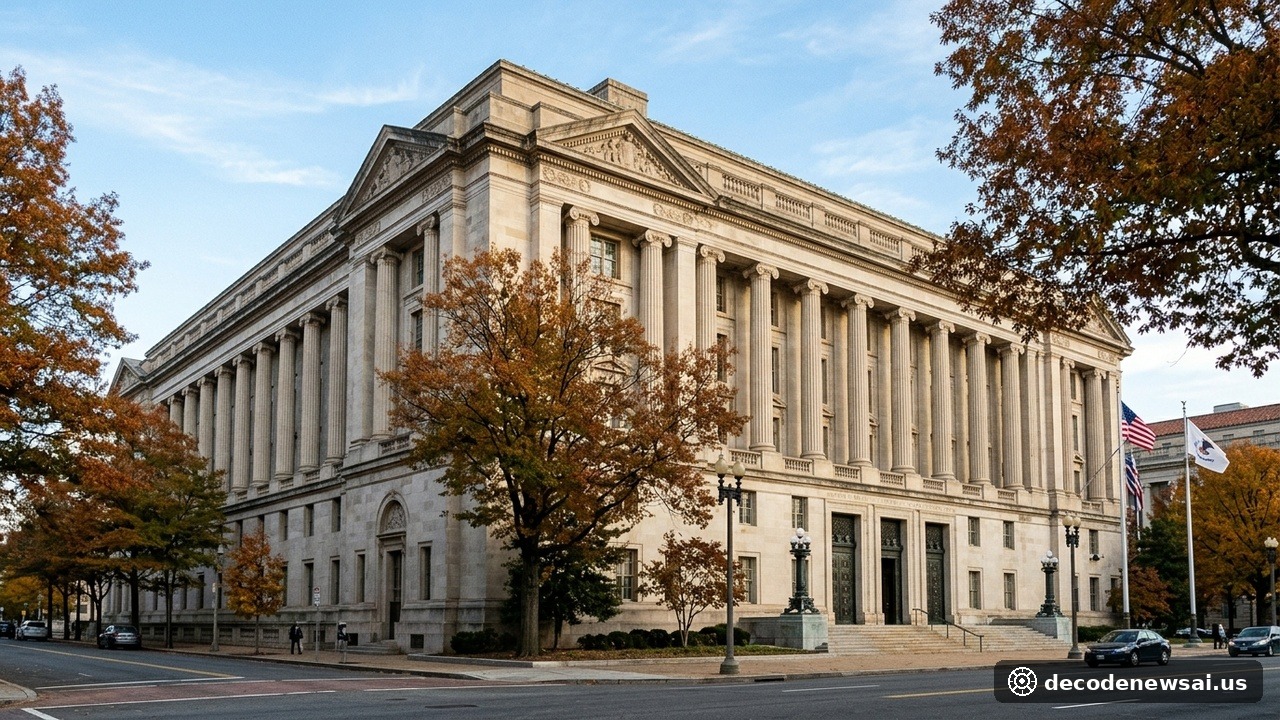
Harmeet Dhillon resigned on Nov. 5 as the Justice Department’s assistant attorney general for civil rights. Attorney General Todd Blanche announced that he had accepted her resignation, praising her work leading the division for about 18 months. Dhillon later said she had decided to leave before the midterm elections to return to private legal practice in California. She said White House Chief of Staff Susie Wiles asked her to wait until after the election before departing. Dhillon is the first senior Justice Department official to leave the Trump administration after Democrats won control of both chambers of Congress.
The timing of her departure
Reports of Dhillon’s planned exit surfaced earlier on Thursday, before Blanche confirmed that he had accepted her resignation. Dhillon told Fox News that she made the decision roughly three weeks before Election Day and delayed her departure at the White House’s request. The timing therefore does not establish that she was forced out because of the Republican losses. She said she wanted to return to private practice and continue working as a lawyer.
A shift in the division’s priorities
Dhillon was confirmed by the Senate in April 2025. During her tenure, she redirected the Civil Rights Division toward issues emphasized by the Trump administration, including religious liberty, Second Amendment rights, investigations involving alleged antisemitism on university campuses, college admissions and diversity policies. The department also expanded election-monitoring efforts and actions involving state voter-registration records. Supporters described the changes as a correction to ideological bias in government. Critics argued that the division was moving away from its traditional role in protecting minority rights and enforcing anti-discrimination laws.
Staff departures and legal disputes
The Associated Press reported that more than three-quarters of the division’s workforce left during Dhillon’s tenure. Dhillon described some departures as a self-selection process involving employees who disagreed with the administration’s direction. Former division officials and civil-rights advocates said the turnover weakened the agency’s expertise and independence. The Justice Department’s demands for detailed voter information from states also faced legal challenges, with courts rejecting some of the government’s requests. Those disputes should be described through the relevant court decisions rather than treating the department’s allegations as judicial findings.
Who will lead the division next?
The Justice Department has not announced a permanent successor. Whether the division continues Dhillon’s policy priorities will depend on the administration’s next personnel decisions and enforcement agenda. Democratic control of Congress could increase oversight of the department’s budget and civil-rights enforcement, but a change in congressional control does not automatically reverse existing executive policies or court rulings. Dhillon’s departure may also be an early sign of further personnel changes in the Trump administration after the midterm elections.