Southern Taurid Meteor Shower Peaks Tonight, Offering a Chance of Fireballs but Few Meteors
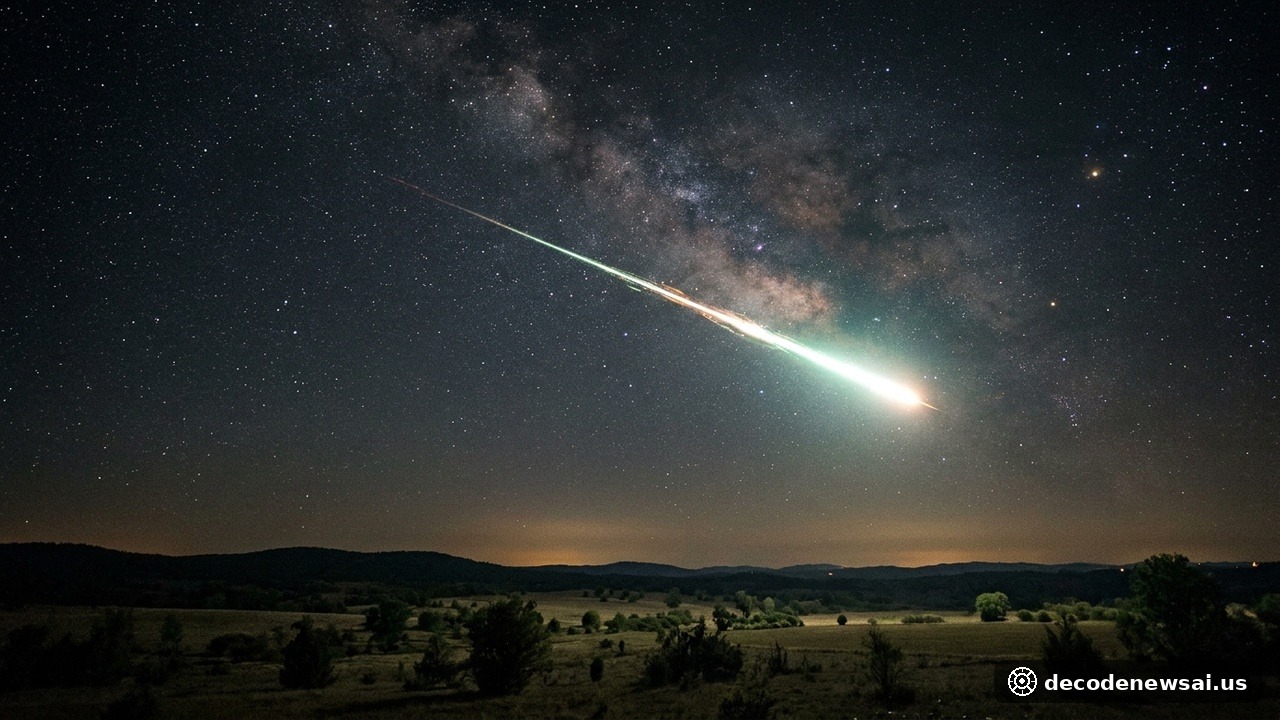
The Southern Taurid meteor shower is expected to reach its main 2026 peak overnight from November 4 into November 5. The American Meteor Society lists November 4–5 as the peak night, while NASA’s November skywatching guide also places the maximum around November 5. The shower is known for occasional bright fireballs, but its overall activity is modest. Under ideal conditions, observers may see about five meteors per hour, not a continuous display across the sky.
The Moon is a waning crescent, with roughly 24% to 25% of its surface illuminated during the peak night. That should limit moonlight interference. Observers can look toward the constellation Taurus around local midnight, choose a dark location away from streetlights and buildings, and allow their eyes 20 to 30 minutes to adjust.
The peak falls on the night of November 4–5
The American Meteor Society’s 2026–2027 meteor shower calendar lists the Southern Taurids’ peak as November 4–5, with a zenithal hourly rate of about five. NASA’s November skywatching guide also says the Southern Taurids peak around November 5, followed by the Northern Taurids around November 12.
The Taurid complex has two branches, the Southern and Northern Taurids. Both remain active for weeks and produce relatively slow-moving meteors. Their hourly rates are low, but they are known for occasionally producing unusually bright fireballs. NASA cautions that the rate of about five meteors per hour applies under ideal conditions, with the radiant high in the sky and little light pollution. Most observers will see fewer.
Fireballs are the highlight, not a sky full of meteors
The Southern Taurids are notable less for their quantity than for the possibility of a particularly bright fireball. Space.com quoted a NASA meteor expert explaining that Taurid rates are low, but the meteors can be very bright when they do appear. Larger fragments of comet debris entering Earth’s atmosphere can create longer-lasting and brighter streaks than typical meteors.
The November 2026 peak comes under a waning crescent Moon, which should provide relatively favorable viewing conditions. The American Meteor Society estimates that about 24% of the Moon will be illuminated on the peak night. That helps observers see fainter meteors, although no one can predict whether a bright fireball will appear over a particular location.
The 2026 display is not expected to be an unusually strong fireball storm. The best approach is to be patient and watch for a longer period rather than expecting a high number of meteors in a short time.
Look for an open, dark sky around local midnight
No telescope or binoculars are needed. Choose a location with a wide, unobstructed view and as little artificial light as possible. Give your eyes 20 to 30 minutes to adjust to the dark, and avoid repeatedly checking a bright phone screen. Meteors can appear anywhere in the sky, so observers do not need to stare directly at Taurus even though the trails appear to radiate from that constellation.
Around local midnight, Taurus is generally higher in the sky, improving the chance of spotting meteors. Actual visibility will depend on cloud cover, light pollution, obstructions near the horizon and the observer’s eyesight. If clouds interfere on the peak night, the Southern Taurids remain active until around November 20, so nearby nights still offer opportunities.
Northern Taurids and Leonids follow later in November
The Northern Taurids are expected to peak on November 11–12, with an ideal rate of about five meteors per hour. The Leonids follow around November 16–17. NASA says the Leonids could produce up to about 15 meteors per hour under ideal conditions, with the best viewing window before dawn on November 17 and 18 after the Moon sets.
The confirmed outlook is that the Southern Taurids peak on November 4–5, with relatively favorable moonlight and a chance of occasional bright fireballs. The ideal rate is only about five meteors per hour, however, and the actual number visible will depend on local weather and sky darkness. A predicted peak does not guarantee that a large number of meteors will be visible from every location.
Sources
- NASA: What’s Up: November 2026 Skywatching Tips from NASA
- American Meteor Society: 2026/2027 Meteor Shower Calendar
- Space.com: Taurid meteor shower 2026: When, where and how to see the 'Halloween fireballs'
- Weather.com: Taurid meteor shower 2026: when to see fireballs in November
- NASA Jet Propulsion Laboratory: What’s Up: November 2026 Skywatching Tips