Canada’s Merchandise Trade Surplus Widens to C$5.4 Billion as Oil and Gold Lift Record Exports
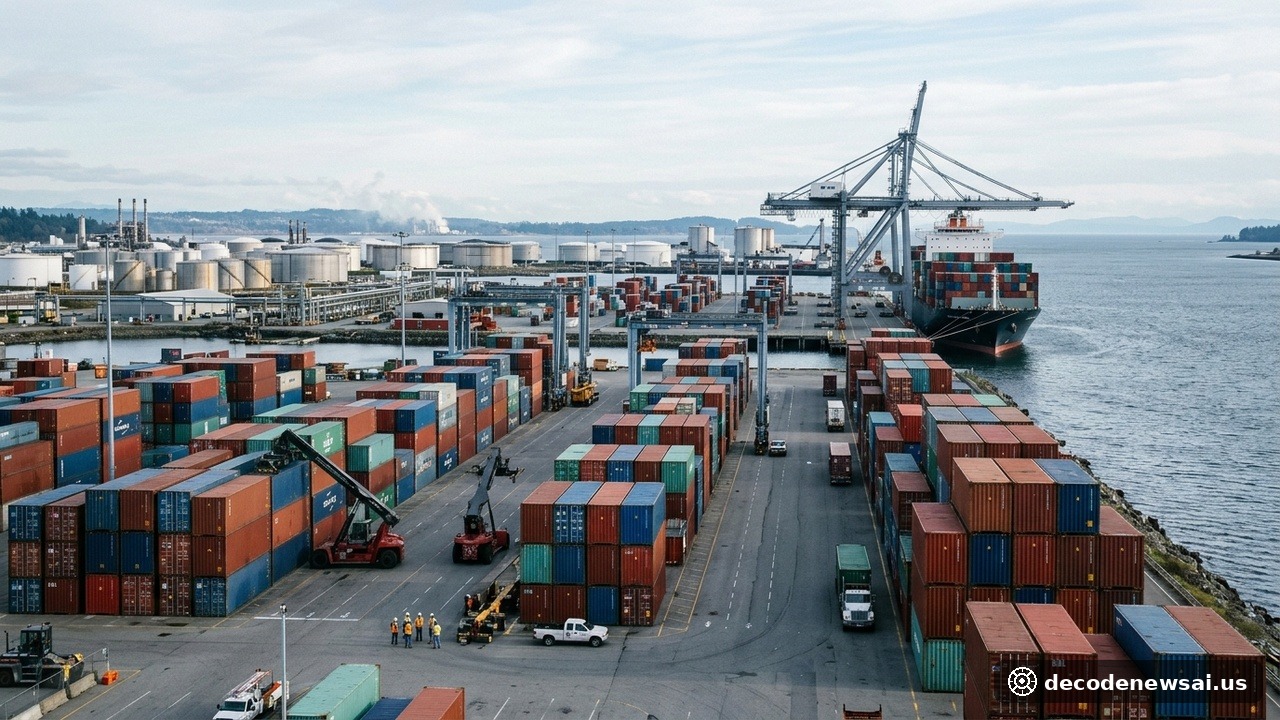
Canada’s merchandise trade surplus widened to C$5.4 billion in September, its highest level since May 2022, as higher shipments of crude oil and gold pushed the value of exports to a record. Statistics Canada reported on November 4 that merchandise exports increased 0.2% to C$78.6 billion, while imports fell 0.3% to C$73.2 billion. The surplus was wider than the revised C$5.0 billion recorded in August.
The headline result masks a weaker picture across much of the export economy. Statistics Canada said exports declined in eight of the 11 product sections. Excluding energy and metal and non-metallic mineral products, exports fell 5.6%. In real volume terms, total merchandise exports declined 4%. The surplus therefore widened mainly because of a small number of commodity categories, rather than broad-based strength across Canadian exporters.
Oil and gold drive the increase in export value
Exports of energy products rose 8.2% in September, the second consecutive monthly increase. Crude oil and bitumen shipments increased 10.2%, while natural gas exports rose 32.1%. Statistics Canada said higher prices were a major factor behind the increase in crude oil and bitumen exports. Exports of refined petroleum energy products fell 13.9%, partially offsetting the gains.
Exports of metal and non-metallic mineral products increased 8.6%. Unwrought gold, silver and platinum-group metals and their alloys rose 16.8%, making that category the largest contributor to the monthly increase in exports. Statistics Canada said higher purchases of Canadian-held gold by U.S. residents were behind much of the rise, while lower gold shipments to the United Kingdom partly offset the gain.
The figures show how commodity prices and specific shipments can lift the dollar value of exports even when the broader export base is struggling. The increase in nominal exports should not be interpreted as a comparable increase in the amount of goods Canada shipped abroad.
Trade with the United States strengthens
Canadian exports to the United States increased 0.7% in September, mainly because of higher crude oil and unwrought gold shipments. Imports from the United States rose 0.4%, partly reflecting increased shipments of processing units. Canada’s merchandise trade surplus with its largest trading partner widened from C$12.1 billion in August to C$12.3 billion in September.
Reuters reported that more than 70% of Canadian exports went to the United States, the highest share in 13 months. The concentration highlights Canada’s continued reliance on the U.S. market at a time when tariffs and trade negotiations remain uncertain.
Exports to countries outside the United States fell 1.1%, marking a second consecutive monthly decline. Lower shipments of gold to the United Kingdom, coal and wheat to Japan, and diesel and wheat to Peru were partly offset by increased exports of copper, coal and crude oil to South Korea. Canada’s merchandise trade deficit with non-U.S. markets narrowed slightly from C$7.1 billion to C$7.0 billion.
Imports fall as vehicles and consumer goods weaken
Merchandise imports declined 0.3% to C$73.2 billion in September. Imports of motor vehicle engines and parts fell 5.6%, coinciding with lower light-truck production in Canada and a decline in exports of passenger cars and light trucks. Consumer goods imports dropped 2.9%, including lower imports of battery energy-storage systems and some jewelry and cut-gem products.
Electronic and electrical equipment imports moved in the opposite direction, rising 10.3% to a record. Imports of computers and computer peripherals increased 29.4%, mainly because Canada imported more data-center processing units from the United States. In the first nine months of 2026, computer and peripheral imports were up 53.4% compared with the same period in 2025, indicating continued demand for computing and data-center equipment.
A wider surplus does not mean export volumes are recovering
When goods and services are combined, Canada’s total exports rose 0.3% to C$99.9 billion in September, while imports edged up 0.1% to C$94.2 billion. The overall trade surplus in goods and services increased to C$5.7 billion from C$5.4 billion in August. That broader figure is different from the C$5.4 billion merchandise-only surplus.
The confirmed result is that Canada’s merchandise trade surplus reached C$5.4 billion, with the value of exports setting a record at C$78.6 billion. But export volumes fell 4%, and most product categories recorded declines. Future trade performance will depend on U.S. tariffs, energy and metals prices, vehicle production and the outcome of Canada-U.S. trade negotiations. The September surplus alone does not show that Canada’s export competitiveness has broadly improved.
Sources
- Statistics Canada: Canadian international merchandise trade, September 2026
- Reuters: Canada's trade surplus widens to more than four-year high in September
- The Wall Street Journal: Canada's Trade Surplus Widens as Oil, Gold Drive Record Exports
- The Canadian Press / Yahoo Finance: StatCan reports $5.4B merchandise trade surplus for September
- CHCH News: Canada’s merchandise trade surplus increased to $5.4B in September: StatCan