Alaska Senate Race Remains Unresolved as Ballot Counting and Ranked-Choice Tabulation Stretch Into November
Alaska’s U.S. Senate race remained undecided on November 4, with Democrat Mary Peltola holding a narrow lead of 626 first-choice votes over Republican incumbent Dan Sullivan. The figures are unofficial, and significant numbers of early, absentee and questioned ballots remain to be processed. Reuters reported that about 74% of the expected Senate vote had been counted, leaving the outcome potentially unresolved for weeks.
Alaska uses ranked-choice voting, allowing voters to rank candidates in order of preference. If no candidate receives more than 50% of first-choice votes, the lowest-performing candidate is eliminated and ballots are transferred to the next available preference marked by each voter. The Alaska Division of Elections plans to conduct the official ranked-choice tabulation on November 18 and is targeting November 25 to certify the results.
Peltola leads by 626 votes, but the count is not final
Unofficial figures published by the Alaska Division of Elections early on November 4 showed Peltola with 102,701 first-choice votes, or 48.0%, compared with 102,075 votes, or 47.7%, for Sullivan. The difference was 626 votes. The other candidates are Republican Gerald Heikes and independent Dan J. Sullivan Jr., a retired teacher whose name is similar to the incumbent senator’s.
Reuters reported that the narrow first-choice lead does not establish a winner. Neither leading candidate has crossed the 50% threshold, so the race could proceed to ranked-choice tabulation. Additional absentee and early ballots could also change the first-round order. The state’s posted results remain unofficial, and neither Peltola nor Sullivan has been declared the winner.
Mail ballots and hand counts in remote areas extend the timeline
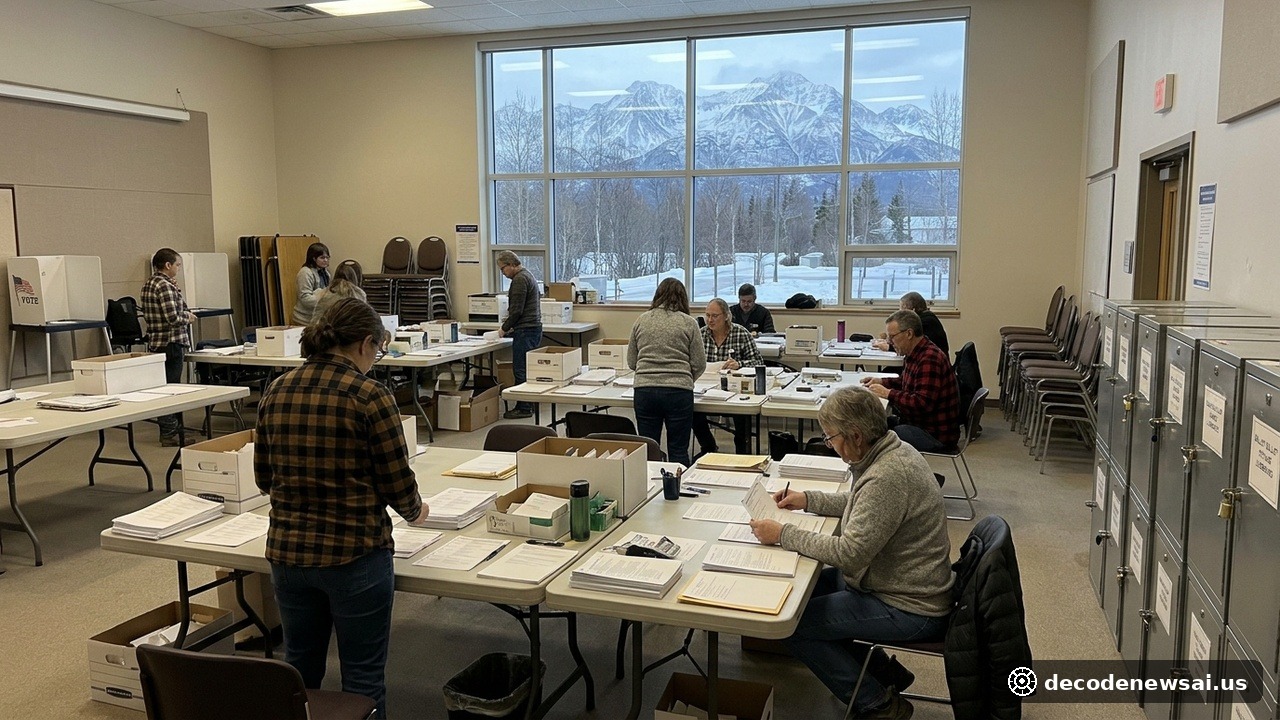
Alaska’s large size and dispersed communities make ballot processing slower than in many states. Alaska Public Media reported that election workers hand-count ballots in 131 of the state’s more than 400 precincts, then report results by phone to regional offices. State law also allows eligible absentee ballots to arrive after Election Day.
Domestic absentee ballots postmarked by Election Day may arrive through November 13. Overseas ballots may arrive through November 18. The Division of Elections plans further result updates on November 10, 13 and 18. Some questioned ballots must also be reviewed to determine voter eligibility before they can be included in the count.
These procedures mean that an Election Night lead can change as later ballots are added. Alaska Public Media has noted that early results in past elections have sometimes shifted by several percentage points as absentee and rural ballots were processed.
Ranked-choice tabulation is scheduled for November 18
Under Alaska’s system, a candidate needs more than 50% of the first-choice vote to win outright. If no one reaches that threshold, the candidate with the fewest votes is eliminated and ballots are redistributed to the next available choice selected by each voter. The process continues until a candidate secures a majority. Voters may rank up to four candidates.
The state plans to conduct the official ranked-choice tabulation on November 18, after eligible ballots have been reviewed and counted. The Washington Post and CBS News have both reported that the combination of remote hand counts, late-arriving absentee ballots and the ranked-choice process is likely to delay a final result. The state is targeting November 25 for certification. Recount requests must be made within five days after certification.
Two candidates with similar names add a political dispute
The Senate ballot includes incumbent Dan S. Sullivan and independent candidate Dan J. Sullivan Jr., whose names are similar. Republicans have alleged that the independent candidate could divert votes from the incumbent. Peltola’s campaign has denied involvement in recruiting him. The Alaska Supreme Court previously rejected an effort to remove Dan J. Sullivan Jr. from the ballot.
The Alaska Beacon analyzed part of the state’s ballot-preference data and found that, in a preliminary ranked-choice scenario, some votes for Heikes and Dan J. Sullivan could transfer to the incumbent senator. But the analysis did not include all hand-counted precincts or ballots that had not yet been processed, so it is not an official projection. The Justice Department is also investigating allegations connected to the candidate’s entry into the race, but an investigation is not proof of wrongdoing by either campaign.
The race still matters after Democrats secured Senate control
The result will determine Alaska’s representation and the size of the parties’ Senate caucuses. Democrats have already secured control of the Senate following the 2026 midterm elections. A Peltola victory would expand the party’s majority, while a Sullivan victory would reduce that advantage. The Alaska race no longer determines which party controls the chamber, but it can still affect the margin and committee balance.
The confirmed position is that Peltola leads the unofficial first-choice count by 626 votes, ballots remain outstanding, ranked-choice tabulation is scheduled for November 18 and certification is targeted for November 25. The winner will not be known until all eligible ballots have been counted and the ranked-choice process is completed. The current lead should not be described as a certified election result.
Sources
- Reuters: What's next for Alaska's unusual US Senate race
- Alaska Division of Elections: 2026 General Election Results
- Alaska Public Media: Alaska counts ballots slowly. Here’s what to expect on Election Night and beyond
- The Washington Post: Why Alaska’s Senate results could take more than two weeks to come in
- CBS News: How Alaska's ranked choice voting system works with 2 Dan Sullivans on the ballot for Senate