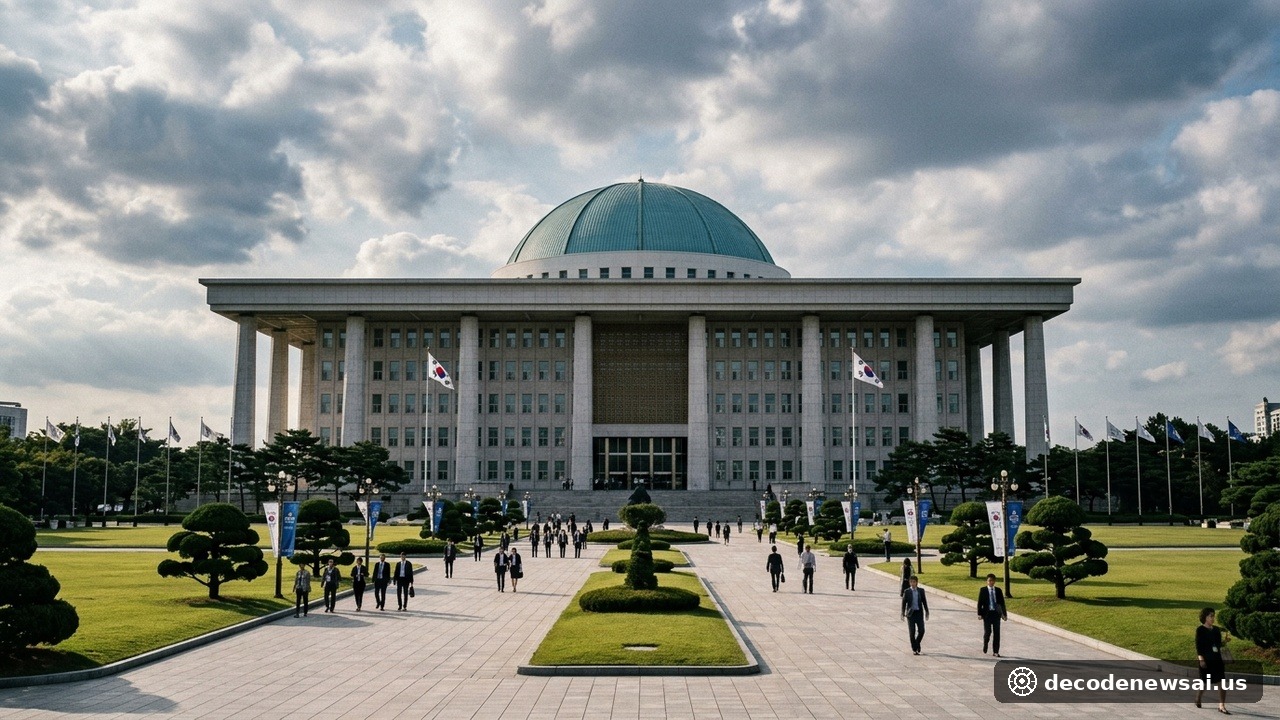
A month-long parliamentary audit in South Korea has revealed growing strains in the country’s alliance with the United States, including disputes over intelligence sharing, access to senior White House officials, visas and trade. Reuters reported on Nov. 5 that South Korea’s intelligence chief acknowledged Washington had curtailed some sensitive intelligence sharing after a South Korean minister publicly discussed the location of a suspected North Korean nuclear site. The revelations came as Washington shifts its military priorities in Asia toward China.
Intelligence sharing curtailed after disclosure
South Korea’s National Intelligence Service chief Lee Jong-seok told lawmakers that the United States had restricted some sensitive intelligence sharing after Unification Minister Chung Dong-young publicly referred to a suspected North Korean nuclear facility. South Korean intelligence and military officials did not disclose the specific information affected. The dispute highlights differences over handling classified information and policy toward North Korea, although the South Korean government says alliance cooperation continues and the issues can be managed through dialogue.
Visa delays and limited White House access
South Korean lawmakers Jin Sung-joon and Jung Chung-rae encountered delays in obtaining U.S. visas for official trips. Jin received his visa only after South Korea’s defense and foreign ministers intervened. South Korea’s ambassador to Washington also told lawmakers that access to senior White House officials had been limited. Korean media reported that the incidents point to broader problems in routine communication between the two governments, rather than isolated visa cases.
Washington is shifting its military focus toward China
The United States has about 28,500 troops stationed in South Korea, where their longstanding mission is to deter North Korea. U.S. officials have recently emphasized that the forces need greater flexibility to respond to regional threats beyond the peninsula, potentially including a conflict involving Taiwan and China. Seoul worries that a shift in U.S. military resources could weaken deterrence against North Korea. Washington says U.S. forces in South Korea will continue to focus on deterring the North, even as regional security arrangements evolve.
Trade tensions and public opinion add pressure
The alliance is also affected by trade and investment disputes, including a U.S. immigration raid that detained South Korean company workers and disagreements over investment commitments and the treatment of Korean businesses. A Pew Research Center survey published in August found that 55% of South Koreans held an unfavorable view of the United States, the highest level in more than two decades of the organization’s tracking. South Korea’s opposition has blamed President Lee Jae Myung for mishandling the relationship, while his government says several issues have combined and are being addressed one by one.
The alliance remains, but coordination is under pressure
The U.S.-South Korea alliance remains a central pillar of Northeast Asian security, and neither government has announced a change to their mutual-defense arrangements. The current friction reflects the need to recalibrate intelligence cooperation, North Korea policy, troop missions and economic relations. As Washington asks allies to take greater responsibility for regional security, Seoul must balance deterrence against North Korea, cooperation with the United States and its relationship with China. Future joint exercises, intelligence-sharing arrangements and defense-cost negotiations will be important indicators of the alliance’s direction.