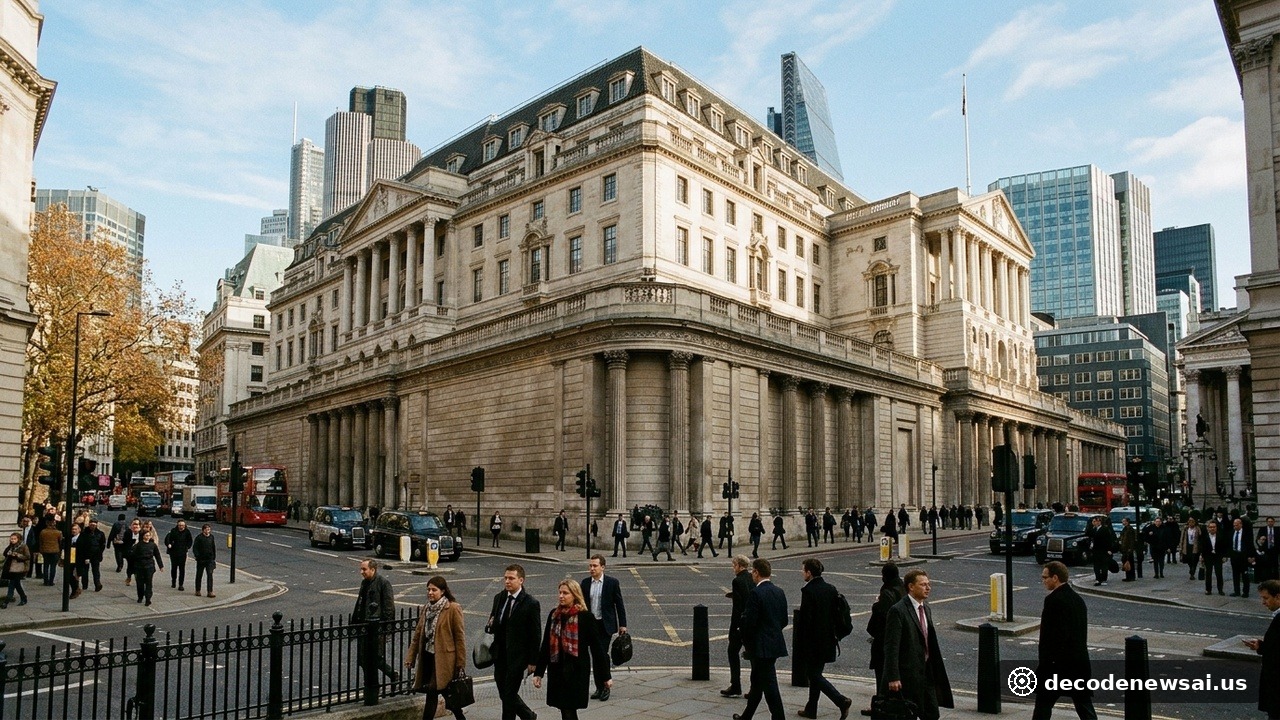
The Bank of England raised its benchmark interest rate by 0.25 percentage points to 4% on Nov. 5, its first increase since August 2023. All nine members of the Monetary Policy Committee supported a rate increase: eight preferred a quarter-point move, while one wanted a larger half-point increase. The Bank said the conflict in the Middle East had pushed energy prices higher. UK consumer-price inflation reached 3.5% in September, and officials expect it could approach 5% by the middle of 2027. The Bank warned that prolonged energy costs could spread into broader prices and wages.
Energy costs reshape the inflation outlook
The Bank said the continuing conflict in the Middle East had disrupted energy transportation and supply, keeping oil and gas prices elevated. Higher energy costs have already affected fuel and household utility bills and could feed into a wider range of goods and services through business costs. The Bank said there was still limited evidence of significant second-round effects in wages and other prices. But the longer the cost shock persists, the greater the risk that it becomes embedded in price-setting and pay negotiations.
All members backed a hike, but differed on its size
All nine MPC members voted for an increase. Eight supported raising Bank Rate by 0.25 percentage points to 4%. Catherine Mann preferred a 0.5-point increase to 4.25%, arguing that stronger action was needed to prevent inflation expectations from becoming entrenched. The vote therefore showed no disagreement over whether to raise rates, but a difference over how far to go. The Bank said future decisions would depend on energy prices, wage growth, business pricing and the amount of spare capacity in the economy.
What it means for mortgages, savings and businesses
Higher rates generally increase borrowing costs for households and companies, particularly for tracker mortgages and other loans linked to Bank Rate. Rates on new loans may also adjust as market expectations change. Savings rates could rise, although banks do not always pass on the full increase to depositors. UK businesses face the possibility of higher energy and financing costs at the same time, which can squeeze margins and affect investment. Households with fixed-rate mortgages will not see an immediate change in monthly payments, but may face higher offers when their deals expire.
The Bank has not promised a series of hikes
Governor Andrew Bailey said the move should not be viewed as the start of an inevitable long sequence of increases. However, he also warned that another rise could be necessary if the Middle East conflict continues. The Bank expects inflation to reach about 5% by mid-2027 before easing as the energy shock fades. Expectations for the next rate decision may change with oil and gas prices, wage data and evidence of broader price pressures. The Bank’s next scheduled decision is due on Dec. 17.