Democrats Expand State-Level Power, Flip Texas House and Win Governorships in Republican-Leaning States
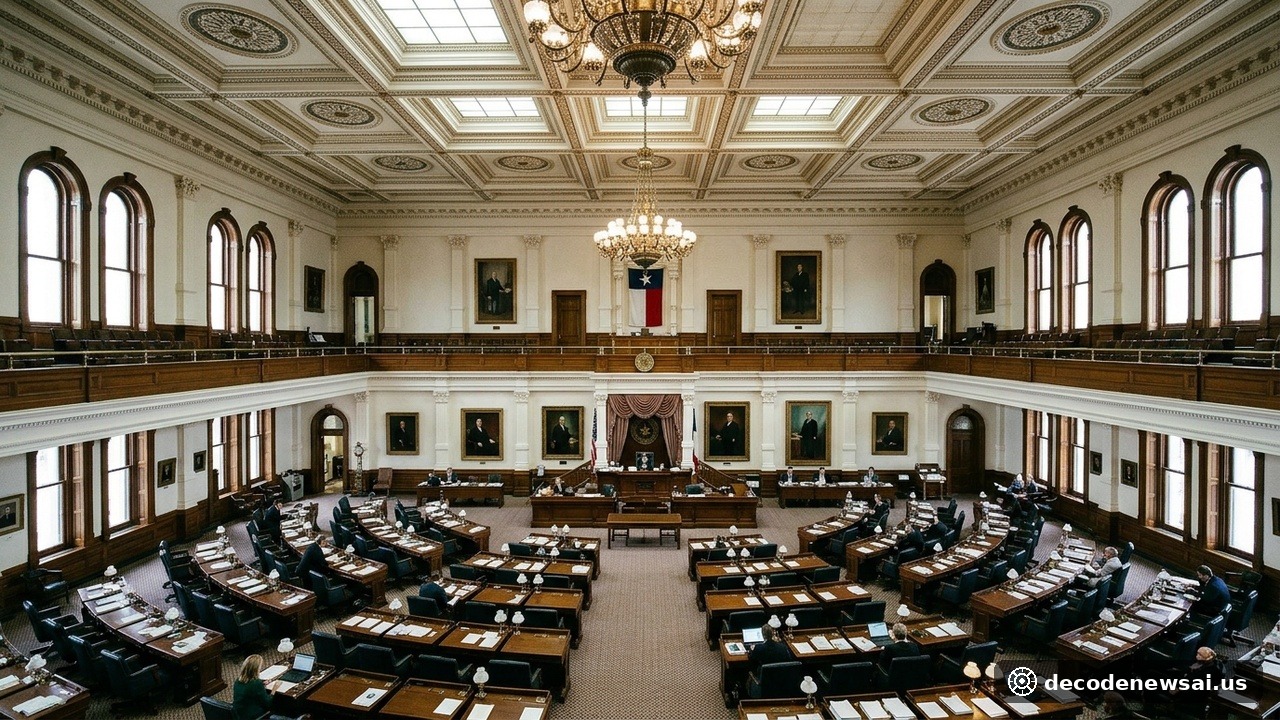
Democrats made major gains in state elections during the 2026 U.S. midterms, winning the Texas governor’s race and control of the Texas House while capturing governor’s offices in several states that had long been led by Republicans. The Associated Press reported that Democrats will control the Texas House for the first time since Republicans took it after the 2002 election. Republicans, however, retained control of the Texas Senate, meaning the state government will not be under complete Democratic control.
The AP also reported that Democrats gained full control of state government in at least five states where power had previously been divided, and were on track to hold at least 28 governorships in 2027. NBC News said Democrats flipped five governor’s offices — Georgia, Iowa, Texas, Ohio and Nevada — giving the party a majority of governorships for the first time in 16 years. These are media-reported election results and projections; formal certification in some states was still pending when the reports were published.
Texas House flips, while Republicans keep the state Senate
Texas was one of the most consequential changes in the election. Democrat Gina Hinojosa defeated incumbent Gov. Greg Abbott, becoming the state’s first Democratic governor since 1994 and its first Latina governor. Democrat James Talarico also won the U.S. Senate race, while Democrats took control of the Texas House.
The AP noted that Republicans had controlled the Texas House since winning it in 2002. Democrats regained the chamber, but Republicans retained the state Senate. The Texas Tribune reported that Democrats also won the governor’s office and other statewide executive positions, including lieutenant governor and attorney general, changing a state government structure that had been dominated by Republicans for decades.
The shift does not mean every part of Texas government is now controlled by Democrats. The Republican Senate remains an important constraint on legislation, budgets and appointments. The new governor and Democratic House majority will have to negotiate with a chamber controlled by the opposing party.
Several battleground states move toward unified Democratic control
The AP reported that Democrats took full control of both legislative chambers and the governor’s office in at least five states where power had previously been shared. Democrats won or retained both legislative chambers and the governor’s office in Michigan, Minnesota and Pennsylvania. In Wisconsin, they flipped both chambers while retaining the governor’s office. Democrats also gained unified control in Nevada by winning the governorship while keeping the legislature.
Wisconsin was a particularly significant legislative shift. The AP reported that Democrats broke a 16-year Republican majority in the state Legislature. The National Conference of State Legislatures said voters in 46 states chose 6,139 state legislators in 2026, representing more than 83% of all state legislative seats nationwide. Its November 4 review cautioned that some results were still unofficial and that several races had not yet been called.
The new state-level map could affect policy in areas where governors and legislatures share authority. Unified control can make it easier for a party to advance legislation, but state constitutions, courts, budget rules and local governments still shape what can be implemented.
Democrats win a majority of governorships after breaking into red states
NBC News reported that Democrats flipped five governor’s offices in Georgia, Iowa, Texas, Ohio and Nevada, giving the party a majority of governorships for the first time in 16 years. Georgia’s Keisha Lance Bottoms is set to become the first Black woman elected governor in U.S. history. Iowa’s Rob Sand and Ohio’s Amy Acton also won their governor’s races.
The AP said Democrats are expected to hold at least 28 governorships in 2027. It also reported that the party broke or prevented Republican supermajorities in nine legislative chambers across eight states: Florida, South Carolina, Indiana, Missouri, Iowa, Ohio, Kansas and North Carolina. Stateline reported that Democrats had flipped at least 12 state legislative chambers, describing the result as the party’s strongest state legislative performance since 2008.
Those figures reflect different measures: governor’s offices, legislative chambers and full state-government control are not interchangeable. A state can have a Democratic governor and a Republican legislature, or a Democratic legislature with a governor from the other party. The Texas result illustrates that distinction.
Cost of living and state policy issues move to the forefront
State governments have direct influence over taxes, housing, education, healthcare, abortion rights, energy costs and data-center approvals. The AP identified the cost of living, gasoline prices, inflation and affordable housing as central voter concerns. Democrats’ new state-level power could put those issues near the top of legislative agendas when state lawmakers return in 2027.
Data-center development and artificial-intelligence oversight may also receive more attention. Campaign debates in Texas and other states have included electricity demand, water use, local impacts and permitting rules. A change in party control does not automatically change policy: new laws still require legislative votes, gubernatorial approval and, in some cases, court review.
The election could also reopen debates over congressional district maps. The AP reported that Republican redistricting efforts in Texas and Wisconsin did not produce all the gains their sponsors had expected, and Democrats are likely to face pressure from supporters to consider their own map strategies where they control the process.
Results still need certification, and governing is the next test
The election gives Democrats more state-level authority, but it also raises expectations that they will deliver on campaign promises. Wisconsin Democratic Party Chairman Devin Remiker told the AP, “Now it’s time to deliver.” Incoming governors and legislative majorities will need to produce proposals on housing, utility bills, healthcare and education, while negotiating with Republican-controlled chambers or local governments where power remains divided.
Some legislative results were still unofficial when the National Conference of State Legislatures published its initial review on November 4. The organization said several races had yet to be called and that chamber control could change as additional results were finalized. Media projections and reported victories should therefore not be described as certified results until the relevant state authorities complete that process.
What is clear so far is that Democrats made substantial gains in state governments, flipped the Texas House and won several governorships in states that had long been Republican-led. The final seat counts, the formal certification of individual races and the policies that the new majorities can enact will determine how lasting the shift becomes.
Sources
- NBC News: Democrats clinch a majority of governorships for first time in 16 years
- The National Conference of State Legislatures: 2026 State Legislative Elections: The Results and What They Mean
- The Texas Tribune: Democrats seize power in Texas, ending decades of GOP dominance
- Stateline: In blue wave, Democrats flipped legislatures, won trifectas and toppled GOP supermajorities
- Houston Chronicle: Which Republican seats did Democrats flip in Texas midterm election? Here's a rundown