Latino and Young Voters Shift Toward Democrats, Helping Fuel the Party’s 2026 Midterm Wins
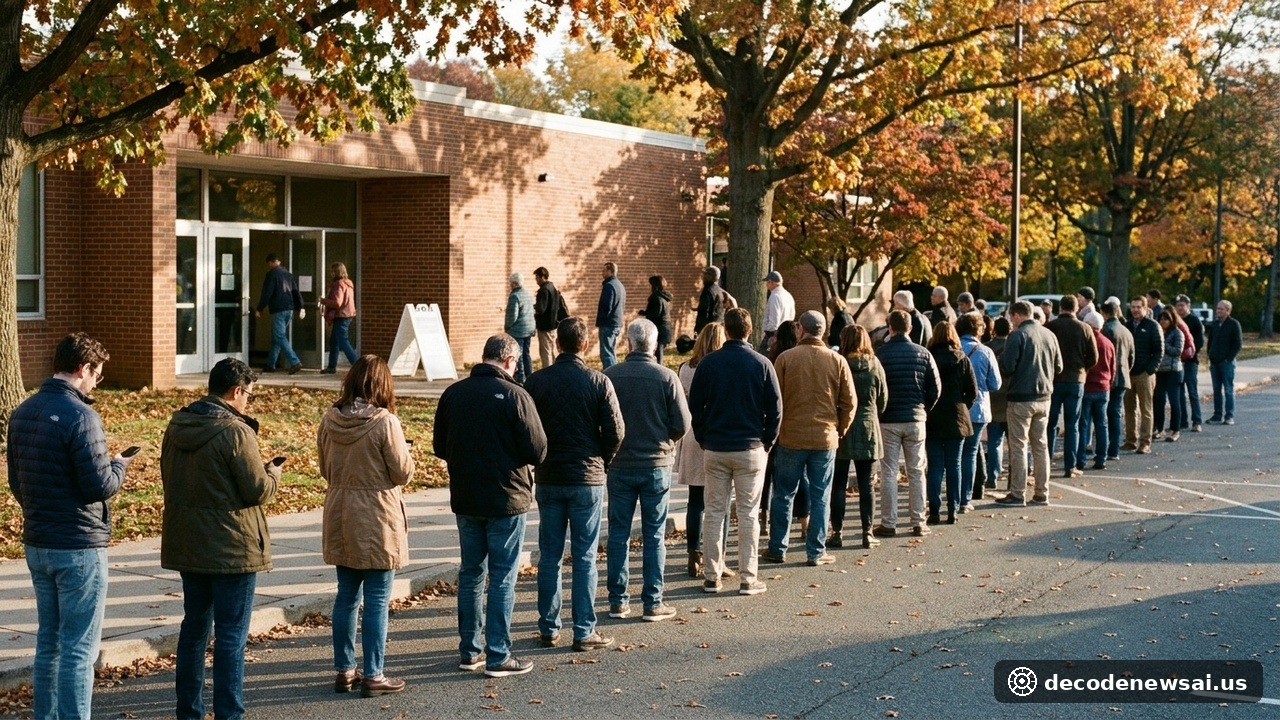
A new analysis by NPR of voter survey data found that Latino, younger, Asian American, suburban and independent voters moved significantly toward Democrats in the 2026 midterm elections, helping the party win control of both chambers of Congress. Compared with 2024, Latino voters shifted 21 percentage points toward Democratic House candidates. Among voters ages 18 to 29, Democrats held a 48-point advantage, a 34-point shift toward the party compared with two years earlier.
The movement was not limited to younger voters and racial minorities. NPR’s analysis found that Democrats also improved substantially among white voters, ending up roughly even with Republicans overall. Republicans won only 38% of independent voters, their weakest performance in that group since at least 1998. The figures describe survey estimates of voter behavior, not official ballot counts, and they do not prove that any single policy issue caused the election result.
Latino and Asian American voters moved sharply toward Democrats
NPR’s analysis of the AP Voter Poll, conducted by SSRS for the Associated Press and other news organizations, found that Latino voters shifted 21 points toward Democratic House candidates compared with 2024. President Donald Trump had won a historically large share of Latino voters for a Republican presidential candidate in 2024, but the group moved back toward Democrats in the midterms.
NPR identified several possible factors, including pressure from the cost of living, frustration that Trump’s promises to lower prices had not been fulfilled and opposition to the administration’s aggressive immigration enforcement. Asian American voters also moved 21 points in the Democratic direction compared with 2024.
The AP Voter Poll found that roughly six in 10 Hispanic voters nationally supported Democratic candidates in their local House races. About nine in 10 Black voters backed Democratic House candidates. In Texas, roughly six in 10 Hispanic voters supported Democratic Senate candidate James Talarico over Republican Ken Paxton.
Voters ages 18 to 29 showed a 34-point shift
Young voters were among the groups with the largest change. NPR reported that Democrats won voters ages 18 to 29 by 48 points, a 34-point shift toward the party compared with 2024. A separate AP Voter Poll of more than 100,000 voters nationwide found that about seven in 10 voters under 30 supported Democratic candidates in their local House races, compared with about three in 10 who supported Republicans.
Young voters accounted for about 11% of the 2026 electorate, however, compared with 18% in the 2008 presidential election. That means their shift was large, but their share of the overall electorate remained relatively small. The survey also found that about six in 10 voters under 30 said one reason for their vote was to express opposition to Trump.
Young voters’ decisions may reflect several issues at once, including economic pressure, dissatisfaction with the administration and views about the president’s political style. The survey does not establish that one factor alone caused the shift.
Suburban voters, men and independents also moved
NPR’s analysis found that Democrats won suburban voters by 19 points and improved their performance in urban areas compared with 2024. Democrats continued to lose rural voters, but by a smaller margin: 16 points, compared with a 32-point deficit in 2024.
Women supported Democrats by a 19-point margin. Men also favored Democrats, by about two points, marking the first time the party had won men since 2008. NPR said that was only the third time in 34 years that Democrats had won the group.
The shift among independents was particularly notable. Republicans won just 38% of independent voters, their worst result in the group since at least 1998. The AP Voter Poll also found that about two-thirds of moderate voters backed Democratic House candidates. Many moderates said Congress was not doing enough to check presidential power, while inflation and the cost of living remained major concerns.
The shifts cannot be explained by one issue alone
NPR’s analysis linked the Latino shift partly to economic concerns and immigration enforcement. The AP Voter Poll found that voters from households earning less than $50,000 were more likely to move away from Republicans, while many moderate voters wanted stronger congressional checks on the president. Different groups may have responded to different issues, and the survey does not show that all voters were motivated by a single rejection of the Trump administration.
The 2026 data came from a survey of tens of thousands of voters conducted around Election Day, including in-person exit interviews and a pre-election survey. The full sample had a reported margin of error of plus or minus 0.6 percentage points, while estimates for smaller demographic subgroups carry larger uncertainty. Official election results remain subject to state certification.
The confirmed pattern is that Democrats improved their performance among several key groups compared with 2024, particularly Latino voters, younger voters and independents. Together with gains among suburban voters and men, those shifts helped form the coalition behind the party’s midterm victories.
Sources
- The Washington Post: The voting groups that powered the Democratic sweep
- The Washington Post / AP: Young voters led a sharp shift toward Democrats in the 2026 midterms
- Strength In Numbers / G. Elliott Morris: Early vote data shows Latinos, young people, Democrats surging in turnout
- Click2Houston: Young Latino voters showed up in record numbers in Harris County. Here's what motivated them
- CIRCLE at Tufts University: One Week Away: Registrations Surge Among Newly Eligible Voters