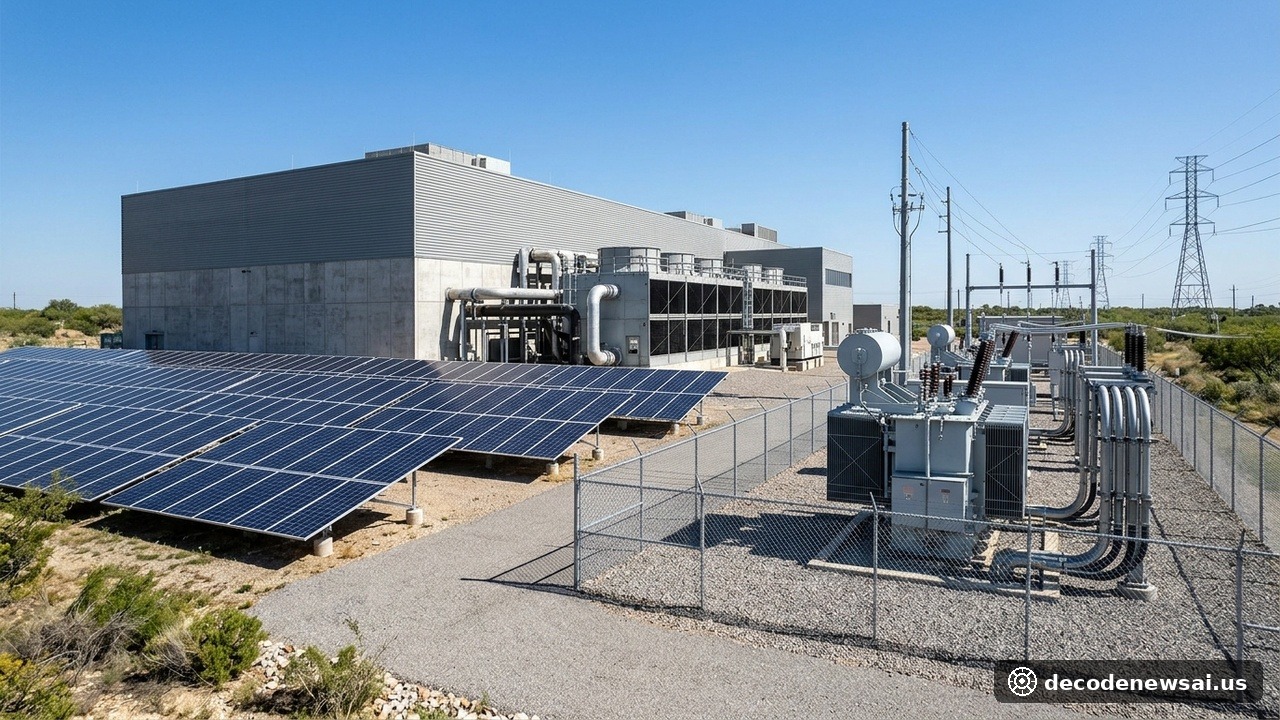
OpenAI on Nov. 5 published a set of community commitments and a policy blueprint for data-center development, responding to growing opposition to AI infrastructure projects across the United States. The company said future compute campuses it owns and operates will cover the full cost of their electricity and related grid infrastructure, while publicly reporting energy use, water use, noise and hiring impacts. OpenAI also urged state and federal policymakers to establish rules requiring large data centers to pay for the additional power demand they create, rather than shifting costs to households.
A pledge to cover power and infrastructure costs
OpenAI’s National Community Compact says the company will pay the full cost of electricity and infrastructure needed to serve future campuses it owns and operates. It also promises financial assurances before major spending begins, so other customers are protected if a project is delayed, reduced or canceled. OpenAI says it will work with utilities to reduce power use when the grid is under strain and publish site-level energy and water data. It plans to prioritize closed-loop or low-water cooling systems.
More transparency and fewer nondisclosure agreements
The policy blueprint calls for developers to publish construction plans, independent noise studies, energy and water use, and expected job openings. OpenAI said it will not use nondisclosure agreements with public officials except for narrow protections involving legitimate security information, trade secrets or proprietary material. The company also wants governments to disclose tax incentives and attach measurable commitments on jobs, investment and infrastructure, with a way to recover public benefits if developers fail to deliver.
Rules to protect other electricity customers
OpenAI proposes that state utility commissions require large electricity users to pay the additional grid costs they create and protect other customers if a project is abandoned. It also supports allowing data centers to reduce demand during periods of peak stress, while speeding up transmission upgrades and clean-power investment. As an example, OpenAI said its agreement with Georgia Power for a planned Effingham County campus allows the utility to reduce electricity delivered to the site by as much as 1,000 megawatts during periods of high demand. These are policy proposals and company commitments, not nationwide rules already in force.
A test of trust between AI developers and communities
Data centers require large amounts of electricity, land and cooling water. They can bring tax revenue, jobs and infrastructure investment, but can also raise local concerns about power bills, water use and noise. OpenAI says it will work with unions, training providers and local businesses to prepare residents for construction, operations and supply-chain jobs, and will fund projects selected by local communities. The company cited a $4.8 million grant for free school meals in Effingham County, Georgia, and a joint $6 million commitment with SB Energy for childcare in Pike County, Ohio. Whether the promises are delivered will depend on public reporting, local oversight and actual spending.