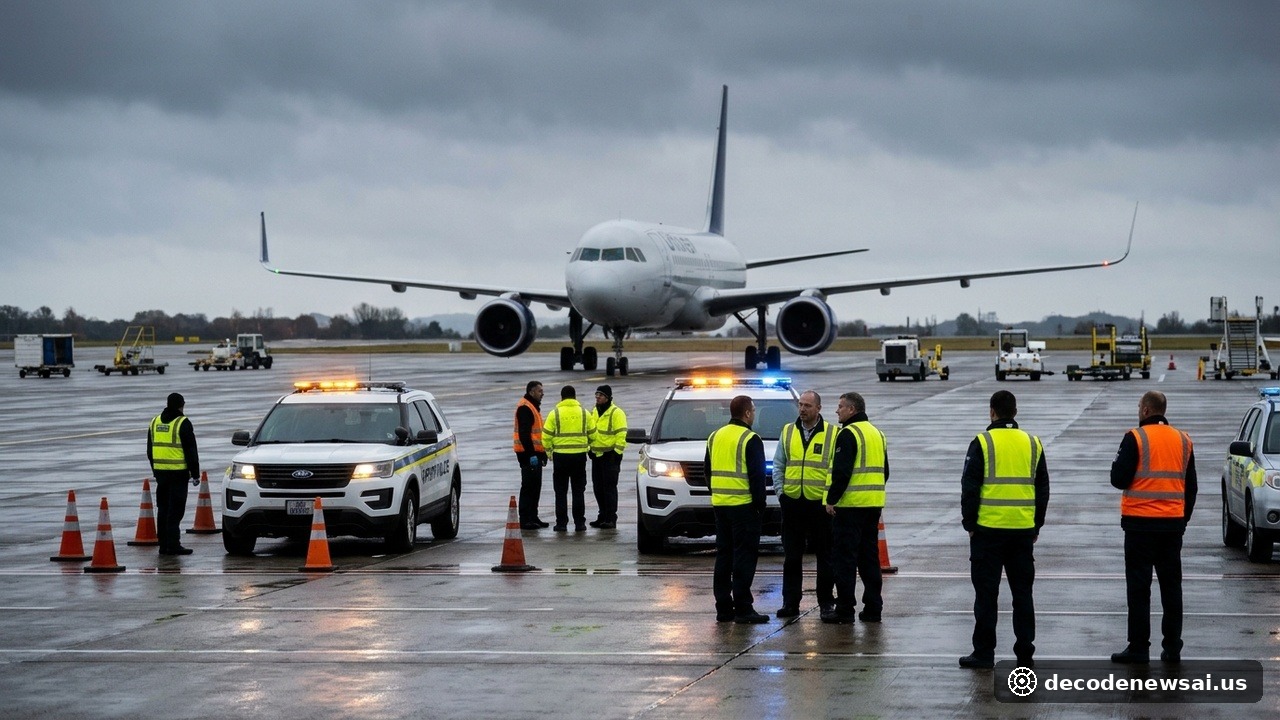
At least 15 commercial aircraft were diverted, made emergency landings or underwent security checks across Europe on Nov. 5 after a new wave of bomb threats. The alerts affected flights involving Ireland, the United Kingdom, Italy, Bulgaria, Romania, Poland, Finland, Austria, Belgium, Portugal, Greece and the Czech Republic. Airlines affected included Aer Lingus, Ryanair, Wizz Air, Finnair, LOT and Aegean Airlines. Searches found no explosives, and Britain’s transport secretary described the threats as malicious hoaxes.
Airlines change routes and arrange emergency landings
An Aer Lingus flight from Dublin to Rome was diverted to a French military airbase. Several Ryanair flights heading to Sofia made emergency landings in Bulgaria or were diverted to other airports. Some Finnair flights were escorted by fighter jets. Wizz Air, LOT, Aegean and Iberia flights were also searched or had their routes changed. Airlines said all affected aircraft landed safely and there were no reports of injuries among passengers or crew.
Similar alerts have occurred repeatedly this week
Bomb threats also affected European flights on Monday and Tuesday, prompting diversions and airport inspections. Thursday’s incidents added to the number of disrupted flights. Rome airport officials said some warnings came through anonymous emails. Authorities in Bulgaria and the Czech Republic said inspections found no suspicious items. Finnair said threats against its flights had been assessed as unfounded or hoaxes.
Investigators have not identified who is behind the threats
Police across Europe are investigating the source of the alerts and whether the incidents are connected. Britain’s transport secretary called the threats malicious hoaxes, but as of Nov. 5 investigators had not published evidence linking them to a particular state, terrorist group or coordinated network. Aviation experts said the number of alerts in a short period could point to coordinated activity, while cautioning that timing alone does not establish who was responsible.
Disruption creates costs for airlines and airports
Each bomb threat can trigger security assessments, aircraft searches, diversions, crew changes and passenger rebooking. Even when a warning proves false, airlines may face additional fuel, airport-service and compensation costs. Airports have increased information sharing and inspection procedures, while the European Union activated an aviation-security information-sharing mechanism. Travelers should follow airline notifications and airport updates rather than treating unverified online posts as official security alerts.
Authorities have not said whether the threats are connected, and no explosives have been found in the aircraft inspected so far.