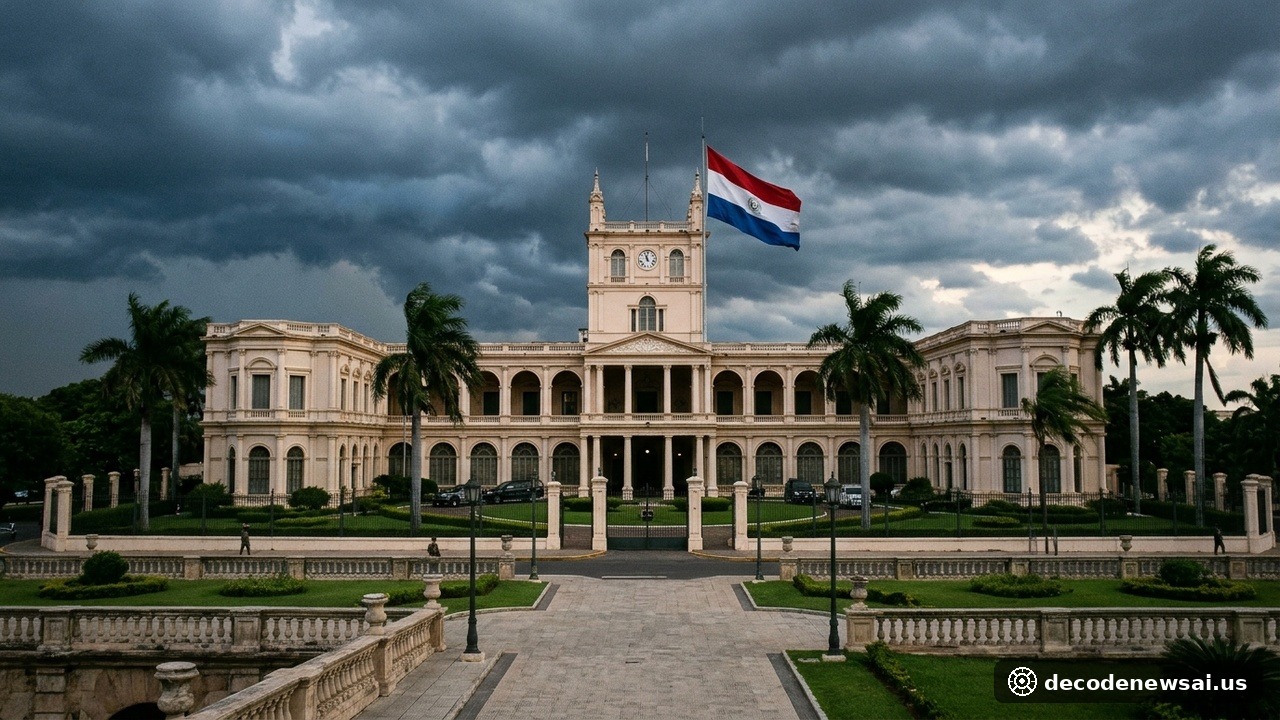
Paraguayan President Santiago Peña announced his resignation on Nov. 5 after the collapse of digital lender Ueno left millions of customers unable to access their money and triggered protests and impeachment pressure. The Associated Press later reported that the lower house voted 78-0 to impeach him minutes after his announcement. The Senate still must consider the case under constitutional procedures, while Vice President Pedro Alliana is expected to take over and complete the term through 2028. The crisis has shaken the country’s financial system and raised questions about banking supervision, public deposits and political connections.
Ueno’s collapse freezes millions of accounts
Paraguay’s central bank began a resolution process on Nov. 3 after finding that Ueno’s solvency ratio had fallen below the legal minimum. The digital lender served about 2.9 million to 3 million customers, roughly 60% of the country’s adult population. Its app, transfers and card services stopped working, leaving many customers unable to access their accounts. Ueno also held about $800 million to $850 million in public-sector funds, including money connected to pension and health services, spreading the impact to public institutions and households.
Regulators found problems with loans and assets
The Associated Press reported that regulators found risky lending to companies linked to the bank’s owners, incomplete documentation and expenses improperly counted as assets. After adjustments to its accounts, Ueno’s capital fell to less than half the required legal minimum. Authorities detained senior executives and prosecutors opened investigations involving bank managers and business associates. The allegations remain subject to legal proceedings and do not mean every person detained has been convicted.
Peña’s ties to the bank raised conflict-of-interest questions
Peña held shares in Grupo Vázquez, Ueno’s parent company, until he sold them in 2025. Opposition lawmakers and some members of the governing party alleged conflicts of interest and questioned why public pension and government funds were held at the lender. Peña denied wrongdoing. In his resignation message, he said he wanted to preserve national stability and democratic institutions and apologized for failing to protect public trust. The allegations still require investigation and judicial review.
Political succession and deposit protection
After Peña’s resignation announcement, the lower house voted 78-0 to impeach him, but the Senate must still consider the process. Congress also needs to handle the resignation and succession arrangements. The government and central bank have begun transferring some accounts and have promised to use deposit-protection mechanisms to safeguard customers. The speed of restoring access to funds, recovering assets and determining any losses to public money will shape confidence in Paraguay’s financial regulators and government. The crisis may also affect international investors’ assessment of the country’s financial governance and political stability.