Asian Stocks Rotate Away From Chipmakers as Samsung and SK Hynix Fall More Than 5%, Autos Rise
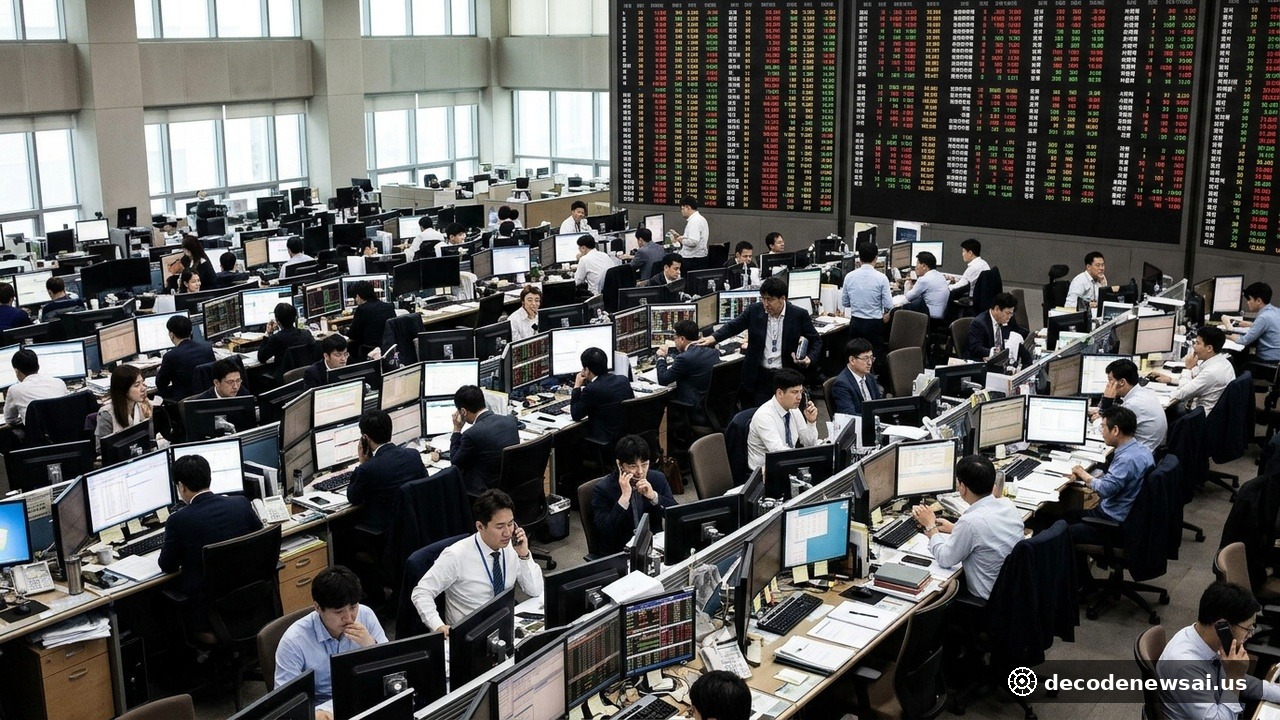
Asian markets saw a pronounced sector rotation on November 5 after Democrats won control of both chambers of the U.S. Congress. Investors worried that a Democratic-controlled Congress could increase scrutiny of AI data-center construction, energy use and major technology companies. Money shifted away from some semiconductor and AI-infrastructure stocks toward automakers, consumer companies and internet platforms. Bloomberg reported that Samsung Electronics and SK Hynix each fell more than 5%, weighing on South Korea’s Kospi, while Toyota and Honda rose about 5%, helping Japan’s Topix advance.
The reported moves varied by market and trading time. Bloomberg, in a report carried by Moneycontrol, said the Kospi fell more than 3% and both Samsung and SK Hynix dropped more than 5%. The National reported that the Kospi was down as much as 4.39%, Toyota rose about 8% and the Hang Seng Tech Index gained about 5%. Reuters reported that the Kospi at one point approached a 6% decline and Taiwan’s benchmark index fell more than 3% during Asian trading. These are intraday figures from different reports, not a single set of closing prices.
Investors reassess AI infrastructure spending
The central issue is a reassessment of the investment returns across the AI supply chain. Data centers require large quantities of chips, memory, electricity and cooling equipment. Companies supplying those products have benefited from rising capital expenditure. But if the new Congress and state governments push for stricter permitting or pauses on some data-center projects, investors may lower growth expectations for certain suppliers.
Bloomberg quoted market analysts saying investors were moving from highly valued stocks that depend heavily on AI expansion toward lower-valued automakers, consumer businesses and some internet companies. Reuters reported that Democratic victories in states such as Texas and Georgia, where data-center projects are concentrated, have increased attention on local governments’ attitudes toward new facilities.
Automakers and consumer companies attract inflows
Automakers were among the relative winners. Bloomberg reported that Toyota and Honda rose about 5% during the session. The National reported that Toyota gained as much as 8% and Hyundai Motor advanced about 3.7%. Chinese internet platforms also attracted buying, with Hong Kong-listed companies such as Tencent and Alibaba supporting the Hang Seng Tech Index.
Automakers may benefit from expectations of changes in tariff policy and from investors reallocating away from expensive technology shares. But rising share prices do not mean the industry’s fundamentals have improved. Global vehicle demand, interest rates, raw-material costs, trade policy and competition in electric vehicles remain important drivers of earnings.
Falling oil prices also affect regional markets
Expectations that the Iran war could move toward a diplomatic resolution have pushed oil prices lower. Reuters reported that Brent crude futures were down about 20% for the week and traded near $94 a barrel during Asian hours. Lower oil prices can reduce costs for energy-importing economies and ease inflation pressures, potentially benefiting airlines, travel companies and transport businesses.
The decline reflects market expectations, not confirmation that the conflict has ended. A deterioration in energy supplies or security in the Middle East could quickly reverse oil prices and sector performance.
Whether the rotation lasts remains uncertain
The current moves look more like short-term repricing than a confirmed long-term shift in the global economy. Democrats’ control of Congress does not immediately change data-center policy; legislation, budgets and regulatory procedures would still be required, and President Trump retains veto power. AI companies may face a slower pace of construction, but long-term demand for computing capacity has not disappeared.
Investors will be watching semiconductor order books and capital-spending guidance, data-center permitting, oil prices and the actions Congress takes on AI and energy policy. If policy uncertainty eases and oil remains lower, automakers and consumer stocks may continue to attract money. If proposed restrictions on AI infrastructure do not materialize, semiconductor shares could rebound.
Sources
- TBS / Bloomberg: 米民主党圧勝で株式の物色先に変化、アジア半導体株安・自動車株高