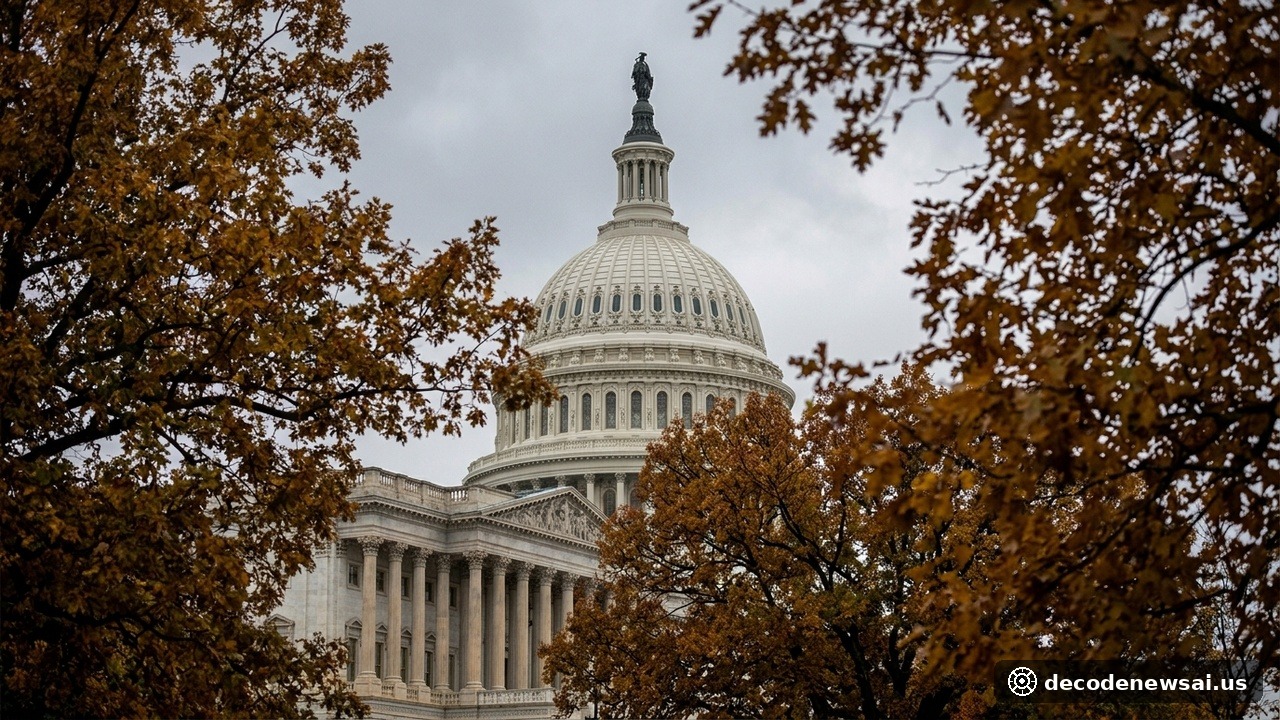
On November 5, 2026, premier global financial and technology publications including the Financial Times, Tom's Hardware, Quartz, and TechTimes reported that following their decisive sweep to regain control of both the United States Senate and House of Representatives, congressional Democrats launched an aggressive legislative offensive targeting the unregulated expansion of the artificial intelligence sector. Independent Senator Bernie Sanders of Vermont publicly demanded an immediate national moratorium on new data center construction, while Representative Yassamin Ansari of Arizona declared that pausing advanced frontier artificial intelligence development and passing a comprehensive federal prohibition against artificial superintelligence (ASI) must be the absolute day-one priority for the newly empowered legislative majority.
Sanders Demands National Data Center Moratorium Amid Grassroots Backlash Against Energy Grid Depletion
Throughout the 2026 midterm election cycle, intense constituent outrage over escalating utility tariffs, localized environmental degradation, and electrical grid instability fueled by hyperscale computational facilities emerged as a decisive political issue across key congressional districts. In Texas, Democratic governor-elect Gina Hinojosa anchored her successful campaign on a late-October pledge to halt all data center permitting until lawmakers establish binding statutory protections for residential ratepayer bills. Within 48 hours of poll closures, Senator Sanders leveraged the midterm mandate to formally advocate for a federal freeze, arguing that commercial technology developers are privatizing public electrical infrastructure while socializing elevated energy costs onto working-class households.
The legislative proposal championed by Sanders and Representative Alexandria Ocasio-Cortez would freeze the physical construction and grid interconnection of all new large-scale data computing centers across the United States. Under the statutory terms of the draft bill, the moratorium would remain in effect until federal regulatory agencies complete comprehensive environmental reviews, enforce strict localized community consent requirements, and guarantee binding tariff firewalls to prevent utility providers from passing capital expansion costs to residential consumers. Sanders fiercely condemned technology executives for treating foundational electrical and municipal water grids as proprietary fuel for speculative algorithmic architectures.
Financial analysts tracking municipal utility obligations note that grid operators across the American Sunbelt and Mid-Atlantic corridors have struggled to absorb unprecedented multi-gigawatt interconnect requests from hyperscalers. The proposed legislative freeze directly imperils multi-billion-dollar project pipelines configured by infrastructure consortia, threatening to delay capital expenditure deployments into late 2028. State regulatory commissions that previously competed to attract corporate data centers with aggressive local tax abatements now face organized ratepayer resistance demanding statutory moratoriums.
The Ban Artificial Superintelligence Act Imposes Up to 20-Year Prison Sentences and Corporate Dissolution
Operating concurrently with infrastructure constraints, Representative Yassamin Ansari, supported by Congressional Progressive Caucus Chairman Greg Casar and newly elected Michigan Senator Abdul El-Sayed, reignited momentum behind the Ban Artificial Superintelligence Act of 2026. Emphasizing that democratic governance must preempt existential technological hazards, Ansari affirmed that the incoming congressional majority will prioritize statutory moratoria on advanced frontier training runs and codify criminal prohibitions against artificial superintelligence as primary legislative goals.
The legislative framework establishes punitive enforcement measures that equate unauthorized advanced artificial intelligence development with the production of radiological and biological weapons of mass destruction. The statute defines superintelligence as any autonomous synthetic cognitive architecture that exceeds human cognitive capacity across multiple operational domains, exhibits autonomous evasion of shutdown commands, generates unauthorized cyberwarfare payloads, or performs recursive self-improvement beyond human verification. Corporate officers who knowingly fund or authorize prohibited development face federal criminal penalties of up to 20 years of imprisonment, accompanied by mandatory 10-year professional industry bans for participating technical staff. Furthermore, corporate entities found in violation face the "corporate death penalty"—mandating the complete revocation of operating charters, corporate dissolution, and judicial asset forfeiture.
Civil liberties advocates and constitutional litigators anticipate that the proposed statutory definitions of recursive self-improvement will provoke contentious judicial challenges regarding the commerce clause and intellectual property protections. However, legislative sponsors maintain that the irreversible risks posed by uncontained synthetic intelligence necessitate national security enforcement structures historically reserved for nuclear non-proliferation treaties.
Multi-Billion-Dollar Lobbying Efforts Sputter as Markets Suffer Historic $2.5 Trillion Valuation Collapse
The aggressive policy posture from congressional leadership catalyzed historic liquidations across global financial markets. Benchmark equity gauges, led by the technology-heavy Nasdaq Composite and the Philadelphia Semiconductor Index, plunged into deep correction territory during Thursday’s trading session on November 5. The market rout erased approximately $2.5 trillion in market capitalization from the tech sector in a single session—marking the steepest single-day percentage decline in 19 months. Leading artificial intelligence hardware manufacturers, including Nvidia, Advanced Micro Devices (AMD), and Micron Technology, experienced severe double-digit contractions, while Elon Musk’s corporate portfolio, including Tesla and SpaceX, suffered heavy liquidations following high-profile political endorsements that failed to secure legislative victories.
Wall Street investment banks and political risk consultants emphasize that Silicon Valley spent more than $600 million across campaign contributions and direct lobbying during the 2026 midterms in an attempt to insulate the industry from progressive oversight. The subsequent electoral sweep demonstrates that popular skepticism toward artificial intelligence data centers, corporate power concentration, and algorithmic displacement now transcends conventional partisan boundaries. As congressional committees prepare to issue subpoenas commanding frontier laboratory executives to testify under oath, the commercial artificial intelligence sector faces an abrupt transition from voluntary corporate commitments into an uncompromising era of federal regulatory oversight, statutory caps, and criminal liability.