Russian Forces Launch Nearly 8,000 Tactical Strike Drones Averaging 1,100 Daily
On November 5, 2026, the General Staff of the Armed Forces of Ukraine released detailed operational statistics evaluating battlefield tactical aviation, documented independently by military analysts at the Institute for the Study of War (ISW) in its daily campaign assessment. Official military disclosures confirmed that between October 29 and November 4, 2026, Russian armed forces launched 7,947 Molniya and Lancet tactical strike drones targeting Ukrainian forward positions, defensive fortifications, combat logistics nodes, and civilian border infrastructure. In response to the massive swarm campaign, integrated Ukrainian air defense units, electronic warfare echelons, and mobile counter-drone teams intercepted and destroyed 7,225 of these aerial platforms, establishing an aggregate 91 percent interception success rate.
Granular telemetry data highlighted the accelerating industrialization of tactical drone strikes across active battle corridors. Russian assault formations deployed an average of more than 1,100 Molniya strike drones per day throughout the seven-day reporting interval. Peak operational volume occurred on October 30, when Russian command launched 1,607 Molniya strike drones in a single 24-hour cycle, representing the highest single-day launch volume for the platform recorded during the armed conflict. While individual Molniya platforms feature lightweight airframes with modest explosive payloads, their primary tactical function involves saturating defensive radar channels and depleting short-range anti-aircraft gun munitions and precision air defense missiles.
Ukrainian Defenses Down 7,225 Molniya and Lancet Drones Achieving 91% Success Rate
Strategic defense analysts observed that while the 91 percent neutralization rate demonstrates high tactical proficiency across Ukraine’s layered counter-unmanned aerial system (C-UAS) architecture, unintercepted strikes continue to inflict localized operational friction against artillery emplacements, armored fighting vehicles, and regional electrical distribution substations. As winter climatic conditions set in, the coordinated employment of tactical loitering munitions alongside long-range missile and jet-powered Shahed variants intensifies operational wear across Ukrainian defensive networks, reinforcing the urgent operational necessity for accelerated Western deliveries of automated electronic counter-measures and cost-effective directed-energy interception systems.
Drone Saturation Warfare Pressures Ammunition Inventories and Regional Energy Nodes
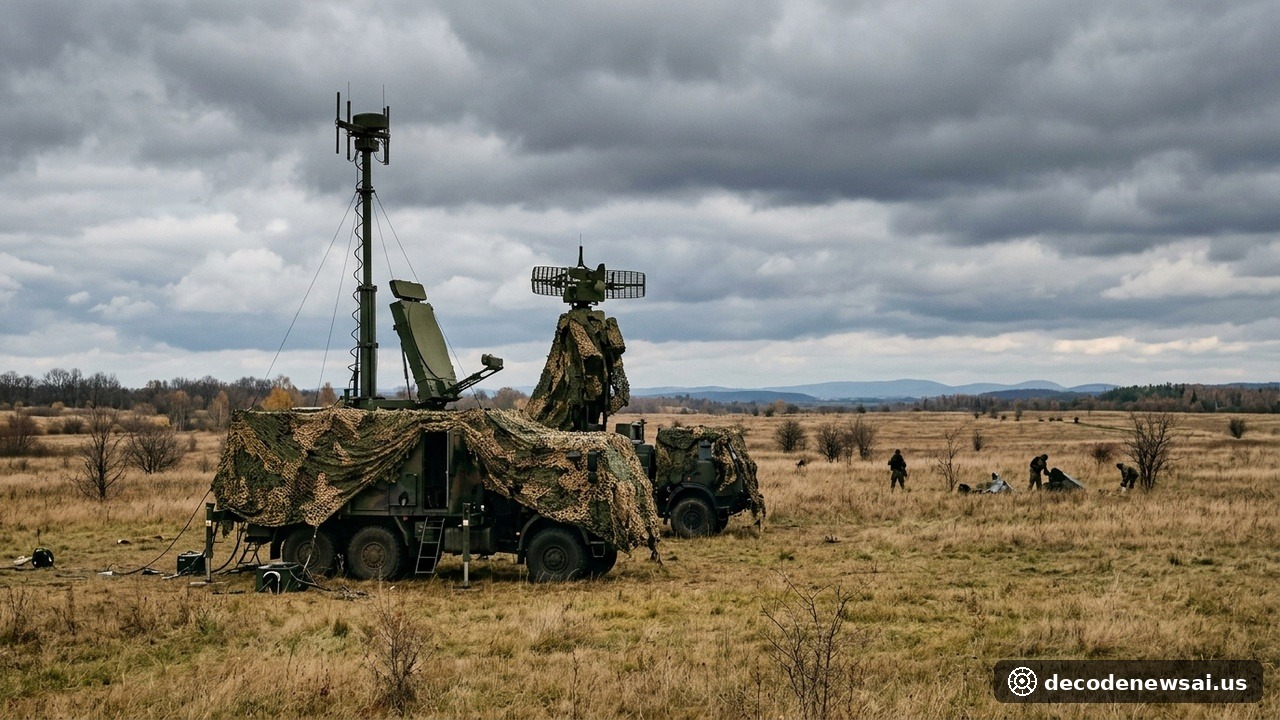
Military logistics coordinators noted that mobile acoustic detection networks and vehicle-mounted electronic jammers account for a growing share of tactical drone takedowns. Expanding local manufacturing of low-cost interceptor drones and radio-frequency spoofers allows Ukrainian defensive units to preserve expensive Western surface-to-air missile stockpiles for high-altitude ballistic threats.
Low-cost interceptor drones and radio-frequency spoofers, increasingly built inside Ukraine, now account for a growing share of takedowns as winter approaches.