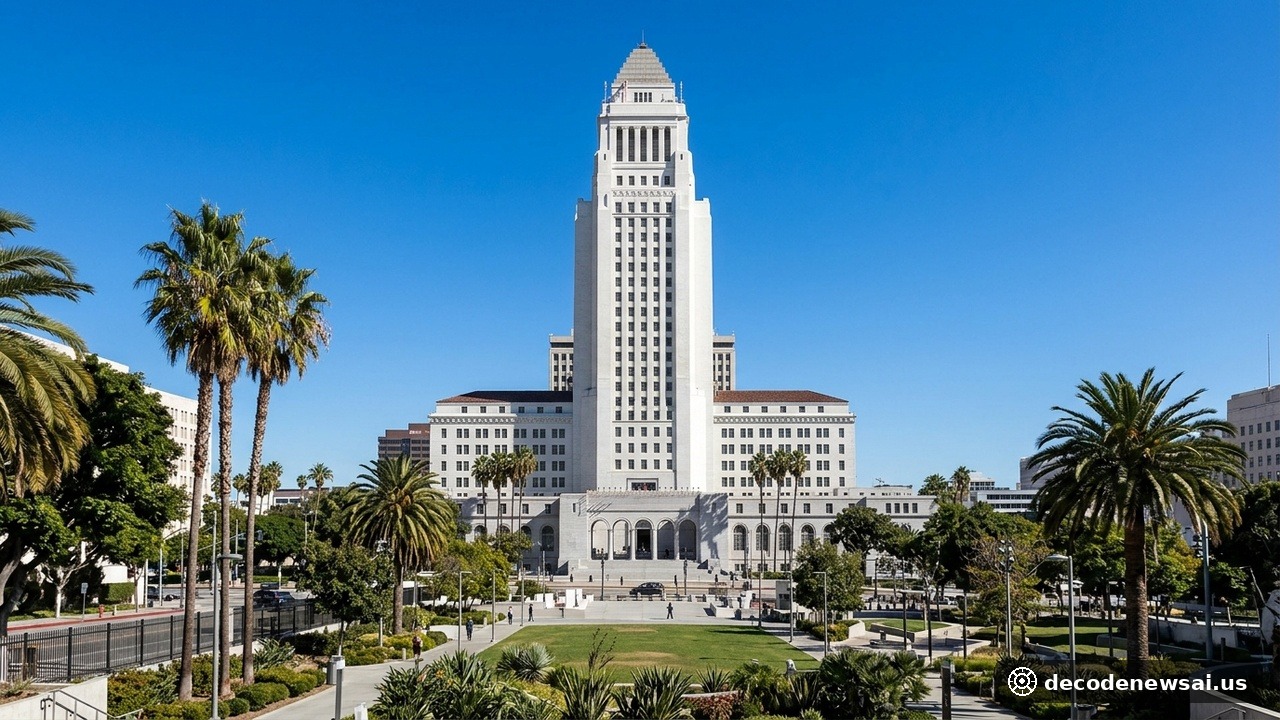
On November 5, 2026, premier American news agencies including the Los Angeles Times, the Associated Press, Axios, and The Guardian reported that progressive Los Angeles City Councilmember Nithya Raman achieved a momentous political victory, defeating one-term incumbent Mayor Karen Bass in the general election for the leadership of the nation's second-largest city. After the Associated Press officially called the race, Mayor Bass placed a telephone call to Raman to concede the election and committed her administration to facilitating an orderly and cooperative mayoral transition. The historic outcome elevates the 45-year-old urban planner as the first South Asian American mayor of Los Angeles and the highest-profile democratic socialist executive in contemporary municipal governance. Her dramatic victory reshapes the ideological fault lines across California politics and establishes a powerful template for left-wing insurgent candidacies nationwide.
Voter Frustration Over Housing, Homelessness, and Emergency Management Unseats Incumbent
The intensely competitive mayoral runoff served as a definitive public referendum on Mayor Bass’s four-year stewardship over a city beset by intersecting urban emergencies. Despite substantial budgetary allocations directed toward emergency temporary housing initiatives during her term, persistent homelessness encampments across commercial corridors and neighborhoods remained a dominant source of widespread constituent dissatisfaction. Furthermore, severe delays in municipal emergency coordination during the catastrophic Palisades wildfire, compounded by deteriorating municipal services and steep housing affordability crises, critically eroded Bass’s traditional base among moderate working-class and suburban voters throughout the metropolis. Voters expressed intense disillusionment with bureaucratic inertia, administrative delays, and the escalating cost of everyday living across the Southern California region.
Official tabulated election tallies released by county election authorities with 76 percent of ballots counted confirmed that Raman secured 429,450 votes, representing 52.1 percent of the total, while Mayor Bass garnered 394,796 votes, translating to 47.9 percent. The nearly 35,000-vote margin demonstrated Raman's formidable electoral coalition across diverse urban districts. In her concession remarks, Bass expressed gratitude to the residents of Los Angeles and extended warm congratulations to Raman, formally concluding a long and storied chapter of municipal leadership that previously included senior legislative service in the United States House of Representatives. Analysts emphasized that Bass struggled to present a compelling second-term vision capable of defusing voter fatigue and neutralizing public anger regarding basic quality-of-life grievances.
Grassroots Coalition and DSA Mobilization Propel Landmark Municipal Transformation
Raman’s electoral triumph was propelled by an extraordinary grassroots mobilization orchestrated by the Democratic Socialists of America (DSA), progressive labor unions, immigrant rights networks, and energized youth demographics. Throughout the campaign cycle, Raman’s field organization deployed thousands of volunteer canvassers across Los Angeles neighborhoods, championing an unapologetic municipal platform centered on expanding universal rent stabilization ordinances, terminating punitive encampment sweeps against unhoused residents, and substantially increasing public funding for permanent social housing development. Raman consistently framed housing access as a fundamental human right rather than a speculative market commodity, resonating with tenants facing relentless economic strain.
This uncompromising policy vision resonated profoundly with younger renters and working-class families disproportionately impacted by escalating corporate rents and persistent cost-of-living inflation across Southern California. National political strategists observed that Raman’s decisive ascent dismantled the longstanding coalition of moderate Democratic establishment figures, civic business associations, and institutional donors that historically exercised dominant control over City Hall, firmly aligning Los Angeles with an assertive new wave of democratic socialist municipal governance. The victory signals that well-organized left-wing grassroots movements can successfully defeat entrenched establishment leaders armed with institutional endorsements and formidable fundraising war chests. Campaign strategists noted that Raman's ground operation outmatched traditional media advertising across key voter-dense precincts.
Commercial Real Estate Apprehension and Looming Preparation for 2028 Olympic Games
The political ascendance of a democratic socialist administration sent immediate reverberations through the commercial real estate and business sectors across Los Angeles. Corporate real estate lobbies and downtown financial stakeholders voiced acute concern over Raman’s prospective policy initiatives, including proposals to freeze multifamily residential rents, enhance municipal real estate transfer taxes on commercial transactions, and redirect discretionary municipal expenditures away from policing toward preventative community alternatives. Business organizations warned that aggressive regulatory interventions could discourage vital private infrastructure investments and constrain municipal revenue streams during an uncertain economic environment.
Simultaneously, the incoming Raman administration inherits direct executive stewardship over preparations for the 2028 Los Angeles Summer Olympic Games, with critical deadlines approaching for transit expansion, public safety protocols, and stadium infrastructure modernization. Balancing her unwavering campaign commitments to socioeconomic justice, tenant protection, and municipal wealth redistribution against the colossal administrative and financial imperatives of hosting the world’s largest international sporting spectacle will constitute the defining governing challenge of Raman’s historic tenure in Los Angeles City Hall. Civic observers emphasize that her performance will serve as a national bellwether for the viability of democratic socialism within America's largest metropolitan governance structures, illustrating whether progressive ideals can effectively master complex municipal execution and maintain regional fiscal stability under intense global scrutiny.