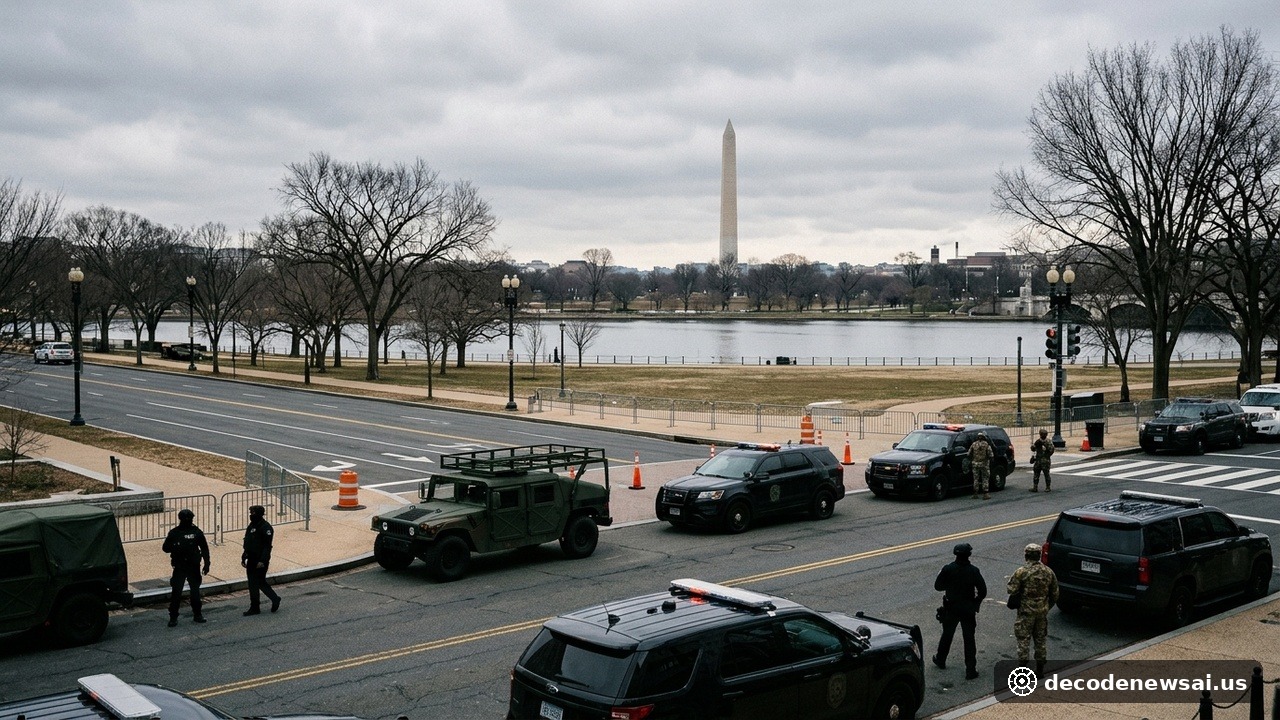
On November 5, 2026, leading American news organizations including Politico and The Hill reported that the United States Department of Defense has officially authorized the National Guard to escalate its operational presence across Washington, D.C. Under the deployment plans confirmed by senior defense officials, Guard units will begin operating tactical river patrol boats, up to 60 marked law enforcement vehicles, and specialized military Humvees to reinforce public safety and joint security operations across designated zones of the nation's capital. The expansion marks a significant broadening of domestic military assets deployed within municipal boundaries, generating fierce constitutional friction between local civic leadership and executive branch authorities in Washington.
Hegseth Signs Directive Authorizing Riverine Operations and Armored Patrols
A Pentagon official confirmed on Thursday that Defense Secretary Pete Hegseth authorized the expanded military presence in an internal policy memorandum dated October 29. According to the document, Guard forces will deploy small watercraft along the Anacostia River in the southeastern quadrant of the District. The maritime vessels are designated to conduct perimeter security in direct support of federal and local police units executing targeted interdiction operations against suspected criminal gang leadership and narcotics trafficking rings operating near waterways. The initiative reflects the Trump administration's declared emphasis on intensifying federal executive measures against urban crime syndicates across major metropolitan centers.
The ministerial directive outlines strict operational parameters governing domestic military activity, explicitly noting that Guard riverine personnel will not perform domestic surveillance on United States citizens during their daily operations. However, Hegseth specified that designated federal law enforcement officers must remain physically present on board Guard vessels at all times to execute the formal arrest of criminal suspects, including fleeing individuals attempting to evade apprehension by plunging into the river. Beyond maritime patrols, the authorization allows the Guard to integrate up to 60 marked police cruisers alongside military tactical vehicles across District thoroughfares to sustain visible deterrent operations and supplement local civilian policing capacity throughout residential and commercial corridors.
This combined operational presence represents an unprecedented convergence of traditional military platforms and civilian law enforcement activities. Defense officials maintain that integrating riverine reconnaissance and armored transport provides critical tactical protection for ground agents operating in hazardous environments. Critics, however, contend that the visual spectacle of armed soldiers, patrol vessels, and tactical armored carriers patrolling municipal waterways and public avenues transforms a civilian capital into an active security garrison, creating profound discomfort among local residents and visitors alike.
Councilmember Pinto Urges Five Governors to Withdraw 628 Troops
The continued escalation of armed military operations across civilian streets in Washington has triggered severe backlash from municipal leaders and neighborhood civil rights coalitions. On November 5, D.C. Councilmember Brooke Pinto issued a public appeal directed at incoming governors recently elected in Georgia, Iowa, Nevada, Ohio, and Texas, calling on them to immediately withdraw 628 out-of-state National Guard personnel stationed within the District upon assuming executive office. Municipal officials argue that the indefinite presence of camouflaged soldiers and military hardware erodes civil liberties, undermines local governance, and damages the capital city's economic vitality.
Councilmember Pinto argued that prolonged military deployments compromise local self-governance and subject local neighborhoods to disproportionate police intimidation. Previously, Pinto had joined Southeast D.C. residents in public demonstrations protesting the physical presence of armed military personnel stationed in close proximity to elementary schools and general election ballot drop boxes during the midterm voting cycle. The political dispute unfolds against a parallel legal backdrop, as the United States Court of Appeals weighs whether the president possesses legal authority to order out-of-state National Guard units into District neighborhoods over the objections of local municipal leadership without formal emergency declarations.
Local community leaders emphasize that public safety problems require dedicated investments in mental health services, youth programs, and community policing rather than external military interventions. By appealing directly to newly elected state chief executives, municipal officials hope to dismantle the interstate deployment framework from the supply side, depriving the Pentagon of the personnel necessary to sustain round-the-clock armored patrols.
Changing Congressional Majority Threatens Federal Security Posture
The expansion of National Guard capabilities comes at a moment of acute political vulnerability for the Trump administration following the midterm elections in November 2026. With Democrats winning decisive majorities across Capitol Hill, the legislative landscape surrounding federal interventions in District governance has shifted fundamentally. Senior lawmakers scheduled to assume committee gavels in January 2027 have pledged vigorous congressional oversight regarding Defense Department expenditures, civilian-military operational boundaries, and unilateral federal deployments inside American cities.
While administration officials maintain that military coordination remains indispensable for countering persistent urban crime, legislative leaders counter that the federal posture undermines municipal home rule and risks normalizing domestic military policing. As newly elected governors prepare to review deployment authorizations and congressional committees prepare to exercise subpoena powers, the operational longevity of boat patrols and tactical military vehicles along the Anacostia River faces unprecedented judicial and legislative scrutiny. The coming months will test whether federalized troop presence can endure against unified congressional oversight, impending judicial rulings, and growing pushback from newly inaugurated state executives across the nation.