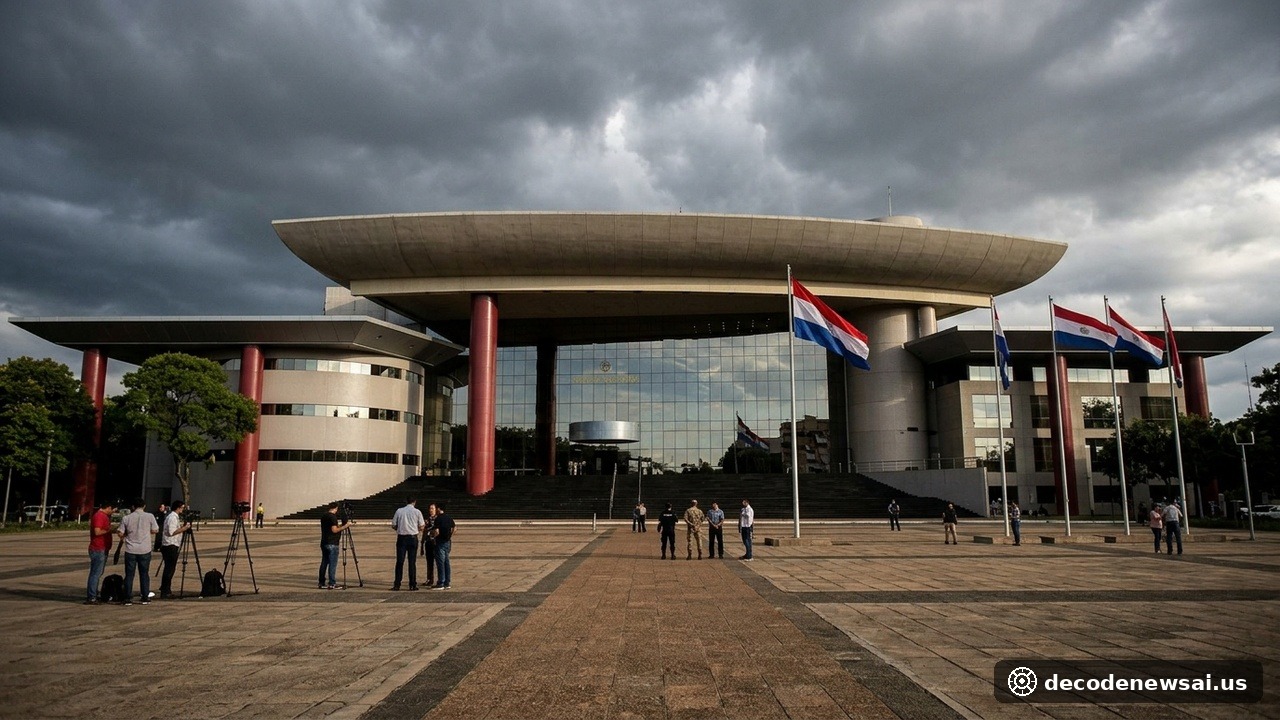
On November 5, 2026, premier international news agencies and diplomatic analysis organizations including Al Jazeera, The Guardian, the Associated Press, PBS NewsHour, and Americas Quarterly reported that South American nation Paraguay plunged into acute political and financial turmoil as 47-year-old President Santiago Peña officially announced his resignation from office. The sudden executive collapse was triggered directly by the insolvency and regulatory seizure of prominent digital commercial lender Ueno Bank, an institutional failure that froze the deposit accounts and payment services of approximately three million citizens—representing nearly half the country’s population. Within minutes of Peña’s televised address, Paraguay’s National Congress rejected standard resignation procedures and voted overwhelmingly to impeach him from the presidency, while the national attorney general announced a formal criminal inquiry into the deposed executive.
Freezing Three Million Accounts Triggers Mass Protests and Central Bank Liquidation
The catalyst for the constitutional crisis was the abrupt insolvency of Ueno Bank, an aggressive financial technology institution in whose corporate parent company Peña had previously held substantial equity holdings and advisory positions prior to assuming the presidency in 2023. Under his conservative administration, regulatory authorities had permitted the digital lender to expand its retail deposit base rapidly across municipal corridors without requiring commensurate capital reserve ratios historically demanded of commercial clearing banks.
The accumulated structural vulnerabilities, driven by unregulated insider lending and non-performing debt assets, ignited an unprecedented liquidity run over the preceding week. On November 3, after verifying severe capital insolvency, the Central Bank of Paraguay executed an emergency statutory intervention, seizing operations and suspending Ueno Bank’s clearing licenses. The administrative intervention instantly severed digital mobile payment applications and retail card networks, depriving three million depositors of immediate access to payroll savings, commercial receivables, and household funds. Mass public outrage rapidly mobilized across the capital of Asunción, where thousands of demonstrators encircled presidential headquarters and government ministries, burning barricades and clashing with military police to demand systemic accountability.
Financial markets across the Southern Cone reacted with intense volatility as interbank lending rates in Asunción spiked. Because Ueno Bank had functioned as the primary digital disbursement mechanism for government welfare transfers and small-business supplier clearing networks, commercial retail trade across major Paraguayan cities ground to a virtual halt within 48 hours of the seizure.
Congress Executes Rapid Impeachment Vote Following Resignation as Prosecutors Issue Border Closure
Confronted with uncontrollable civil unrest and the total desertion of his legislative coalition within the National Congress, President Peña delivered a televised resignation address on the morning of Thursday, November 5. In his remarks, Peña claimed that his decision to step down was intended to afford the nation an opportunity to demonstrate institutional resilience and restore public order, seeking to forestall protracted political deadlock.
However, lawmakers rapidly neutralized Peña’s effort to secure an orderly exit and retain executive legal immunities. Convening an extraordinary joint parliamentary session minutes after the broadcast concluded, the National Congress voted decisively to decline his voluntary resignation. Lawmakers immediately initiated statutory impeachment proceedings, voting by an overwhelming constitutional majority to remove Peña from office on charges of gross malfeasance, administrative dereliction, and improper patronage in commercial banking oversight. Following the legislative dismissal, the Office of the Attorney General of Paraguay convened an emergency briefing confirming that criminal prosecutors had formally launched an inquiry into Peña and associated regulatory officials, dispatching urgent border-watch notifications to international migration checkpoints to prevent targeted individuals from fleeing the jurisdiction.
Constitutional legal scholars in Asunción observed that the decision to impeach rather than accept a voluntary resignation strips the former executive of statutory immunities against immediate judicial detention. Specialized anti-corruption prosecutors have already secured judicial warrants to impound communications records and executive correspondence between the presidential palace and Ueno Bank's board of directors dating back to 2024.
Geopolitical Ramifications Across the Southern Cone as Sovereign Risk Premiums Escalate
The dramatic collapse of the Peña administration creates an acute power vacuum across South America's Southern Cone. A former International Monetary Fund economist and prominent regional ally of conservative American political movements, Peña had framed his presidential mandate around attracting foreign direct investment, advancing infrastructure projects, and maintaining firm alignment with Western geopolitical interests.
Sovereign debt analysts and Latin American policy scholars observe that the interim government—tasked with stabilizing public order ahead of prospective extraordinary general elections—faces severe fiscal liabilities in establishing deposit guarantee funds to compensate millions of affected bank customers. The scandal has severely compromised Paraguay’s international financial credibility, triggering widening credit default swap spreads across sovereign bond instruments. The sudden collapse of executive authority is widely anticipated to catalyze fundamental structural realignments across Paraguay’s regional trade commitments within Mercosur and its overarching international diplomatic partnerships.