Superior Court Judge Cynthia Freeland of San Diego County, California, issued a significant mid-trial ruling on November 7, 2026, in the high-profile civil dispute Conroy v. Tesla. The court granted the plaintiff homeowners' motion for severe issue sanctions, officially holding Tesla, Inc. legally liable for claims of breach of contract, intentional misrepresentation, and fraud regarding its solar roof systems. Judge Freeland ruled that Tesla engaged in continuous discovery misconduct by willfully withholding critical internal test databases, disobeying court production orders, and providing misleading witness testimony regarding roof leak defects. By imposing direct issue sanctions, the court formally stripped Tesla of its ability to contest liability for fraud, advancing the litigation directly to damages assessment where the company faces property claims exceeding $2.5 million alongside wider nationwide warranty liabilities.
Judicial Parameters and Liability Metrics in the Tesla Solar Roof Litigation
- Presiding Court & Trial Judge: San Diego County Superior Court; Judge Cynthia Freeland;Electrek EV and Clean Energy Desk
- Imposed Sanction & Legal Determination: Issue Sanction Applied; Liability for Fraud Deemed Established;MLQ AI Financial & Legal Intelligence
- Substantive Claims & Technical Defects: Extensive Roof Water Infiltration and Output Misrepresentations;Grit Daily Technology & Business Journal
- Market Implications & Secondary Spillover: After-Hours Equity Volatility; Nationwide Precedent Risk
Why Did the California Court Impose Issue Sanctions Against Tesla?
Under California civil procedure, an issue sanction represents an extraordinary judicial penalty reserved for egregious discovery abuse, functioning to resolve disputed liability claims against an offending party without requiring jury factual deliberation.
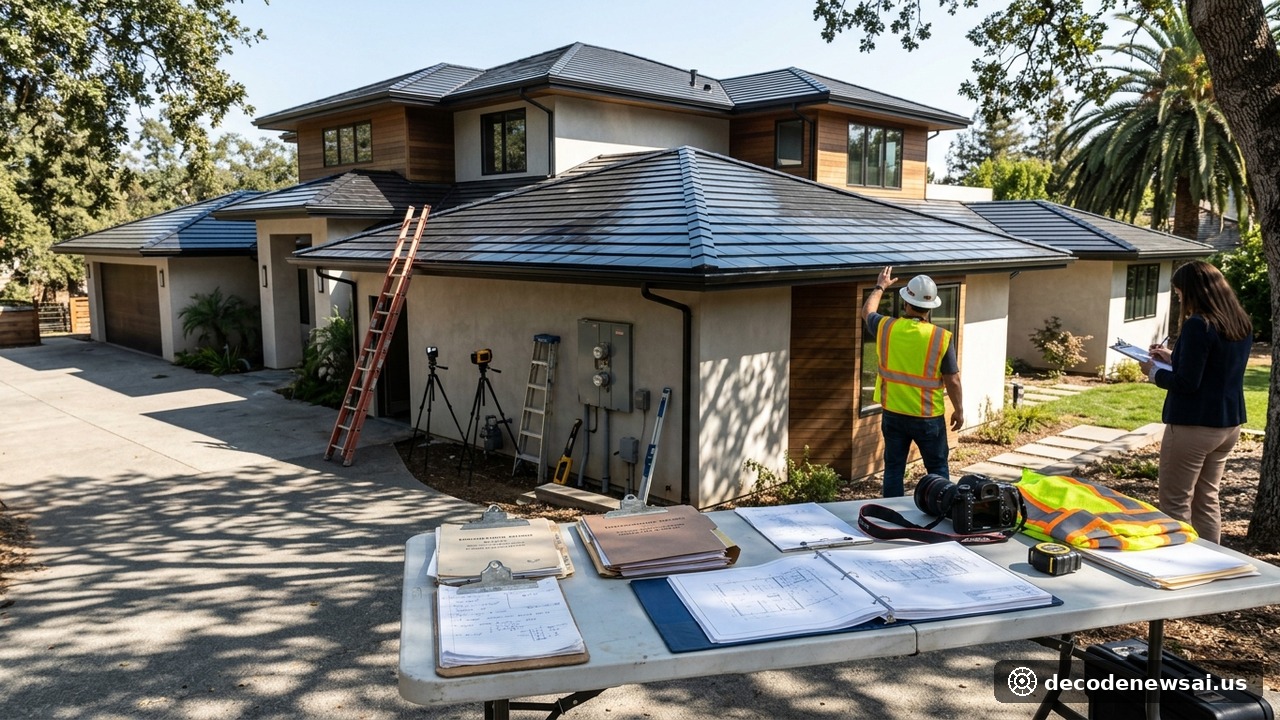
Judge Freeland's ruling detailed how the Conroy family contracted Tesla to install its integrated solar roof technology, only to experience severe interior water intrusion, structural beam rotting, and energy yields that fell drastically below contracted performance metrics. Throughout protracted pretrial discovery, the court issued four separate orders compelling Tesla to surrender internal degradation models, sealant reliability evaluations, and warranty repair databases. Court records revealed that Tesla persistently delayed disclosures, produced incomplete documentation, and misrepresented the availability of key engineering repositories. Concluding that Tesla's tactics compromised judicial integrity, the court ruled that establishing legal liability for fraud was the only appropriate remedy to protect the plaintiffs' constitutional due process rights.
What Are the Immediate Financial Liabilities and Class Litigation Risks?
With liability conclusively established, the upcoming jury trial will focus exclusively on quantifying compensatory and punitive damages. Legal counsel for the plaintiffs confirmed that total restoration costs, including structural roof remediation, toxic mold removal, and luxury interior rebuilds, surpass $2.5 million for the single residential estate.
The broader legal ramifications present far greater exposure for Tesla's clean energy division. According to legal intelligence from Shattered, dozens of commercial and residential property owners across California, Arizona, and Florida have reported comparable water ingress and fire safety concerns linked to early-generation solar tile installations. With Judge Freeland's fraud ruling establishing a documented record of corporate concealment, plaintiffs' attorneys across the United States are coordinating multi-district class action filings, threatening to trigger hundreds of millions of dollars in warranty remediation claims and punitive legal liabilities.
How Are Financial Markets and Tech Equity Analysts Assessing the Legal Fallback?
Following the release of the judicial order, shares of Tesla fell in extended trading on the Nasdaq exchange, reflecting investor sensitivity to regulatory and corporate governance headwinds. While Tesla's market capitalization remains anchored in automotive manufacturing margins, Full Self-Driving software development, and the Optimus robotics project, Chief Executive Elon Musk had repeatedly characterized the residential energy and storage division as an essential pillar of long-term revenue diversification.
Corporate governance commentators at Bloomberg Law emphasized that Tesla has historically utilized aggressive litigation postures to defer discovery scrutiny across product liability cases. This severe ruling establishes a dangerous precedent, demonstrating that judicial tolerance for discovery stonewalling is diminishing. Institutional equity analysts caution that unless Tesla institutes comprehensive quality assurance reforms and settles outstanding property claims, widening legal liabilities could erode valuation multiples across its renewable energy business unit.