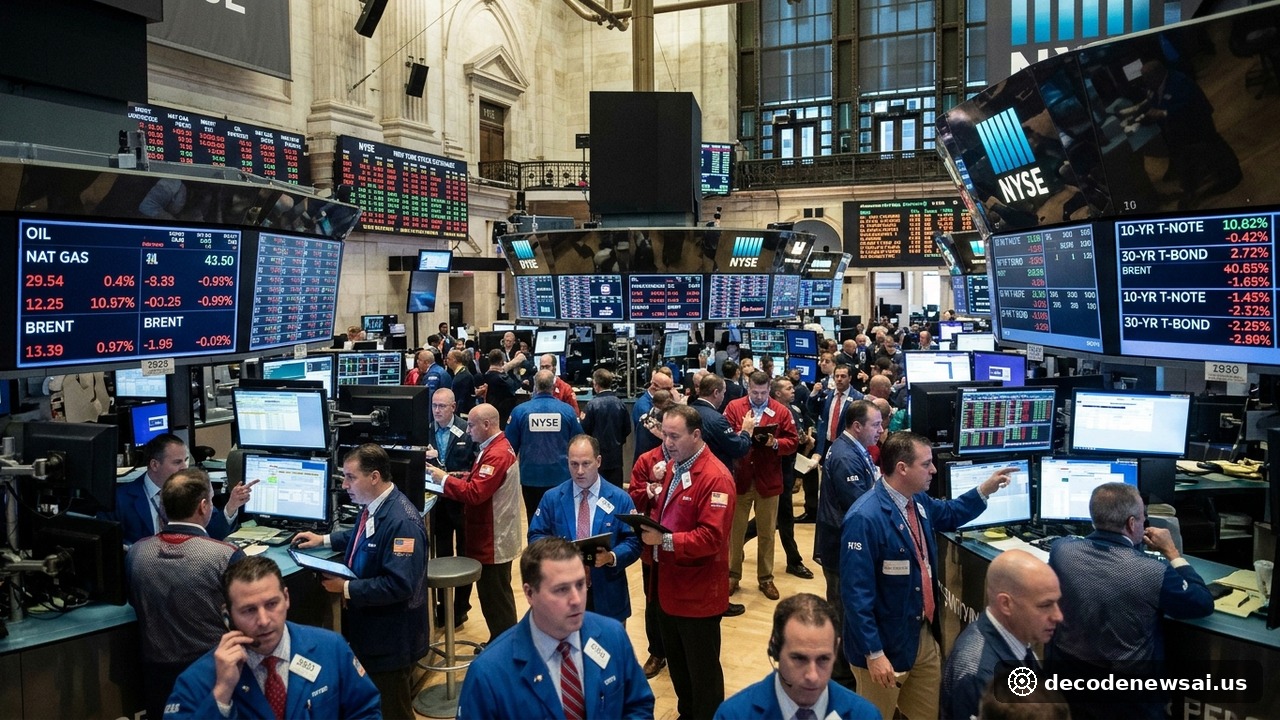
Global foreign exchange and fixed-income trading desks executed swift positional repricing across November 6–7, 2026, as the U.S. Dollar Index (DXY) staged a violent technical rebound above 104.50 following a three-day post-midterm slide, while USD/JPY rallied from multi-week lows of 157.25 back toward 158.00; driven by pre-payrolls short covering and equity market hedging, benchmark 10-year Treasury yields stabilized near 4.40%, with interest rate swap derivatives elevating the implied probability of an additional Federal Reserve 25-basis-point rate hike in December to 85%.
What Key Foreign Exchange and Fixed Income Movements Followed the Midterm Elections?
- 10-Year U.S. Treasury Benchmark Yield: Stabilized in 4.38% – 4.42% channel;Flattened from two-month troughs ahead of jobs data
- U.K. 10-Year Gilt Benchmark Yield: Fell 6 bps to 5.18% yield;Continental bond bid cushions sterling volatility
Why Did Democratic Congressional Victories Spark a Short-Covering Squeeze in the Dollar?
Following an initial knee-jerk liquidation of dollar assets as exit polls confirmed Democratic majorities across both the House and Senate, foreign exchange sentiment pivoted within 48 hours. Strategic currency research published by MUFG characterized the immediate post-election sell-off as an unsustainable emotional reaction to political headlines.
Institutional macro traders recognized that divided executive and legislative governance effectively neutralizes expansive unfunded fiscal spending and aggressive statutory tariff regimes. A gridlocked legislative branch constrains federal borrowing expansion, relieving the Federal Open Market Committee (FOMC) from the hazard of monetizing debt expansions. This political friction preserves the central bank's operational latitude to combat stubborn underlying core price pressures through disciplined monetary policy.
Why Did Derivatives Markets Reprice December Federal Reserve Tightening to 85%?
Financial derivatives participants were caught off guard by the sharp repricing in benchmark federal funds futures, which shifted away from prospective winter easing toward renewed policy tightening.
Sustained services-sector pricing momentum and wage resiliency compelled derivative desks to assign an 85% probability to a 25-basis-point rate hike at the December FOMC gathering. Investment bank trading desks at JPMorgan and Goldman Sachs noted that while the benchmark target range rests at 3.75% to 4.00%, robust employment metrics following the November policy pause justify an insurance tightening to anchor inflation expectations permanently before entering 2027.
How Will Sovereign Yield Divergence and Yen Carry Trades Shape Cross-Asset Flows?
Concurrently, currency carry trade dynamics are navigating subtle structural crosscurrents. Although the Japanese yen attracted short-term support following hawkish meeting minutes from Bank of Japan Governor Kazuo Ueda pointing toward a potential December Japanese rate increase, the structural nominal interest rate differential between U.S. and Japanese sovereign paper exceeds 350 basis points.
This massive carry premium attracts sustained algorithmic dollar bidding whenever global yield pullbacks stabilize near major moving averages. As equity market volatility prompts defensive liquidity hoarding across cross-asset funds, global macro investors are anchoring positions around forthcoming Nonfarm Payrolls and Consumer Price Index prints, where the defense of 4.40% on 10-year Treasuries will govern year-end multi-asset capital allocation.
What Macroeconomic Scenarios Could Force a Hawkish December Monetary Policy Surprise?
Fixed-income strategists caution that a convergence of tight labor market metrics and sticky core services inflation could compel the Federal Reserve to implement a hawkish policy adjustment before year-end. If upcoming wage growth data accelerates, monetary officials may determine that a final rate hike is essential to extinguish residual demand-side price pressures.
Market participants are pricing in an asymmetrical risk distribution across the short end of the sovereign curve. Portfolio managers are maintaining substantial cash allocations, positioning for elevated two-year Treasury yields while monitoring foreign exchange volatility across major trading pairs, as global currency reserves adjust to the prospect of prolonged restrictive monetary policy in Washington.